



L.A. Metro to explore congestion pricing, taxing ride-hailing companies
The board also voted to continue work on the Twenty-Eight by ’28 Initiative, which seeks ways to accelerate the delivery of 28 major projects before the Olympic and Paralympic Games.

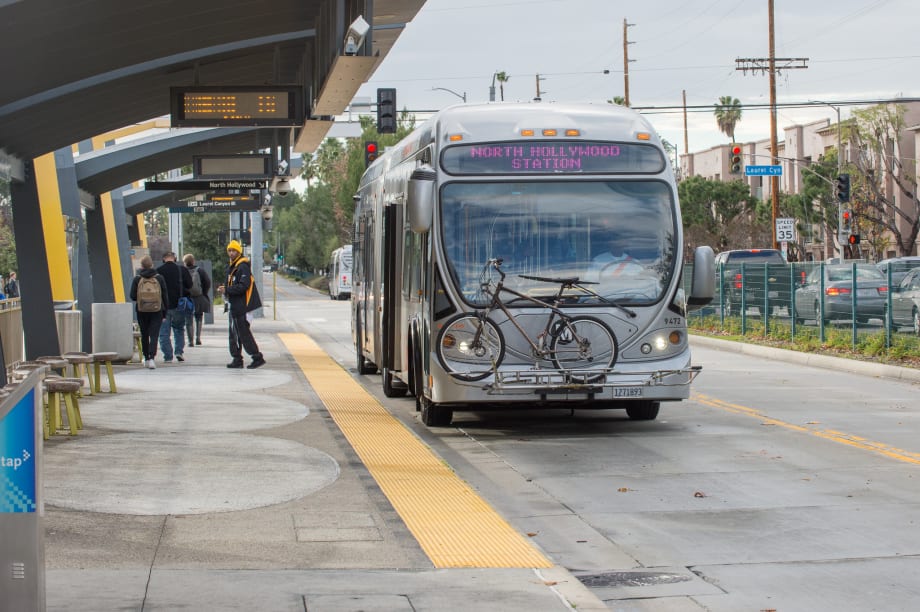
The study will develop a plan for transit service improvements to provide faster and more reliable trips as an alternative to driving.
Steve Hymon
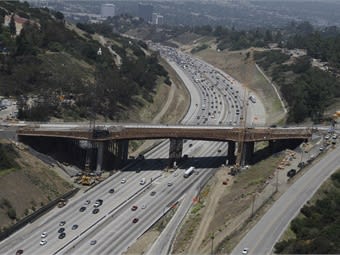
A critical component of the feasibility study is an Equity Strategy that will look at ways that congestion relief pricing can improve equity for vulnerable populations.
L.A. Metro
In a significant vote to relieve traffic congestion and combat climate change, the Los Angeles County Metropolitan Transportation Authority (Metro) board of directors unanimously voted to further explore congestion relief pricing and new mobility fees for ride-hailing companies like Uber and Lyft. Both are strategies in Metro’s “Re-Imagining of Los Angeles County: Mobility, Equity and the Environment” plan.
The board also voted to continue work on the Twenty-Eight by ’28 Initiative, which seeks ways to accelerate the delivery of 28 major projects before the Olympic and Paralympic Games arrive in the Los Angeles area in 2028. Metro staff will provide updates to the board on acceleration efforts to deliver Twenty-Eight by ’28 later this year.
One of the “Re-Imagining L.A. County” initiatives approved for further study includes congestion relief pricing, which uses tolls to more effectively manage traffic flow, especially during peak periods. Metro will begin a 12- to 24-month congestion relief pricing feasibility study to evaluate potential models and locations to test the concept.
The three models to be studied are: a cordon model, where anyone traveling into a designated zone is charged a fee; a Vehicle Miles Traveled (VMT) model, where charges are based on the number of vehicle miles traveled within congested areas, and; a corridor model, where anyone traveling within a congested corridor is charged based on number of vehicle miles traveled within that corridor.
Upon completion of the feasibility study, the Metro Board will consider a pilot program to test the concept.
The study will develop a plan for transit service improvements to provide faster and more reliable trips as an alternative to driving.
Steve Hymon
A critical component of the feasibility study is an Equity Strategy that will look at ways that congestion relief pricing can improve equity for vulnerable populations. The study will develop a plan for transit service improvements to provide faster and more reliable trips as an alternative to driving. In addition, it will investigate potential toll and fare discounts for low-income users.
“I believe the possibility of free transit is real,” said METRO CEO Phillip A. Washington during a MoveLA event on Friday. He added the idea behind congestion pricing is about re-imagining transit, while also eradicating congestion.
“It’s really about changing the behavior of people who drive every day,” he said.
Metro will also study the idea of levying fees on new mobility devices like electric scooters and ride-hailing companies like Uber and Lyft that profit from the use of public roadways and whose vehicles contribute to congestion.
More Management

METRO Opens Submissions for 2026 Motorcoach Awards
Nominations are now being accepted for METRO Magazine’s Operator of the Year and Innovative Operator of the Year awards.
Read More →
New York MTA Advances Final Contract for Second Avenue Subway Expansion
Contract Four is the largest in the Second Avenue Subway Phase 2 project and includes construction of station infrastructure, tracks, and signals for the subway expansion, MTA officials said. Work on Contract Four will begin in 2027.
Read More →
Transit Agencies Highlight Safety Gains at National Summit
Leaders from 15 major transit systems shared crime-reduction results and safety initiatives while discussing the role of continued federal support.
Read More →

NITA Names New Leadership, Expands Reduced-Fare Program at First Board Meeting
The new regional transit authority appointed its first board chair and interim executive director while extending reduced fares across CTA, Metra, and Pace for eligible riders.
Read More →
Beyond the Checklist: A Structured Approach to Transit Maintenance
Reliability-Centered Maintenance helps transit agencies move beyond routine checklists to focus limited resources on the assets and failures that have the greatest impact on safety, reliability, and service.
Read More →
APTA 2026 Nominating Committee Selects Leadership Slate, Names Chair and Vice Chair Nominees
Leadership changes will help shape the association’s priorities and its representation of the transportation industry during the 2026–2027 term.
Read More →
DART Launches Major Security, Fare Enforcement Initiative
The 90-day demonstration will deploy coordinated security teams at five light rail stations while testing controlled access and gathering data to guide future investments.
Read More →
Advancing Fare Collection Through Technology and Innovation
Learn about delivering 1300 gates at 91 stations while managing fare evasion. Explore the large scale deployment, solution customization and real-world results that affect the region. Prepare for deployment in your region now.
Read More →
Game Day in Motion: Moving Millions During the 2026 World Cup
Between packed transit stations and team motorcoaches, see how agencies and operators across North America tackled the transportation demands of the 2026 FIFA World Cup.
Read More →
Surface Transportation Extension Averts Shutdown, Leaves Transit Funding Gap
The stopgap keeps federal transportation programs moving, but missing advance funding could complicate the transit and rail projects agencies are planning next.
Read More →