



New England Wheels' low-floor minibus aces Altoona testing
The 22-foot, 15-passenger true low-floor Frontrunner achieved a score of 91 on the new pass/fail test implemented in 2017.

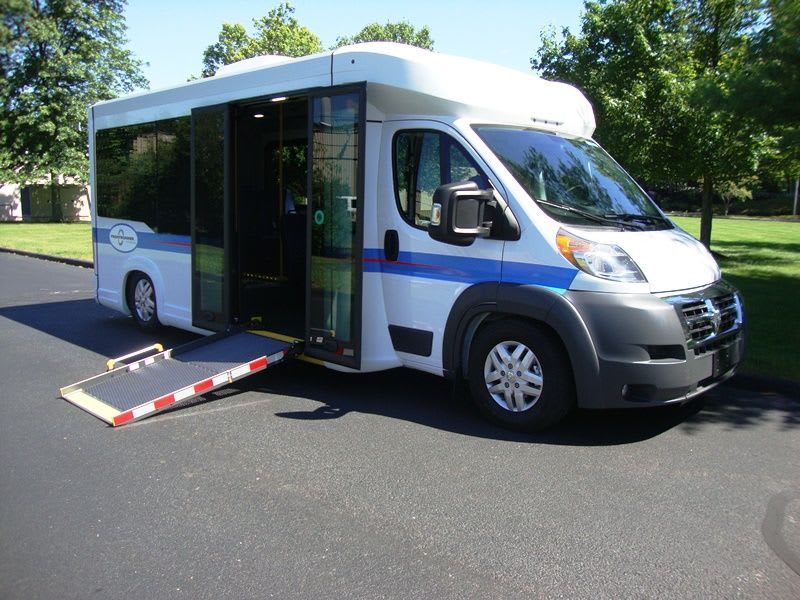
The multi-patented design and construction utilizes the Ram Promaster 3500 cutaway for the drive-train and is joined to a purpose built lowered-floor platform made from high strength lightweight steel.
New England Wheels
The multi-patented design and construction utilizes the Ram Promaster 3500 cutaway for the drive-train and is joined to a purpose built lowered-floor platform made from high strength lightweight steel.
New England Wheels
New England Wheels Inc. announced the Federal Transit Administration (FTA) issued its official report for the company’s next generation lowered-floor minibus — the Frontrunner. The 22-foot, 15-passenger true low floor achieved a score of 91 on the new pass/fail test implemented in 2017.
“The test validates the design goal that a front wheel drive sub 10,000 GVWR low floor can be lightweight, fuel efficient, user friendly, and durable to address the growing demand for low-floor accessibility in this size class” said Paul LaRose, president/CEO of New England Wheels.
While the pass/fail test at Altoona allowed for 125 hours of downtime due to mechanical failure, the Frontrunner was charged with only one hour, explaining its high score in the most demanding portion of the durability test. “We had no failures in our air suspension and no structural issues with our high strength lightweight steel frame during the test,” said LaRose. “The Frontrunner really proved it is ‘The Little Bus That Could.’”
The multi-patented design and construction utilizes the Ram Promaster 3500 cutaway for the drive-train and is joined to a purpose built lowered-floor platform made from high strength lightweight steel. The entire lowered floor chassis is fully galvanized for superior corrosion resistance and longevity. The bus structure utilizes a patented composite wall structure for superior strength and durability.
“The front-wheel drive platform allowed us to build a lowered floor bus that is truly flat at the entrance unlike the rear wheel drive alternatives that rely on a sloped floor to clear the rear wheel drive components” remarked LaRose. “In addition, a simple fold-out ramp and full width transit door makes the Frontrunner the only lowered floor minibus in its size class built in the true likeness and utility of a larger 40-foot transit bus.”
“We are looking at an electric version of the Frontrunner” added LaRose. “Right now, the Frontrunner offers a much greener, fuel efficient, user friendly alternative to technologies that are still in the development phase but have been released because of what they promise to offer. Compared to a traditional cutaway powered by large inefficient V-8’s, three difficult steps to enter, and a side mounted lift, the Frontrunner is a more economical choice when looking at the total cost of ownership and the rider experience.”
The Frontrunner meets or exceeds all applicable FMVSS standards, is Buy America compliant, and is represented by a growing national network of dealers. It has also been approved by the GSA under its 23V-New Technology program for purchase by government agencies. New England Wheels has been structurally modifying vans for over three decades. “We’ve taken the feedback from our customers, the knowledge we’ve gained over the years, our experience with troublesome wheelchair lifts, and built the next generation of lowered floor non-CDL commercial transportation in a smaller vehicle” remarked LaRose.
More Bus

New York MTA Plans Largest Bus Fleet Upgrade in More Than a Decade
The agency is seeking manufacturers for 650 new CNG buses to replace aging vehicles, improve reliability, and advance its broader fleet modernization strategy.
Read More →
Building a Flexible Path to Transit Electrification
John Hroncich discusses BAE Systems’ modular and scalable approach, lessons learned from decades of real-world operations, and how agencies can identify electrification strategies that fit their fleets.
Read More →
Bus Tech Talk: Keeping Transit Technicians Ahead of the Technology Curve
LA Metro’s Obed Mejia discusses technician training, evolving maintenance technology, fleet replacement, and strategies for getting the most out of today’s transit fleets.
Read More →
Biz Briefs: RIPTA Unveils New Frontrunners, Clevland RTA Adds New Siemens, and More
In METRO's latest installment, we take a look at recent news from Siemens, Prevost, Dodge, and more partnerships making headlines across the transportation sector.
Read More →
People Movement: Holly Arnold Joins Transdev and More
In this edition, we also cover recent appointments and announcements at Pace, CamTran, MCI, and more, showcasing the individuals helping to shape the future of transportation.
Read More →
The High Cost of Transit Buses: Industry Leaders Look to Procurement Reform
Transit leaders and policymakers examine how standardized bus designs, streamlined procurement, and predictable funding could help agencies stretch budgets and deliver better service.
Read More →
The Business Voice Behind Public Transportation
As chair of APTA’s Business Members Board of Governors, Ray Melleady explains how more than 850 business members are partnering with transit agencies to advance funding, innovation, and industry-wide collaboration.
Read More →
From Surviving to Thriving: Building Stronger Transportation Organizations
Bus Business Consultants founder Brian Dickson shares lessons on leadership, organizational health, and creating options for long-term success in a changing transportation industry.
Read More →
Finding the ‘Happy Medium’: Optimizing Maintenance Without Sacrificing Reliability
The key to maintenance optimization isn’t doing less work—it’s doing the right work at the right time on the right assets.
Read More →
LA Metro, City of West Hollywood, and Partners Advance Smarter Bus Lane Enforcement
The award-winning partnership combines AI-powered detection with human oversight to improve bus reliability, accessibility, and enforcement efficiency.
Read More →