



SARTA, NEORide land $1.9M FTA grant
The FTA’s IMI program funds projects that demonstrate innovative and effective practices, partnerships, and technologies to enhance public transportation effectiveness, increase efficiency, and more.
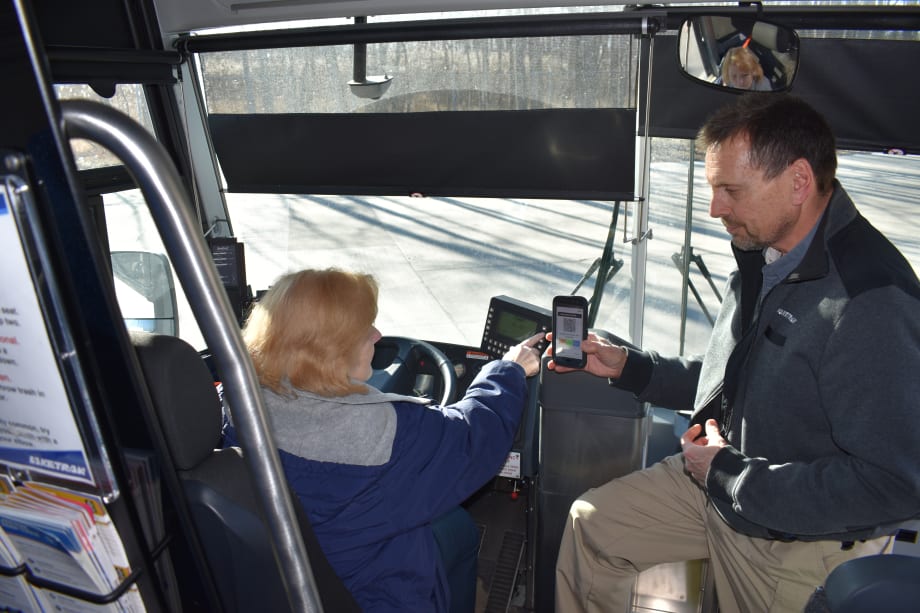
The multi-year grant, which will be shared with 10 other transit providers, will fund the purchase and installation of validators for use with the EZfare mobile ticketing platform.
Laketran
Ohio’s Stark Area Regional Transit Authority (SARTA) was awarded a $1.9 million Integrated Mobility Innovation grant by the Federal Transit Administration (FTA). The multi-year grant, which will be shared with 10 other transit providers, will fund the purchase and installation of validators for use with the EZfare mobile ticketing platform and ticketing integration with Transit app, data collection, and survey research, and the development of an innovative alternative payment application that will enable users to pay for transit and other transportation services using their phone or a "smart card" rather than cash.
In addition to SARTA, NEORide transit providers who will also receive grant funding, include Butler County Regional Transit Authority, Laketran, Western Reserve Transit Authority, Sandusky Public Transit, Medina County Public Transit, Metro RTA, Southwest Ohio Regional Transit Authority, Lancaster-Fairfield Public Transit, Transit Authority of Northern Kentucky, and South East Area Transit.
SARTA’s President/CEO Kirt Conrad said the IMI project was conceived and will be carried out by an impressive consortium that includes NEORide, a council of governments comprised of 15 transit agencies; Calstart, a non-profit that works with businesses and government to create transportation solutions, Masabi, a fare payments-as-a-service and mobile ticketing provider; and Cleveland State University.
The FTA’s IMI program funds projects that demonstrate innovative and effective practices, partnerships, and technologies to enhance public transportation effectiveness, increase efficiency, expand quality, promote safety, and improve the traveler experience. Competition for funding is incredibly fierce: only 20 of the 104 proposals submitted won approval.
Conrad said letters of commitment to the project submitted by numerous agencies and organizations as well as enthusiastic letters of support from local, state, and federal officeholders and officials including 16th District Congressman Anthony Gonzalez undoubtedly influenced the FTA’s decision-making process. “We’re grateful that so many community and civic leaders grasp the importance of public transit in general and this project in particular,” he said. “They played an indispensable role in our success.”
More Technology

From Hardware to Digital Partner: Luminator Charts Its Next Chapter
CEO Magnus Friberg discusses Luminator’s shift toward becoming a digital partner, the growing importance of software and interoperability, and how AI can help agencies improve operations and passenger experience.
Read More →
Beyond the Checklist: A Structured Approach to Transit Maintenance
Reliability-Centered Maintenance helps transit agencies move beyond routine checklists to focus limited resources on the assets and failures that have the greatest impact on safety, reliability, and service.
Read More →
NJ TRANSIT Advances Bus Technology Upgrades Across Statewide Fleet
More than 1,500 buses now feature upgraded technology designed to improve arrival predictions and provide free Wi-Fi, with deployment expected to reach nearly 2,000 buses by the end of 2026.
Read More →

Building a Flexible Path to Transit Electrification
John Hroncich discusses BAE Systems’ modular and scalable approach, lessons learned from decades of real-world operations, and how agencies can identify electrification strategies that fit their fleets.
Read More →
Biz Briefs: Alstom Lands Canadian Contract, LYT to Supply California TSP, and More
In METRO's latest installment, we take a look at recent news from Complete Coach Works, Beep, FlixBus, and more partnerships making headlines across the transportation sector.
Read More →
From Legacy Silos to Conversational Intelligence
What if transit leaders could ask any operational question and get a trusted answer in seconds? Conversational AI is transforming how agencies use their data.
Read More →
USDOT Announces Rail Vehicle Replacement Grants, Chattanooga AV Shuttle Funding
More than $191 million in federal funding will help three transit agencies replace aging rail vehicles and support a new autonomous shuttle service in Chattanooga.
Read More →
Bus Tech Talk: Keeping Transit Technicians Ahead of the Technology Curve
LA Metro’s Obed Mejia discusses technician training, evolving maintenance technology, fleet replacement, and strategies for getting the most out of today’s transit fleets.
Read More →
Biz Briefs: RIPTA Unveils New Frontrunners, Clevland RTA Adds New Siemens, and More
In METRO's latest installment, we take a look at recent news from Siemens, Prevost, Dodge, and more partnerships making headlines across the transportation sector.
Read More →
Why Simulating Pedestrian Movement Has Become Essential for Modern Rail Stations
Pedestrian microsimulation is helping rail planners identify bottlenecks, test station designs, and prepare complex transit hubs for growing passenger volumes.
Read More →