



Lightning eMotors Expands Manufacturing Plant, Boosts Production Capacity
Lightning eMotors has completed expansion of manufacturing facility to more than 226,000 square feet, doubling its production capacity.
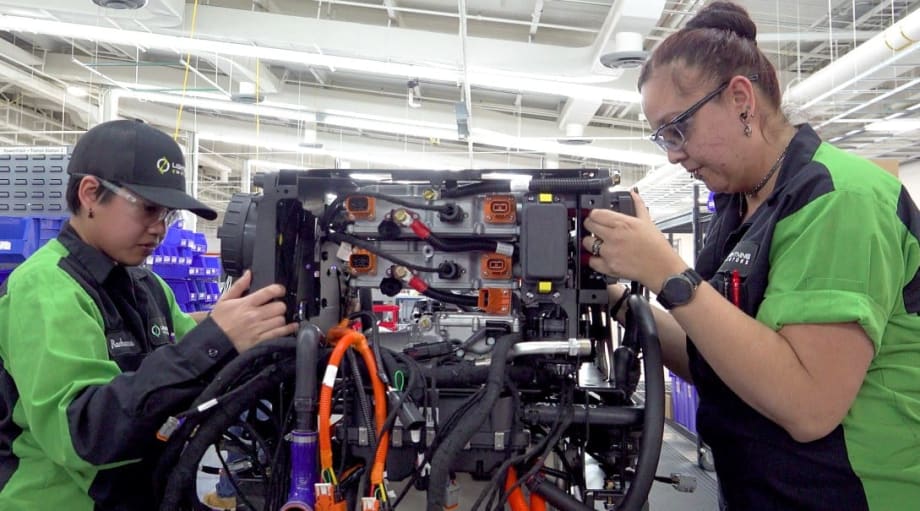
The company also reconfigured workstations throughout the plant to incorporate advanced automation and augmented reality systems across multiple workstations and assembly areas.
Photo: Lightning eMotors
Lightning eMotors announced it has completed the expansion of its manufacturing campus in Loveland, Colorado by 102,000 square feet to a total of over 226,000 square feet.
The company also reconfigured workstations throughout the plant to incorporate advanced automation and augmented reality systems across multiple workstations and assembly areas.
The expansion and investment in new plant equipment is part of the company’s effort to improve efficiency and increase production capacity. The investment of more than $5 million includes the installation of collaborative robots and man‐machine interface stations to enable technicians to increase throughput and consistency throughout the assembly process and improve overall safety and quality.
Lightning eMotors’ retooled and expanded manufacturing operations will increase the production capacity up to 1,500 zero emission complete vehicles and powertrain systems annually by the end of 2022 and keeps the company on track to its previously announced plan to produce up to 20,000 vehicles and powertrain systems by 2025. Lightning eMotors believes it can readily expand and add the additional square footage needed on its 1,000,000 square‐foot campus to potentially allow it to support capacity for up to 20,000 complete vehicles and powertrain systems per year.
“Our experience building vehicles and powertrains has provided us with unique insights about how to build zero‐emission vehicles with industry leading quality and cost control, and we’ve applied what we learned to the investments we’ve made in the expansion and automation,” said Tim Reeser, Lightning eMotors’ CEO. “This expansion at our headquarters here in Loveland not only helps us increase our production capacity – but the additional tooling and automation enables our technicians to do their jobs more safely, more efficiently, and with a focus on quality and consistency.”
The plant expansion includes the addition of collaborative robots (Cobots) to assist technicians with the fabrication and welding process. Lightning eMotors is also using projected augmented reality (AR) software to transform the manual assembly and manufacturing processes. The projected AR platform projects virtual step‐by‐step work instructions directly onto an employee’s work surface, delivering immediate impacts on quality and productivity.
An additional 3,700 square feet on the campus is also being renovated to become Lightning’s new vehicle research and development annex and battery testing center with a commercial vehicle rated dynamometer and advanced battery testing equipment.
“As we expand Lightning eMotors’ production capacity we are incorporating advanced manufacturing processes,” said Brian Barron, Lightning eMotors’ chief manufacturing officer. “We have also built a manufacturing and operations team that includes a number of talented executives who bring a wide range of experience and expertise from some of the world’s best manufacturers including BMW, Nissan, and Tesla.”
Currently more than 50 technicians build and customize medium duty commercial vehicles at the company’s manufacturing campus. That number is expected to more than double by the end of 2022 as the company continues to expand.
“I am very proud of the team for completing this phase of our manufacturing operations expansion, and am excited by the improvements in production efficiency we have been able to achieve and the new jobs we are creating as we continue to grow,” Reeser said. “The jobs we are providing are at the higher end of pay and benefits for manufacturing jobs at this skill level and will benefit our local community.”
More Management

METRO Opens Submissions for 2026 Motorcoach Awards
Nominations are now being accepted for METRO Magazine’s Operator of the Year and Innovative Operator of the Year awards.
Read More →
New York MTA Advances Final Contract for Second Avenue Subway Expansion
Contract Four is the largest in the Second Avenue Subway Phase 2 project and includes construction of station infrastructure, tracks, and signals for the subway expansion, MTA officials said. Work on Contract Four will begin in 2027.
Read More →
Transit Agencies Highlight Safety Gains at National Summit
Leaders from 15 major transit systems shared crime-reduction results and safety initiatives while discussing the role of continued federal support.
Read More →

NITA Names New Leadership, Expands Reduced-Fare Program at First Board Meeting
The new regional transit authority appointed its first board chair and interim executive director while extending reduced fares across CTA, Metra, and Pace for eligible riders.
Read More →
Beyond the Checklist: A Structured Approach to Transit Maintenance
Reliability-Centered Maintenance helps transit agencies move beyond routine checklists to focus limited resources on the assets and failures that have the greatest impact on safety, reliability, and service.
Read More →
APTA 2026 Nominating Committee Selects Leadership Slate, Names Chair and Vice Chair Nominees
Leadership changes will help shape the association’s priorities and its representation of the transportation industry during the 2026–2027 term.
Read More →
DART Launches Major Security, Fare Enforcement Initiative
The 90-day demonstration will deploy coordinated security teams at five light rail stations while testing controlled access and gathering data to guide future investments.
Read More →
Advancing Fare Collection Through Technology and Innovation
Learn about delivering 1300 gates at 91 stations while managing fare evasion. Explore the large scale deployment, solution customization and real-world results that affect the region. Prepare for deployment in your region now.
Read More →
Game Day in Motion: Moving Millions During the 2026 World Cup
Between packed transit stations and team motorcoaches, see how agencies and operators across North America tackled the transportation demands of the 2026 FIFA World Cup.
Read More →
Surface Transportation Extension Averts Shutdown, Leaves Transit Funding Gap
The stopgap keeps federal transportation programs moving, but missing advance funding could complicate the transit and rail projects agencies are planning next.
Read More →