



New York’s MTA Creates Blue-Ribbon Panel to Combat Fare Evasion
Members of the “Fareness” panel will focus on innovative approaches to encourage fare payment through education, equity, and enforcement.

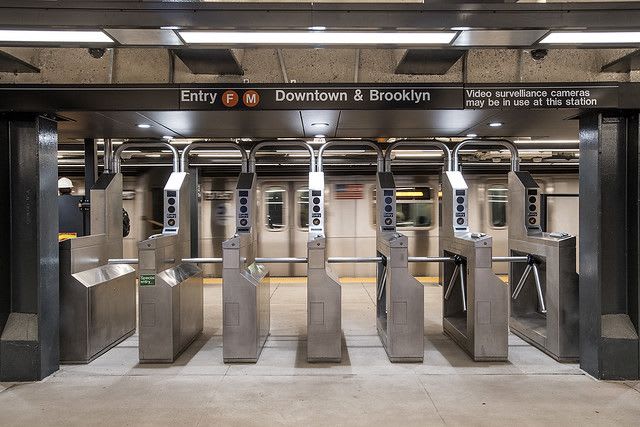
In recent years, fare evasion has nearly tripled on New York's subway from about 3% to more than 12%.
Photo: MTA/Patrick Cashin
New York Metropolitan Transportation Authority (MTA) Chair and CEO Janno Lieber announced the creation of a blue-ribbon panel, which will develop fresh approaches to reducing fare evasion across the entire MTA system of subways, buses, commuter rails, bridges, and tunnels.
Members of the “Fareness” panel will focus on innovative approaches to encourage fare payment through education, equity, and enforcement. The panel will also look at how technological, design, and personnel solutions can help limit fare evasion.
Farebox and toll revenue account for 50% of the MTA’s operating budget. In recent years, fare evasion has nearly tripled on the subway from about 3% to more than 12%. On buses, approximately one out of every three bus riders evade the fare. Fare evasion on bridge and tunnel crossings has also become an issue with an increase in fake and obscured license plates designed to evade tolling cameras.
“Our New York sense of fairness and community is violated when rule-abiding, honest folks — people who tap or swipe because they know it’s the right thing to do, even if it’s a stretch economically — see others dodging the fare,” said Lieber. “What hardworking, fare paying New Yorkers tell us, in a word, is that seeing fare evasion makes them feel like suckers. Fare evasion is a problem we need to solve together. That’s why I am convening a panel of distinguished New Yorkers to take a deep dive into the issue. The goal is to hit the reset button on how we approach fare evasion at the MTA and across government.”
The panel will review approaches that can combat fare evasion with a focus on three key areas: education, equity, and enforcement.
More Management

METRO Opens Submissions for 2026 Motorcoach Awards
Nominations are now being accepted for METRO Magazine’s Operator of the Year and Innovative Operator of the Year awards.
Read More →
New York MTA Advances Final Contract for Second Avenue Subway Expansion
Contract Four is the largest in the Second Avenue Subway Phase 2 project and includes construction of station infrastructure, tracks, and signals for the subway expansion, MTA officials said. Work on Contract Four will begin in 2027.
Read More →
Transit Agencies Highlight Safety Gains at National Summit
Leaders from 15 major transit systems shared crime-reduction results and safety initiatives while discussing the role of continued federal support.
Read More →

NITA Names New Leadership, Expands Reduced-Fare Program at First Board Meeting
The new regional transit authority appointed its first board chair and interim executive director while extending reduced fares across CTA, Metra, and Pace for eligible riders.
Read More →
Beyond the Checklist: A Structured Approach to Transit Maintenance
Reliability-Centered Maintenance helps transit agencies move beyond routine checklists to focus limited resources on the assets and failures that have the greatest impact on safety, reliability, and service.
Read More →
APTA 2026 Nominating Committee Selects Leadership Slate, Names Chair and Vice Chair Nominees
Leadership changes will help shape the association’s priorities and its representation of the transportation industry during the 2026–2027 term.
Read More →
DART Launches Major Security, Fare Enforcement Initiative
The 90-day demonstration will deploy coordinated security teams at five light rail stations while testing controlled access and gathering data to guide future investments.
Read More →
Advancing Fare Collection Through Technology and Innovation
Learn about delivering 1300 gates at 91 stations while managing fare evasion. Explore the large scale deployment, solution customization and real-world results that affect the region. Prepare for deployment in your region now.
Read More →
Game Day in Motion: Moving Millions During the 2026 World Cup
Between packed transit stations and team motorcoaches, see how agencies and operators across North America tackled the transportation demands of the 2026 FIFA World Cup.
Read More →
Surface Transportation Extension Averts Shutdown, Leaves Transit Funding Gap
The stopgap keeps federal transportation programs moving, but missing advance funding could complicate the transit and rail projects agencies are planning next.
Read More →