




Want More? CTA Launches Celebration to Mark 75 Years of Service
CTA Unveils New, Customer-Focused Action Plan
“Meeting the Moment” aims to address these many current challenges in the near-term, while also mapping a plan for long-term stability.
August 12, 2022
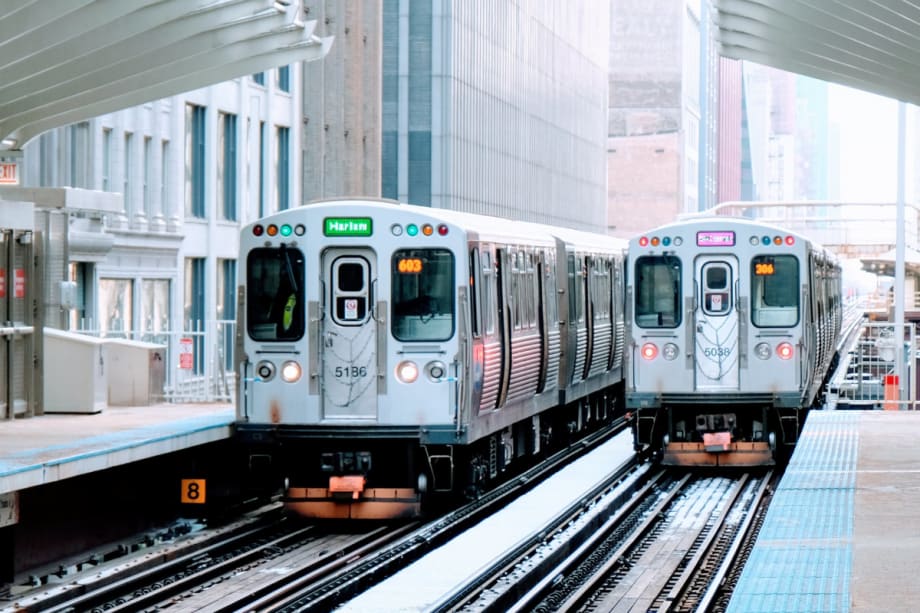
the agency will invest in and launch multiple near-term strategic investments, initiatives, and tools designed to reinforce the CTA rider experience.
Photo: CTA
2 min to read
Chicago Transit Authority (CTA) President Dorval R. Carter Jr. announced a new action plan that will guide the CTA’s ongoing efforts to address the agency’s challenges brought on by the pandemic.
“Meeting the Moment: Transforming CTA’s Post-Pandemic Future” Action Plan is a multifaceted investment plan that focuses on responding to customers’ concerns and strengthening the foundations of the rider experience — reliable service, safe rides, clean facilities, modern amenities, customer engagement tools, and a CTA workforce.
“I am confident this action plan is exactly what CTA needs to address our customers’ immediate concerns while proactively meeting our transit future.” said Carter, who announced the plan during his speech at the City Club of Chicago. “At the core of this action plan are our customers; we are investing in and appreciating our current customers, while taking meaningful steps toward welcoming more customers back.”
The combination of unplanned absences due to illness (COVID infections, caring for family members, quarantining) as well as the “Great Resignation,” has left CTA with not enough manpower to reliably deliver our scheduled service. CTA is also impacted by socio-economic conditions of the region, including recent, prominent instances of crime and behavior occurring on CTA.
“Meeting the Moment” aims to address these many current challenges in the near-term, while also mapping a plan for long-term stability and transit transformation in the future.
The customer-focused action plan is grounded in five key pillars:
Deliver reliable and consistent service.
Enhance safety and security for riders.
Improve the customer experience at CTA facilities.
Upgrade digital tools to improve rider communication.
Invest in employees.
Within each pillar, the agency will invest in and launch multiple near-term strategic investments, initiatives, and tools designed to reinforce the CTA rider experience. CTA will announce new service initiatives, safety strategies, customer tools, facility and vehicle investments, and employee hiring and retention investments from this Action Plan in the coming weeks and months.
More Management

NITA Names New Leadership, Expands Reduced-Fare Program at First Board Meeting
The new regional transit authority appointed its first board chair and interim executive director while extending reduced fares across CTA, Metra, and Pace for eligible riders.
Read More →
Beyond the Checklist: A Structured Approach to Transit Maintenance
Reliability-Centered Maintenance helps transit agencies move beyond routine checklists to focus limited resources on the assets and failures that have the greatest impact on safety, reliability, and service.
Read More →
APTA 2026 Nominating Committee Selects Leadership Slate, Names Chair and Vice Chair Nominees
Leadership changes will help shape the association’s priorities and its representation of the transportation industry during the 2026–2027 term.
Read More →

DART Launches Major Security, Fare Enforcement Initiative
The 90-day demonstration will deploy coordinated security teams at five light rail stations while testing controlled access and gathering data to guide future investments.
Read More →
Sponsored•September 9, 2026
Advancing Fare Collection Through Technology and Innovation
Learn about delivering 1300 gates at 91 stations while managing fare evasion. Explore the large scale deployment, solution customization and real-world results that affect the region. Prepare for deployment in your region now.
Read More →
Game Day in Motion: Moving Millions During the 2026 World Cup
Between packed transit stations and team motorcoaches, see how agencies and operators across North America tackled the transportation demands of the 2026 FIFA World Cup.
Read More →
Surface Transportation Extension Averts Shutdown, Leaves Transit Funding Gap
The stopgap keeps federal transportation programs moving, but missing advance funding could complicate the transit and rail projects agencies are planning next.
Read More →
Bus Tech Talk: Keeping Transit Technicians Ahead of the Technology Curve
LA Metro’s Obed Mejia discusses technician training, evolving maintenance technology, fleet replacement, and strategies for getting the most out of today’s transit fleets.
Read More →
Why Simulating Pedestrian Movement Has Become Essential for Modern Rail Stations
Pedestrian microsimulation is helping rail planners identify bottlenecks, test station designs, and prepare complex transit hubs for growing passenger volumes.
Read More →
People Movement: Holly Arnold Joins Transdev and More
In this edition, we also cover recent appointments and announcements at Pace, CamTran, MCI, and more, showcasing the individuals helping to shape the future of transportation.
Read More →