



6 Agencies Land FTA Railcar Replacement Funds
The selections represent first-time funding from the new Rail Vehicle Replacement Program, which was created to improve safety, service, and the customer experience on subways, commuter rail, and light rail systems.

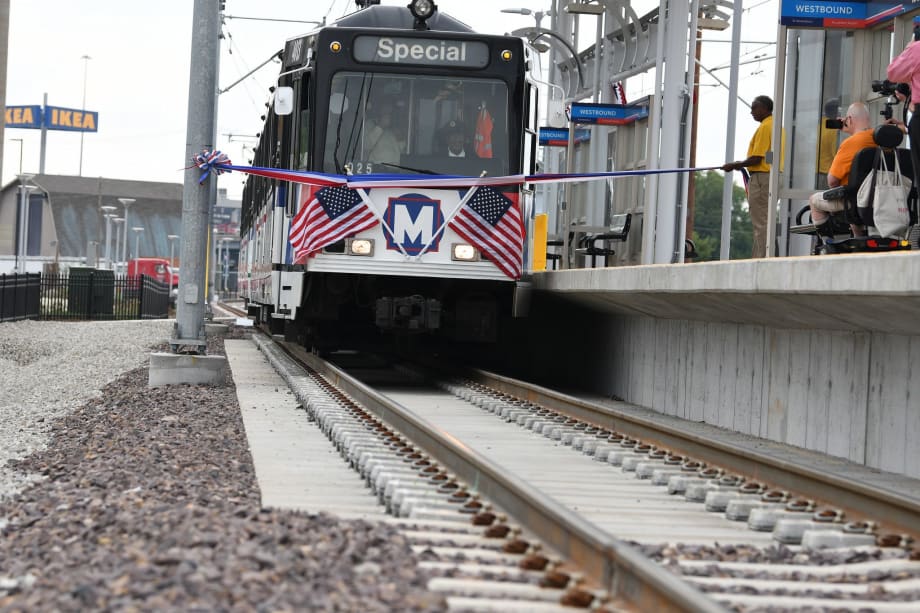
Metro will receive $196.3 million to replace 48 light rail vehicles that have exceeded or are near the end of their useful life.
Photo: St. Louis Metro
The Federal Transit Administration (FTA) announced the selection of six projects in six states to replace aging passenger railcars, improving reliability, safety, and accessibility on the nation’s rail transit systems.
Funded by President Biden’s Bipartisan Infrastructure Law, the approximately $703 million in project selections represents first-time funding from the new Rail Vehicle Replacement Program, which was created to improve safety, service, and the customer experience on subways, commuter rail, and light rail systems.
“Every day, millions of Americans rely on subways, commuter rail, and light rail to get to work or school, buy groceries, and see loved ones, but many railcars still in service are decades old and in need of replacement,” said U.S. Transportation Secretary Pete Buttigieg. “These grants will help bring riders faster, safer, more reliable service on America’s rails.”
Needed Transit Vehicle Replacements
Older railcars contribute to service delays and increased costs and lack newer amenities, such as digital signage and audio tools that improve the riding experience. They may also lack accessibility features — such as direct access into the railcar — for people with disabilities or anyone pushing a stroller.
The Bipartisan Infrastructure Law will invest a total of $1.5 billion in new funding through 2026 for FTA’s Rail Vehicle Replacement Program.
“One-third of our nation’s subway and commuter rail vehicles are more than 25 years old,” said FTA Administrator Nuria Fernandez. “This program focuses on transit agencies that lack the funding they need to address overdue railcar replacements. We are proud to select these projects to improve passenger rail service for riders across the nation.”
FTA’s Rail Vehicle Replacement Awards
The selected Rail Vehicle Replacement projects are:
California’s Sacramento Regional Transit Districtwill receive $45.1 million to buy 16 light rail vehicles, which will replace older vehicles that have exceeded their useful life. The investment will improve the agency’s state of good repair needs and improve service and reliability for the region’s 1.7 million residents.
The South Florida Regional Transportation Authority, which operates the Tri-Rail commuter rail service in Miami and along the 72-mile South Florida Rail Corridor, will receive $71.7 million to replace 24 rail vehicles (32% of its fleet). The funding will support new locomotives and passenger cars to replace older vehicles that have exceeded or are near the end of their useful life. The project will ensure safe, reliable, and efficient transportation for Tri-Rail’s 12,500 daily riders.
The Chicago Transit Authority (CTA) will receive $200 million to buy up to 300 new electric propulsion passenger railcars to replace railcars that have been operating since the 1980s. The project will improve CTA’s state of good repair needs in a fleet where the average age of its railcars is nearly 40 years.
The Bi-State Development Agency of the Missouri-Illinois Metropolitan District, the operator of the Metro public transportation system serving the St. Louis metropolitan region, will receive $196.3 million to replace 48 light rail vehicles that have exceeded or are near the end of their useful life. The project will improve service and reliability as it addresses state of good repair needs.
The Greater Cleveland Regional Transit Authority (GCRTA) will receive $130 million to buy 60 new light rail and heavy rail vehicles to replace older vehicles that can operate on both systems, eliminating the need for GCRTA to run two separate fleets. The project will improve system reliability and safety and enhance the agency’s operational flexibility.
The Utah Transit Authority will receive $60 million to buy 20 light rail vehicles to replace older railcars. The project will improve service, reliability, and safety and significantly improve accessibility for riders by allowing direct access and reducing the use of boarding devices.
Projects were selected for funding based on criteria described in the Notice of Funding Opportunity. In response to the Notice of Funding of Opportunity, FTA received more than $3.5 billion dollars in funding requests.
More Rail

New York MTA Advances Final Contract for Second Avenue Subway Expansion
Contract Four is the largest in the Second Avenue Subway Phase 2 project and includes construction of station infrastructure, tracks, and signals for the subway expansion, MTA officials said. Work on Contract Four will begin in 2027.
Read More →
San Diego MTS Breaks Monthly Trolley Ridership Record
Agency officials said July’s ridership indicates MTS’s continued recovery from the pandemic.
Read More →
Report Examines NJ TRANSIT Reliability, Funding Challenges
The Garden State Initiative analysis examines the roles of Amtrak infrastructure, fleet management, and agency operations while recommending a more performance-based approach to improving reliability.
Read More →
Stadler, CapMetro Sign Long-Term Rail Fleet Support Agreement
Beginning in 2027, Stadler will provide on-site technical expertise, spare parts support, training, and obsolescence management to help extend the reliability and longevity of CapMetro’s GTW fleet.
Read More →
Biz Briefs: Alstom Lands Canadian Contract, LYT to Supply California TSP, and More
In METRO's latest installment, we take a look at recent news from Complete Coach Works, Beep, FlixBus, and more partnerships making headlines across the transportation sector.
Read More →
CATS Gold Line Marks 5 Years of Service, 2.8M Passenger Trips
With a six-mile expansion planned, the Charlotte streetcar is positioned to connect more neighborhoods and major transit hubs across the region.
Read More →
Why Simulating Pedestrian Movement Has Become Essential for Modern Rail Stations
Pedestrian microsimulation is helping rail planners identify bottlenecks, test station designs, and prepare complex transit hubs for growing passenger volumes.
Read More →
Amtrak Begins Major Construction at New York’s Sunnyside Yard
The new maintenance facility will support Amtrak’s Airo trainsets while improving maintenance efficiency and turnaround times in New York.
Read More →
Chicago Leaders Unveil Plans for O’Hare Airport Express Train
The privately developed project would offer a 15-minute trip between downtown and O’Hare’s Terminal 2, with trains operating every 15 minutes on a dedicated track. The service would use battery-electric trains and three existing freight rail rights-of-way.
Read More →
OCTA Maps Out 30-Year Strategy to Protect Coastal Rail Corridor
The draft feasibility report identifies strategies to protect the coastal rail line for decades as the agency continues near-term stabilization and sand placement efforts.
Read More →