



USDOT Advances Transportation Solutions in Underserved Communities
The Bureau received 406 applications requesting more than $127 million in funding. Of those, 70 applications totaling $19 million were submitted from Tribal applicants.

The Bureau used a streamlined application form and reviewed applications on a first-come, first-served basis.
Photo: USDOT
The U.S. Department of Transportation (DOT) announced it is advancing transportation projects in underserved communities across the United States by awarding 13 grants totaling $3.4 million through the new Rural and Tribal Assistance Pilot Program (RTA).
Administered by the Build America Bureau, the RTA grant program supports early-stage development of transportation solutions in rural and Tribal communities with grants funding technical, legal, and financial assistance. The Bureau received 406 applications requesting more than $127 million in funding. Of those, 70 applications totaling $19 million were submitted from Tribal applicants.
"The number of applications received, and the amount of funding requested demonstrates the need for funding communities that have historically been left out of federal investment opportunities,” said Deputy U.S. Transportation Secretary Polly Trottenberg. “This is great progress in our mission to help our rural and Tribal partners realize their visions for safer and more efficient transportation options.”
Selected Awardees
The selected awardees are:
Applicant | Project | Award |
City of Independence (Oregon) | Design and engineering of Chestnut Street Bridge Replacement | $320,000 |
City of Elkhorn (Wisconsin) | Design of Centralia Street Reconstruction and Bicycle Lane Addition | $320,000 |
Roosevelt City (Utah) | Design, permitting, and estimating of 500 W. Roadway | $266,000 |
Contra Costa County (California) | Design and estimating of Vasco Road Corridor Safety Improvements | $320,000 |
Douglas County (Oregon) | Green Unincorporated Area Traffic Analysis and RAISE Grant Preparation | $311,000 |
City of Blair (Nebraska) | Design of Missouri River Barge and Rail Expansion | $263,000 |
Tolowa Dee-ni’ Nation (California) | Design of separated pedestrian pathway and lighting for Connected Communities | $315,000 |
Nulato Village (Alaska) | Design, permitting, and estimates for Nulato Small Port Development | $320,000 |
Bois Forte Reservation Tribal Government (Minnesota) | Feasibility study for secondary evacuation route for Nett Lake | $175,000 |
Fond du Lac Band of Lake Superior Chippewa (Minnesota) | Environmental study for Willard Munger State Trail Connection | $320,000 |
Karuk Tribe (California) | Tribal Transit Feasibility Study and Design for improved transit services | $40,000 |
Match-E-Be-Nash-She-Wish Band of Pottawatomi Indians (Michigan) | Design and permitting for new road and trail (Wi-Zhewébzet Ė-Zhyaygo: We Are Going Into the Future) | $300,324 |
Igiugig Village Council (Alaska) | Design and permitting for Diamond Point integrated breakwater and barge landing | $129,676 |
“The Bureau is excited to work with these new partners to jump-start local projects and better position them to compete for DOT grants and explore innovative funding, financing, and delivery solutions,” said Bureau Executive Director Morteza Farajian. “The response to this funding opportunity was astounding and has highlighted how impactful the Program will be for our rural and Tribal communities. This is just the beginning.”
The Bureau used a streamlined application form and reviewed applications on a first-come, first-served basis.
This approach reduced the burden on applicants new to or inexperienced with the Federal grant process and the numerous forms traditionally required for Federal grants.
As part of the Administration’s commitment to advancing equity and opportunity for all American Indians, Alaska Natives, and Hawaiian Home Lands, the Transportation Secretary set a goal to increase engagement with Tribes on a government-to-government basis that respects the principles of Tribal self-governance.
To ensure equitable opportunity for Tribal governments to access the RTA grants, the Bureau reserved up to $1.6 million for Tribal applicants under this solicitation.
More Management

Bringing Austin’s First Light Rail System to Life
Austin Transit Partnership CEO Greg Canally discusses the city's nearly 10-mile light rail project, its collaborative approach to project delivery, the importance of community engagement, and the milestones ahead as construction approaches in 2027.
Read More →
ETA CEO John Maglio on Transit Technology, Innovation, and Building Agency Trust
ETA founder and CEO John Maglio explores the evolution of transit technology, the importance of reliable systems, and how stronger partnerships can help agencies improve operations and the passenger experience.
Read More →
Metra Draft Plan Outlines Costs, Service Improvements for Regional Rail
The Systemwide Network Plan identifies infrastructure needs and potential investments to expand all-day, bidirectional rail service across the Chicago region.
Read More →
New Orleans RTA Names Augustine III as New CEO
In this edition, we also spotlight recent personnel moves at HDR, PATH, STV, and more, highlighting the people taking on new roles across the transportation industry.
Read More →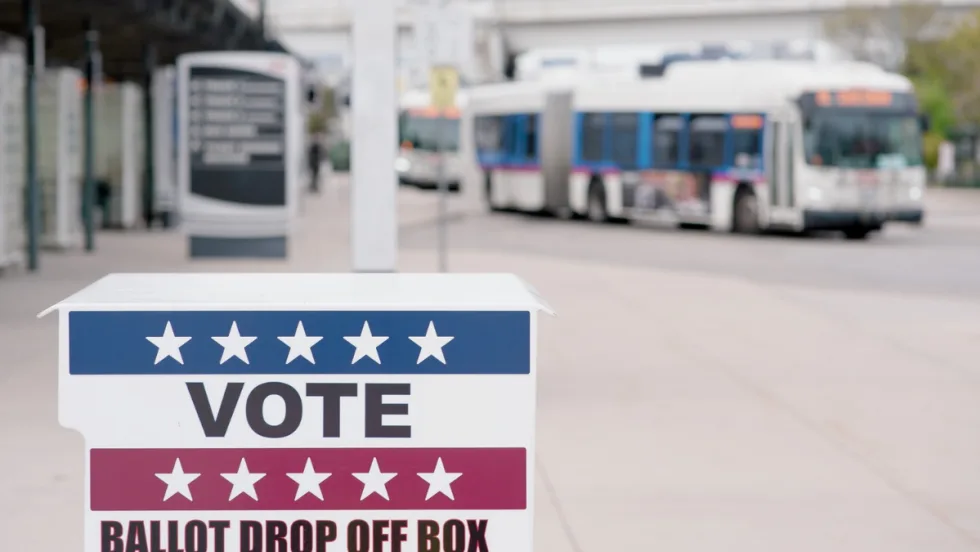
How Transit Agencies Are Using Free Rides to Improve Voting Access
Transit agencies are using fare-free service, trip-planning tools, and targeted rides to improve voting access. See what other agencies can learn from these efforts.
Read More →
Caltrain’s Electrification Drives a New Era of Ridership Growth
The railroad’s shift to electric service has brought more frequent trains, stronger customer satisfaction, and increased ridership, earning it APTA’s Outstanding Public Transportation System award.
Read More →
Chicago, Charlotte Transit Agencies Expand Rider Support Programs
CTA launched crisis intervention teams as CATS prepares to deploy fare ambassadors, expanding customer assistance and security efforts across both systems.
Read More →
New York MTA Launches Historic $1.9B Signal, Track Modernization Project
Funded in part by congestion pricing revenue, the project will replace nearly century-old signals along the A and C lines in Brooklyn and Queens.
Read More →
Brian Dickson on Building Stronger, More Resilient Transportation Organizations
Bus Business Consultants Founder Brian Dickson discusses the leadership principles, operational discipline, and strategic planning that separate transportation companies positioned for long-term success from those stuck in survival mode.
Read More →
LA Metro Breaks Ground on Vermont BRT Project
The 12.4-mile corridor is projected to serve 66,200 daily riders, reduce travel times by up to 24%, and create the nation's busiest bus rapid transit corridor.
Read More →