New York Announces Upcoming OMNY Fare Payment Milestones
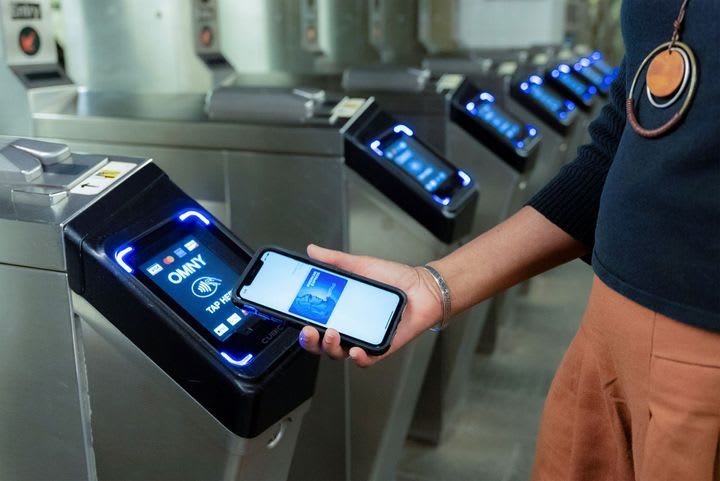
The plan is a major push to expand the reach of OMNY to include all customer groups by the end of 2024, including students, Reduced-Fare, Fair Fares, Access-a-Ride, and pre-tax commuter benefit customers.
New York City Transit customers are choosing contactless fare payment with a customer satisfaction rate of 85%.
Photo: MTA
3 min to read
The New York Metropolitan Transportation Authority (MTA) announced major upcoming milestones in the authority’s transition from MetroCard to OMNY, the contactless fare payment system, with a major push to expand the reach of OMNY to include all customer groups by the end of 2024 including students, Reduced-Fare, Fair Fares, Access-a-Ride, and pre-tax commuter benefit customers, with substantial completion of the rollout across subway, bus, and paratransit services slated for the end of 2025.
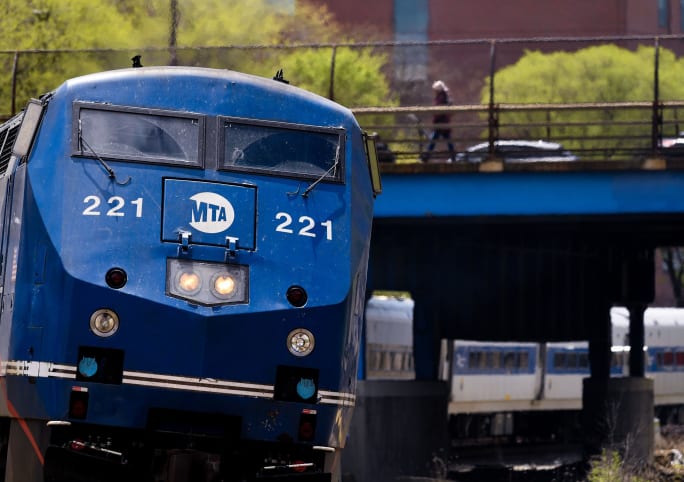
The rollout will also include upgrades and integrations with the award-winning TrainTime application for railroad ticketing and the implementation of modernized ticket machines on the Long Island Rail Road (LIRR) and Metro-North Railroad, which will be substantially completed in early 2026.
Ad Loading...
OMNY Rollouts
All New York City school students will receive student-specific OMNY cards instead of MetroCards at the start of the 2024-25 school year in September.
OMNY pilots have also been launched for select paratransit and pre-tax commuter benefit customers with a wide rollout to both customer bases expected by the end of 2024. All existing Reduced-Fare MetroCard customers, totaling more than 1.5 million customers, will receive an OMNY card mailed to them by the end of 2024.
On LIRR and Metro-North, new modern ticket vending machines will be introduced across the commuter rail system by contractor Scheidt & Bachmann, with TrainTime continuing to service customers for contactless digital payment through contractor Masabi.
“By treating OMNY as the megaproject that it is, we have turned a corner on delivering its benefits to all categories of customers,” said MTA Chair and CEO Janno Lieber. “The new approach is going to give users the sense of interoperability they expect, while limiting MTA’s contractor risk and saving millions of dollars.”
Fare Payment Programs
On May 1, the MTA and New York City Department of Social Services (DSS) announced the official launch of the Fair Fares pilot on OMNY.
Ad Loading...
Fair Fares customers registered for the pilot can now use OMNY cards to pay via tap-and-go on New York City subways and buses. The pilot is scheduled to run for 90 days, which will allow the agency to collect feedback from participants, evaluate the pilot, and finalize a plan for the full transition to OMNY across all Fair Fares customers at a later date.
Additionally on April 29, the authority announced the completion of its OMNY Card Vending Machine rollout pilot program. To date, MTA crews have activated 70 machines at 37 stations with more activations scheduled systemwide as card vending machines are expected to be in all subway stations by mid-2025 — providing additional ways all full fare customers with an OMNY card can reload their cards.
Due to the success of TrainTime, the next-generation mobile app on the commuter railroads, Long Island Rail Road and Metro-North Railroad will continue to build on that platform adding full flexibility for future fare offerings such as joint fare products, pay-as-you-go discounts and easier ticket purchase and validation.
Photo: MTA/Marc A. Hermann
OMNY Growth
New York City Transit customers are choosing contactless fare payment with a customer satisfaction rate of 85%.
More than three quarters (76%) of regular fare customers are now tapping in with OMNY, a 10% increase in overall market share in the past year. Nearly 70% of OMNY customers tap into the system with their smart device with the remaining using debit, credit, or OMNY card.
Due to the success of TrainTime, the next-generation mobile app on the commuter railroads, Long Island Rail Road and Metro-North Railroad will continue to build on that platform adding full flexibility for future fare offerings such as joint fare products, pay-as-you-go discounts and easier ticket purchase and validation.
Ad Loading...
TrainTime has earned the trust of riders with over 50 points of market share growth since October 2017, collecting 70% of all railroad revenue, 91% customer satisfaction rating, and a 4.9 star rating in the Apple Store.
CEO Magnus Friberg discusses Luminator’s shift toward becoming a digital partner, the growing importance of software and interoperability, and how AI can help agencies improve operations and passenger experience.
Reliability-Centered Maintenance helps transit agencies move beyond routine checklists to focus limited resources on the assets and failures that have the greatest impact on safety, reliability, and service.
More than 1,500 buses now feature upgraded technology designed to improve arrival predictions and provide free Wi-Fi, with deployment expected to reach nearly 2,000 buses by the end of 2026.
John Hroncich discusses BAE Systems’ modular and scalable approach, lessons learned from decades of real-world operations, and how agencies can identify electrification strategies that fit their fleets.
In METRO's latest installment, we take a look at recent news from Complete Coach Works, Beep, FlixBus, and more partnerships making headlines across the transportation sector.
What if transit leaders could ask any operational question and get a trusted answer in seconds? Conversational AI is transforming how agencies use their data.
More than $191 million in federal funding will help three transit agencies replace aging rail vehicles and support a new autonomous shuttle service in Chattanooga.
LA Metro’s Obed Mejia discusses technician training, evolving maintenance technology, fleet replacement, and strategies for getting the most out of today’s transit fleets.
In METRO's latest installment, we take a look at recent news from Siemens, Prevost, Dodge, and more partnerships making headlines across the transportation sector.
Pedestrian microsimulation is helping rail planners identify bottlenecks, test station designs, and prepare complex transit hubs for growing passenger volumes.