



Next Generation of Positive Train Control: Unfolding Future Trends
For rail authorities and operators, the PTC journey has delivered multiple insights and challenges, marking a transformative step toward smart railways. However, this journey doesn’t end here — PTC 2.0 is on the horizon.
Despite the financial burden PTC has placed on the industry, some rail operators are already pioneering next-gen PTC projects that incorporate advanced functionalities.
Photo: METRO
Positive Train Control (PTC) has significantly enhanced rail signaling systems, reducing redundancy, and elevating rail transportation safety.
For rail authorities and operators, the PTC journey has delivered multiple insights and challenges, marking a transformative step toward smart railways. However, this journey doesn’t end here — PTC 2.0 is on the horizon.
Despite the financial burden PTC has placed on the industry, some rail operators are already pioneering next-gen PTC projects that incorporate advanced functionalities.
Positive Train Control systems and their core parts are poised to revolutionize the national rail networks, offering new tools for boosting capacity, enhancing customer experience, and minimizing fuel consumption.
Less than four years after the original PTC program’s completion, cutting-edge developments are already shaping the future of rail.
It’s the perfect time to reassess PTC's bottlenecks and unlock its full potential for an efficient, forward-looking rail industry.
What Is PTC 2.0? A Look Ahead
For now, next-gen Positive Train Control represents a “collective vision” for the future of rail transit, incorporating AI analytics, enhanced automation, IoT monitoring, Machine Vision, and other top-notch technologies.
But first of all, the second generation is distinguished by new tasks to be accomplished. While safety was a cornerstone of PTC’s inauguration, technological breakthroughs allowed us to take a broader view of the railway and move forward ambitiously without harming safety.
A closer look at Positive Trail Control today reveals:
Reaching the Limits: The first PTC project was launched about 20 years ago using the available technologies that are now outdated. Compatibility issues are becoming more common as replacement parts become harder to source, presenting challenges for ongoing maintenance.
Traffic Soaring: Increased throughput may be provided by the PTC but is not implied by default. According to the Federal Railroad Administration (FRA), U.S. rail traffic is expected to increase over the next decade, increasing pressure on infrastructure that is already showing signs of age.
Internal and External Threats: Railways, while eco-friendly, still face challenges in meeting long-term sustainability goals. Additionally, rail systems remain vulnerable to both physical and cyberattacks. Over the last five years, cyber incidents on railway systems surged by 220%, underscoring the need for enhanced security.

For now, next-gen Positive Train Control represents a “collective vision” for the future of rail transit, incorporating AI analytics, enhanced automation, IoT monitoring, Machine Vision, and other top-notch technologies.
Photo: Pixabay
Key Innovations Powering the Next-Gen PTC
PTC 2.0 promises to build upon the existing safety framework of PTC while addressing the limitations of the first generation. In shaping the future of rail, the following improvements should be considered.
Enhanced Efficiency
Positive Train Control offers long-term economic benefits, and PTC 2.0 can accelerate these returns. While PTC utilizes resource-intensive operations, next-gen PTC should head to quicker ROI through energy savings, maintenance process optimization, and fewer operational staff needed for routine tasks.
Unlike traditional PTC, which is primarily reactive, PTC 2.0 will serve as a reliable foundation for automating rail operations.
Currently, only a few rail networks in the U.S. operate under the Automated Train Operations (ATO) system at a limited scale of GoA 2 (semi-automated). No rail lines have yet fully leveraged the potential of automated operations, which presents significant opportunities.
By incorporating ATO, PTC 2.0 will enable trains to operate more closely together, reducing headways and improving track capacity. This will allow railroads to handle increased traffic without expanding physical infrastructure.
Sophisticated Cybersecurity Measures
Given that PTC relies heavily on wireless communication between trains, control centers, and trackside infrastructure, cybersecurity is critical to ensure safe and reliable operations. An even greater interconnectedness of rail and related systems is likely in the future, which necessitates incorporating stronger measures into current systems.
Rail cybersecurity is still in its early stages and should borrow best cybersecurity practices from other sectors:
Encryption is Vital. All PTC subsystems are highly interconnected, making encryption across wireless communication channels essential. Key management systems to secure communication between rail assets (e.g., trains and wayside equipment) must be implemented in every PTC application.
Safety-Minded Software Development. Control software should follow secure coding principles to protect against buffer overflows, injection attacks, and code vulnerabilities.
Back-Office Access Security. Advanced PTC-compliant dispatching systems must utilize sophisticated cybersecurity measures like Multi-Factor Authentication (MFA). Advanced methods like full-duplex authentication ensure multi-sided validation of secure access.
Positive Train Control for Environmental Sustainability
Rail already boasts one of the lowest carbon footprints of any transport mode, but PTC 2.0 should take it further to meet the ambitious goal of a net-zero economy by 2050. Next-gen drives sustainability through capacity optimization and failure reduction.
Sustainable PTC 2.0 technology can incorporate fuel optimization algorithms to adjust train speeds and braking curves for every trip to minimize fuel use. Additionally, allowing trains to operate closer together and more efficiently reduces congestion, emissions, and asset underutilization.
Looking ahead, alternative power sources, such as energy harvesting from rails or hydrogen gas, may power future trains. Given plenty of potential cases, they have to be precisely monitored to estimate emissions and calculate benefits.
IoT-enabled solutions like advanced particle counters will help rail track and maintain emissions at acceptable levels. These innovations are precisely what railways need to become an integral part of smart cities.
Real-Time Monitoring and Predictive Maintenance
Positive Train Control 2.0 leaves no blind spots in rail infrastructure visibility.
Vibration, temperature, humidity sensors, field cameras, LiDAR, and Machine Vision systems help unlock the full potential of IoT-based real-time monitoring for track conditions, train health, and level crossing failures. Supported by the FRA program, level-crossing enhancements are expected to be prioritized.
The industry is also exploring detection systems based on Machine Vision and using AI models. This technology combination enables obstacle detection on and near tracks, as well as identifying passenger or freight events.
By integrating Edge Computing and continued AI training, instantaneous feedback is ensured while eliminating false positives.
Currently, only about one-third of U.S. rail operators rely on predictive maintenance — leading to 25% to 30% in maintenance cost waste and up to 50% unplanned downtime for others.
Next-gen PTC aims to rectify this through widespread adoption, enabling rail operators to identify potential PTC infrastructure failures before they occur.
Furthermore, real-time data from the rail network, combined with PTC data such as train schedules and station loadings, facilitates advanced analytics. This empowers rail operators to make smarter strategic decisions, optimize routes, and reduce delays, giving rail transit a competitive edge over other modes.
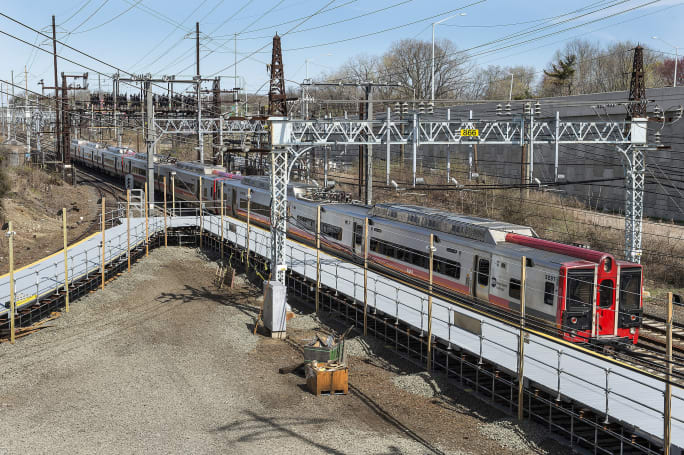
While PTC utilizes resource-intensive operations, next-gen PTC should head to quicker ROI through energy savings, maintenance process optimization, and fewer operational staff needed for routine tasks.
Photo: Patrick Cashin
Cross-Network PTC Interoperability
One of the major challenges of current Positive Train Control systems is interoperability between different railroads, especially where multiple operators share the same tracks.
PTC 2.0 will expand real-time data availability by enhancing data-sharing frameworks. Modernizing legacy infrastructure to be PTC-compatible is essential, along with enhancing communication systems to provide relevant real-time data.
The growing significance of real-time data sharing will help railroads avoid scheduling issues, slowdowns, or even safety concerns.
The Path Forward: Industry Trends and Timelines
Pilot programs and initial deployments of PTC 2.0 technologies are already underway. Early adopters like BNSF, CSX, and Union Pacific are exploring advanced train control systems that integrate AI and predictive analytics.
Over the next five years, these pilot projects are expected to lay the foundation for the broader adoption of next-gen Positive Train Control technologies. Now is the time to innovate and shape the future of rail transportation in the U.S.
The global digital railway market is projected to reach $103.70 billion by 2028, growing at a CAGR of 9.2%, driven by an increasing demand for more dynamic, responsive, and functional railways.
With the first successful implementations and the broader adoption of next-gen PTC, these numbers could double or even triple, marking a new “smart” era in U.S. rail transit.
Julia Seredovich is Business Operations Manager at Professional Software Associates Inc.
More Technology
Almaviva Looks to Open Architecture to Advance Transit Technology
Eric Reese discusses how interoperability, open architecture, and modular design can help transit agencies control costs, reduce vendor lock-in, and upgrade technology without starting over.
Read More →
Driving Smarter Paratransit
John Hanlon shares how AlphaRoute is leveraging AI-powered technology to help paratransit providers optimize operations, support frontline staff, and enhance the rider experience.
Read More →
From Hardware to Digital Partner: Luminator Charts Its Next Chapter
CEO Magnus Friberg discusses Luminator’s shift toward becoming a digital partner, the growing importance of software and interoperability, and how AI can help agencies improve operations and passenger experience.
Read More →

Beyond the Checklist: A Structured Approach to Transit Maintenance
Reliability-Centered Maintenance helps transit agencies move beyond routine checklists to focus limited resources on the assets and failures that have the greatest impact on safety, reliability, and service.
Read More →
NJ TRANSIT Advances Bus Technology Upgrades Across Statewide Fleet
More than 1,500 buses now feature upgraded technology designed to improve arrival predictions and provide free Wi-Fi, with deployment expected to reach nearly 2,000 buses by the end of 2026.
Read More →
Building a Flexible Path to Transit Electrification
John Hroncich discusses BAE Systems’ modular and scalable approach, lessons learned from decades of real-world operations, and how agencies can identify electrification strategies that fit their fleets.
Read More →
Biz Briefs: Alstom Lands Canadian Contract, LYT to Supply California TSP, and More
In METRO's latest installment, we take a look at recent news from Complete Coach Works, Beep, FlixBus, and more partnerships making headlines across the transportation sector.
Read More →
From Legacy Silos to Conversational Intelligence
What if transit leaders could ask any operational question and get a trusted answer in seconds? Conversational AI is transforming how agencies use their data.
Read More →
USDOT Announces Rail Vehicle Replacement Grants, Chattanooga AV Shuttle Funding
More than $191 million in federal funding will help three transit agencies replace aging rail vehicles and support a new autonomous shuttle service in Chattanooga.
Read More →
Bus Tech Talk: Keeping Transit Technicians Ahead of the Technology Curve
LA Metro’s Obed Mejia discusses technician training, evolving maintenance technology, fleet replacement, and strategies for getting the most out of today’s transit fleets.
Read More →