



Grant to Help UCLA Boost Electric Bus, Charging Program
The grant will be used to expand UCLA’s current fleet of five all-electric buses and an all-electric passenger van by adding another eight all-electric buses, as well as inductive charging solutions.

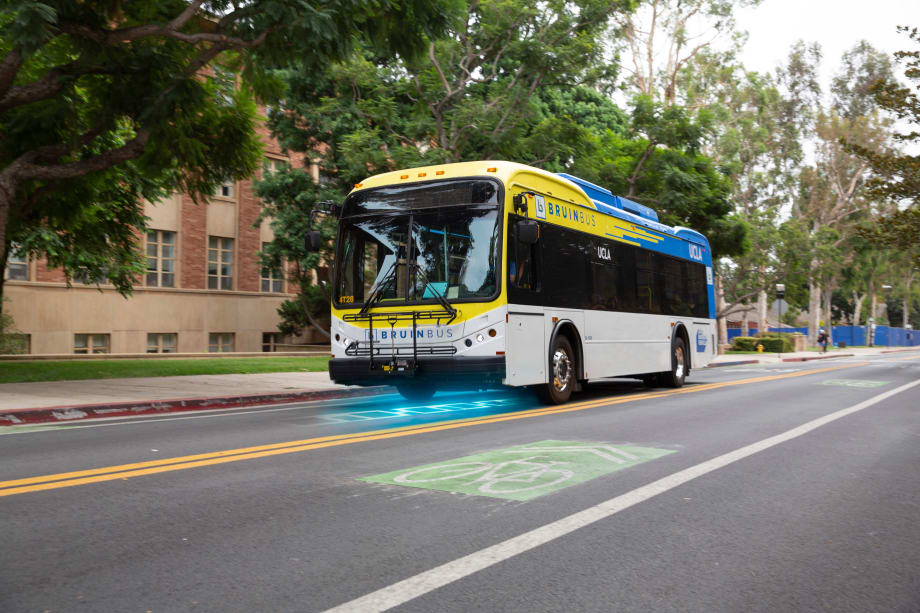
BruinBus routes link major student residential neighborhoods, the Westwood Village commercial district, Ronald Reagan UCLA Medical Center, academic buildings, and many other university facilities.
Photo: UCLA
A $19.85 million grant received in collaboration with CALSTART — a nonprofit dedicated to accelerating clean transportation — and wireless charging provider Electreon will enable UCLA’s BruinBus fleet to transition to 100% electric, expand service, and fund California’s first in-road electric charging system, all in time for the 2028 Olympic and Paralympic Games.
“This transformative grant will significantly enhance our transportation network, providing a cleaner, more efficient BruinBus fleet that aligns with our commitment to sustainability and innovation,” said Tony Lucas, executive director of UCLA Events and Transportation, noting that reducing greenhouse gas emissions and increasing transportation access are key priorities.
BruinBus Charging into the Future
BruinBus routes link major student residential neighborhoods, the Westwood Village commercial district, Ronald Reagan UCLA Medical Center, academic buildings, and many other university facilities. BruinBus routes also connect passengers to seven other transit agencies.
The grant will be used to expand UCLA’s current fleet of five all-electric buses and an all-electric passenger van by adding another eight all-electric buses.
In addition, funds will be used to build a new transit hub between the UCLA bus depot and the planned UCLA/Westwood station. This hub, set to open in 2028, will connect directly to L.A. Metro’s D Line light rail extension.
The extension will bring riders within two-thirds of a mile from the UCLA campus and be the first-ever direct rail connection from downtown Los Angeles to Beverly Hills, Century City, and Westwood.
“The new transit hub and extension will be a game-changer for connectivity in Westwood,” said Clinton Bench, director of UCLA Fleet and Transit. “It will make it easier for everyone to travel between UCLA and key destinations throughout Los Angeles, especially as the city prepares to host the Olympics, thereby fostering a more integrated and accessible urban landscape."
UCLA Adding Inductive Charging
The grant will also support California’s first electric road system.
Inductive charging coils will be installed below the road along transit routes, allowing for the wireless charging of electric passenger shuttles and heavy-duty buses while the vehicle drives.
Additionally, static wireless charging will be deployed at passenger pick-up and drop-off locations and transit depots, including the new UCLA transit hub, to charge while vehicles are stopped.
The mixed-use approach to wireless charging will allow UCLA to reap the environmental benefits of an expanded electrified fleet while minimizing vehicle downtime for charging and minimizing the size and weight of the vehicle’s battery.
“By integrating advanced charging technology into the UCLA transit system, we are setting a precedent for the entire state,” said Jared Schnader, CALSTART sr. director and bus initiative lead. “If adopted widely, this innovation could revolutionize transit electrification, enhancing efficiency and sustainability across California’s transportation infrastructure."
More Zero Emissions

Building a Flexible Path to Transit Electrification with BAE's John Hroncich
John Hroncich discusses BAE Systems’ modular and scalable approach, lessons learned from decades of real-world operations, and how agencies can identify electrification strategies that fit their fleets.
Read More →
LA Metro Board Awards 220 Battery-Electric Bus Contract to ENC
The contract, which is the largest base award of battery-electric buses by a U.S. transit agency, will be built in Southern California, sustaining good jobs as LA prepares to welcome the world in 2028
Read More →
Public Transit Conference Returning to GFX in 2027, Call for Papers Now Open
The Call for Papers is now open, allowing transit agency professionals and industry experts to help shape the PTC educational program by submitting session ideas for consideration.
Read More →
Report: Transit Bus Manufacturing Supports 34,100 Jobs, $5.1B in GDP
The “Buses Mean Business” report examines the transit bus manufacturing industry’s economic footprint, supply chain, and rising demand for vehicle replacements.
Read More →
Ohio’s METRO RTA Turns Electric Buses into Mobile Power Sources at PorchROKR
See how three Gillig battery-electric buses powered festival stages while the agency’s new Park & Ride service carried approximately 1,000 attendees, demonstrating another potential use for transit agencies’ electric fleets.
Read More →
CALSTART and Forth Combine to Form Catalyst Mobility
The new name represents a renewed vision for the nonprofit focused on advancing clean, equitable, and affordable transportation solutions that move people and goods.
Read More →
Building a Flexible Path to Transit Electrification
John Hroncich discusses BAE Systems’ modular and scalable approach, lessons learned from decades of real-world operations, and how agencies can identify electrification strategies that fit their fleets.
Read More →
California's VVTA Begins Phased Rollout of Hydrogen Fuel Cell Buses
The agency is introducing 13 zero-emission buses into revenue service while evaluating performance across its urban, rural, and long-distance routes.
Read More →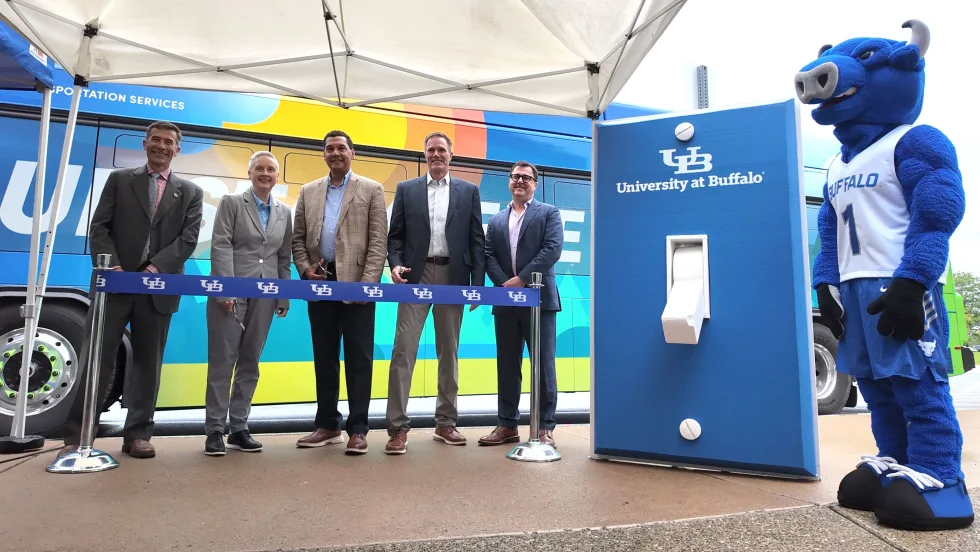
Inside Look: University at Buffalo Puts First 8 Electric Buses Into Stampede Service
UB, transportation solutions provider WeDriveU, and fleet electrification specialist Zenobē marked the deployment in the presence of students, university administrators, and local officials.
Read More →
Biz Briefs: OCTA Taps Clean Energy for Hydrogen Station, Stadler to Supply Via Rail Vehicles, and More
From manufacturers and suppliers to transit agencies and motorcoach operators, these updates offer a snapshot of the projects, partnerships and business moves driving the industry forward.
Read More →