



Ohio's SARTA Passes Balanced Budget
The spending plan, drafted after the auditing firm Jefferson Wells conducted a meticulous, line-by-line review of the agency’s finances, closes a $5 million gap in the original draft of the system’s budget for 2025 caused by declining sales tax revenue and less than anticipated federal assistance.

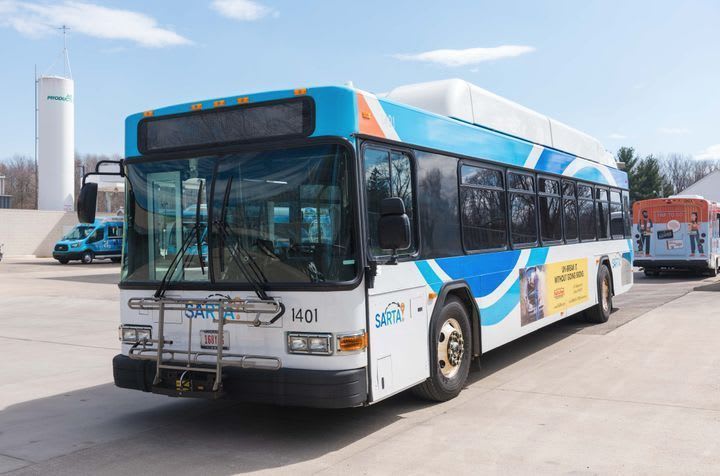
In addition to presenting the board with a budget for this year, SARTA CEO Kirt Conrad and his finance team also prepared proposed spending plans for 2026 and 2027.
Photo: SARTA
Canton, Ohio’s Stark Area Regional Transit Authority (SARTA) adopted balanced operating and capital budgets totaling $39,057,095 for 2025, which is projected to produce a $84,703 surplus at year’s end.
The spending plan, drafted after the auditing firm Jefferson Wells conducted a meticulous, line-by-line review of the agency’s finances, closes a $5 million gap in the original draft of the system’s budget for 2025 caused by declining sales tax revenue and less than anticipated federal assistance.
“The balanced budgets we passed tonight accurately align our revenue and expenses, protect our $6 million reserve fund, and place on solid financial ground, and will enable us to continue providing the safe, affordable, reliable, and convenient public transit service the residents of Stark County need, expect, and deserve,” said SARTA CEO Kirt Conrad.
SARTA’s Balanced Budget
The plan also demonstrates the necessity of the cost-cutting measures Conrad and the board of directors implemented when problems with the budget were detected late last year.
“President Ron Macala and other members of the Board, our staff, and I devoted countless hours to developing a plan that would enable us to meet the fiscal challenges we faced,” Conrad said. “The decisive steps we took at that time, including suspending some fixed routes, reducing staff via layoffs and attrition, and modifying ProLine, our Americans with Disabilities Act-compliant paratransit service paved the way to financial stability today and put us on the road to enhancing public transportation in this community in the years ahead.”
Conrad noted the changes made to ProLine and launch of ProLine Plus implemented in early February are already paying dividends.
“In two weeks, we’ve reduced overtime by 850 hours and saved $70,000 in payroll expenses,” he said. “Those figures underscore the fact that operating Proline as a countywide, on demand, point-to-point, unlimited service as we did for the past 25 years was simply not sustainable. The modifications we’ve made are fiscally prudent and will enable us to fulfill our obligation to people with disabilities and their families who depend on us for safe, affordable public transportation.”
Presenting a Prepared Spending Plan
In addition to presenting the board with a budget for this year, Conrad and his finance team also prepared proposed spending plans for 2026 and 2027.
“We want to have a clear view of what lies ahead, although that view could be clouded by events in Washington, D.C., Columbus, and here in Stark County” he said. “Right now, no one knows how budget negotiations between the Trump Administration and Congress will impact federal support for transit, the same can be said for the transportation budget that’s being hammered out by the General Assembly, and at this point we don’t know if sales tax revenue will rebound here.
“We’re monitoring all three of those factors closely and we will be prepared to make adjustments that will enable us to operate in the most fiscally responsible manner possible while transporting our passengers to the thousands of destinations in and beyond Stark County they travel to each day,” Conrad concluded.
More Management

ENC Lands MATA Contract and More in Biz Briefs
In this edition of Biz Briefs, we spotlight the latest developments shaping the future of mobility.
Read More →
From Surviving to Thriving: Building Stronger Transportation Organizations
Bus Business Consultants founder Brian Dickson shares lessons on leadership, organizational health, and creating options for long-term success in a changing transportation industry.
Read More →
Everett Transit, Community Transit Outline Consolidation Agreement
The proposed agreement calls for a 50% increase in bus service in Everett, a new microtransit zone, continued paratransit service, and the transfer of Everett Transit operations to Community Transit.
Read More →

Strada360’s Steve Lassey on Turning Transit Data Into Better Decisions
From breaking down data silos to preparing for AI, Strada360 CEO Steve Lassey discusses how transit agencies can use technology to improve operations, customer information, and long-term decision-making.
Read More →
People Movement: Phil Washington Joins HNTB, Denver RTD Launches CEO Search, and More
In this edition, we also spotlight recent personnel moves at STV, the Eno Center for Transportation, and more, highlighting the people taking on new roles across the transportation industry.
Read More →
SEPTA Details Accelerate Vision for Transit System
The plan outlines investments in trolley modernization, new Metro and Regional Rail vehicles, accessible stations, and more frequent bus and rail service.
Read More →
FTA Ends Direct Oversight of MBTA Safety Actions
The federal agency closed its remaining special directive to the Massachusetts Department of Public Utilities following a safety review that began in 2022.
Read More →
Report: Transit Bus Manufacturing Supports 34,100 Jobs, $5.1B in GDP
The “Buses Mean Business” report examines the transit bus manufacturing industry’s economic footprint, supply chain, and rising demand for vehicle replacements.
Read More →
LIT Marks 10-Year Milestone at Annual Summit
Hosted by the COTA from September 10 to 13, the Summit carried the theme “Celebrating 10 Years of Excellence, Leadership, and Impact,” with every part of the program honoring the people, agencies, and partners who built LIT over its first decade.
Read More →
People Movement: Dan Dipert Coaches Adds Third-Generation Leader, Keolis Names New Valley Metro VP/GM, and More
In this edition, we also cover recent appointments and announcements at the Wabtec, SilverRide, HNTB, and more, showcasing the individuals helping to shape the future of transportation.
Read More →