



Tech Showcase: How Sportworks’ Velolink Empowers Transit Agencies to Drive Bike-on-Bus Adoption
Velolink delivers deep insights into usage patterns, enabling agencies to optimize operations, enhance rider experience, and increase multimodal adoption.

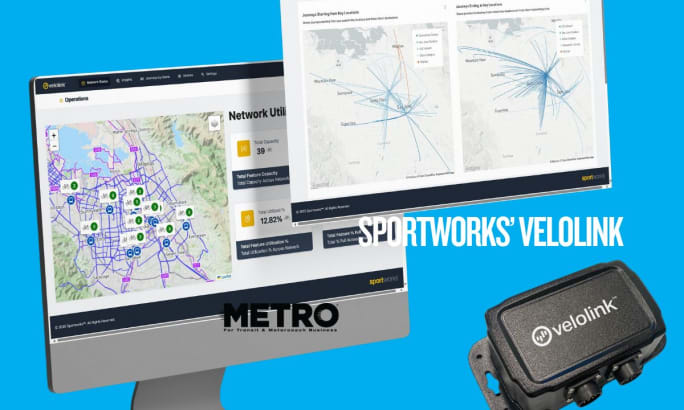
Velolink bridges the data gap with an integrated hardware and software solution purpose-built for transit bike racks.
Photo: METRO
- Velolink provides comprehensive data on bike usage patterns to assist transit agencies in optimizing their services.
- The tool helps agencies enhance the rider experience by offering insights for better operational decisions.
- Velolink supports increased multimodal transportation use by encouraging bike-on-bus travel.
*Summarized by AI
As cities work to reduce single-occupancy vehicle trips and promote active transportation, seamless integration between cycling and public transit becomes essential. However, many agencies face a significant barrier: the lack of precise, actionable data on how and when bike racks on buses are used.
Sportworks Velolink — the transit industry's first digitally-enabled bike rack system — fills this gap.
Velolink delivers deep insights into usage patterns, enabling agencies to optimize operations, enhance rider experience, and increase multimodal adoption.
The Multimodal Imperative
Bicycles are key in closing first- and last-mile gaps, expanding transit access, and advancing sustainability and equity goals. However, many transit operators struggle to manage and grow bike-on-bus services without adequate data.
Without clear visibility into how racks are used, agencies risk under- or over-investing in capacity, resulting in poor allocation where racks are most needed. This can lead to a diminished rider experience, with cyclists encountering full racks and denied boarding.
Inefficient planning and scheduling also become an issue when resources are misaligned with actual demand, and missed funding opportunities arise from the inability to support grant applications with solid usage data.
Despite the widespread installation of bike racks on transit vehicles — 77% of buses and 50% of light-rail vehicles in the U.S. as of 2024 — many agencies still rely heavily on anecdotal feedback rather than formal data collection methods.
National studies and surveys, including those by the Transportation Research Board (TRB) and APTA, confirm that most agencies collect little detailed information on bike usage, making it challenging to optimize programs.
One illustrative example comes from the Central Ohio Transit Authority (COTA), which faced challenges in understanding the scale and patterns of bike usage on its system.
To address this, COTA implemented a manual process where operators logged bike rack usage into the Mobile Data Terminal (MDT) during each trip. While helpful, this approach underscored the limitations of manual data collection, including accuracy, consistency, and the burden placed on operators.
Introducing Sportworks Velolink
Velolink bridges the data gap with an integrated hardware and software solution purpose-built for transit bike racks.
With built-in GPS and wireless connectivity, the system tracks where and when each bike rack position is used. Integration with GTFS-RT feeds enables real-time, system-wide visibility, seamlessly connecting bike rack data with overall transit operations.
Cloud-based dashboards and reporting tools further empower planners and operations staff with easy-to-use analytics that drive better decision-making.
National studies and surveys, including those by the TRB and APTA, confirm that most agencies collect little detailed information on bike usage, making it challenging to optimize programs.
Photo: Sportworks
Transforming Data into Actionable Insights
Velolink turns raw bike rack usage data into meaningful insights that agencies can immediately leverage. Agencies can optimize service planning by adjusting bike rack allocation and fleet assignments based on actual demand.
By analyzing usage trends, agencies can enhance rider experience by proactively reducing trip denials and ensuring racks are available when and where needed. Data-driven reporting supports funding and policy initiatives by providing concrete evidence of demand and service value.
Additionally, Velolink streamlines maintenance and operations by issuing alerts for rack malfunctions or anomalies, helping to minimize downtime.
Case Example: Planning with Confidence
Consider a scenario where route-level data reveals specific lines and time windows consistently experience higher bike rack demand.
With Velolink, planners can deploy buses with additional racks on high-demand routes. They can also adjust schedules or add trips during peak cycling seasons to meet surges in demand.
Furthermore, the data supports coordination with city agencies to improve bike access to key transit hubs. This data-driven approach ensures that investments are targeted and services are aligned with rider needs.
Another critical scenario involves service restructuring — whether due to budget adjustments, ridership shifts, or network redesigns.
During these evaluations, agencies often face tough decisions about which routes to consolidate, reduce, or expand. Without concrete data on bike usage, planners may inadvertently eliminate routes that play a key role in multimodal connectivity.
Velolink data provides clarity, revealing which routes are essential corridors for cyclists and which lines could be shortened, prioritized for retention, or enhanced. This enables agencies to make more informed and equitable decisions that balance efficiency with the needs of multimodal riders.
Driving Multimodal Growth
Velolink goes beyond simple monitoring. It helps agencies become proactive partners in multimodal transportation by providing essential visibility and supporting more thoughtful planning. By encouraging ridership through improved reliability, agencies can build confidence among cyclists.
Velolink supports equity goals by using data to ensure that underserved communities have better access to bike-on-bus options.
Finally, by reducing vehicle miles traveled and promoting cycling, agencies can contribute meaningfully to climate and sustainability objectives.

Bicycles are key in closing first- and last-mile gaps, expanding transit access, and advancing sustainability and equity goals.
Photo: METRO
Demonstrating ROI
For many transit agencies, dedicating funding and applying for grants to support bike-on-bus programs comes with a critical challenge: demonstrating a clear return on investment (ROI).
Without accurate and consistent data, agencies often rely on assumptions and general ridership trends to justify these projects. This can weaken funding applications and make it difficult to prioritize projects internally.
Velolink provides transit authorities with the quantitative data needed to build stronger, data-driven cases for investment. By showcasing clear patterns of bike usage, peak demand times, and multimodal connectivity value, agencies can confidently justify funding requests, make the case for continued or expanded programs, and ensure public resources are directed where they deliver the most impact.
Ready to Make Bike-on-Bus Work Smarter?
Transit agencies need solutions that provide actionable intelligence as multimodal transportation becomes increasingly important.
Sportworks’ Velolink makes bike rack usage visible, measurable, and manageable, so planners and operators are equipped with the insights they need to optimize service, improve rider experience, and advance adoption of bikes on buses as part of a seamless and essential mobility network.
Quick Answers
Velolink is a technology solution developed by Sportworks that provides transit agencies with deep insights into bike-on-bus usage patterns.
*Summarized by AI
More Technology

From Hardware to Digital Partner: Luminator Charts Its Next Chapter
CEO Magnus Friberg discusses Luminator’s shift toward becoming a digital partner, the growing importance of software and interoperability, and how AI can help agencies improve operations and passenger experience.
Read More →
Beyond the Checklist: A Structured Approach to Transit Maintenance
Reliability-Centered Maintenance helps transit agencies move beyond routine checklists to focus limited resources on the assets and failures that have the greatest impact on safety, reliability, and service.
Read More →
NJ TRANSIT Advances Bus Technology Upgrades Across Statewide Fleet
More than 1,500 buses now feature upgraded technology designed to improve arrival predictions and provide free Wi-Fi, with deployment expected to reach nearly 2,000 buses by the end of 2026.
Read More →

Building a Flexible Path to Transit Electrification
John Hroncich discusses BAE Systems’ modular and scalable approach, lessons learned from decades of real-world operations, and how agencies can identify electrification strategies that fit their fleets.
Read More →
Biz Briefs: Alstom Lands Canadian Contract, LYT to Supply California TSP, and More
In METRO's latest installment, we take a look at recent news from Complete Coach Works, Beep, FlixBus, and more partnerships making headlines across the transportation sector.
Read More →
From Legacy Silos to Conversational Intelligence
What if transit leaders could ask any operational question and get a trusted answer in seconds? Conversational AI is transforming how agencies use their data.
Read More →
USDOT Announces Rail Vehicle Replacement Grants, Chattanooga AV Shuttle Funding
More than $191 million in federal funding will help three transit agencies replace aging rail vehicles and support a new autonomous shuttle service in Chattanooga.
Read More →
Bus Tech Talk: Keeping Transit Technicians Ahead of the Technology Curve
LA Metro’s Obed Mejia discusses technician training, evolving maintenance technology, fleet replacement, and strategies for getting the most out of today’s transit fleets.
Read More →
Biz Briefs: RIPTA Unveils New Frontrunners, Clevland RTA Adds New Siemens, and More
In METRO's latest installment, we take a look at recent news from Siemens, Prevost, Dodge, and more partnerships making headlines across the transportation sector.
Read More →
Why Simulating Pedestrian Movement Has Become Essential for Modern Rail Stations
Pedestrian microsimulation is helping rail planners identify bottlenecks, test station designs, and prepare complex transit hubs for growing passenger volumes.
Read More →