




Miss This? App to Help Jacksonville Blind and Low-Vision Transit Users Navigate System
Florida's JTA Sees On-Time Performance Improvement With Optibus-Snapper Integration
Predictive runtimes help Jacksonville Transportation Authority reach up to 98% OTP, improving reliability and reducing delays on key city routes.
June 11, 2025
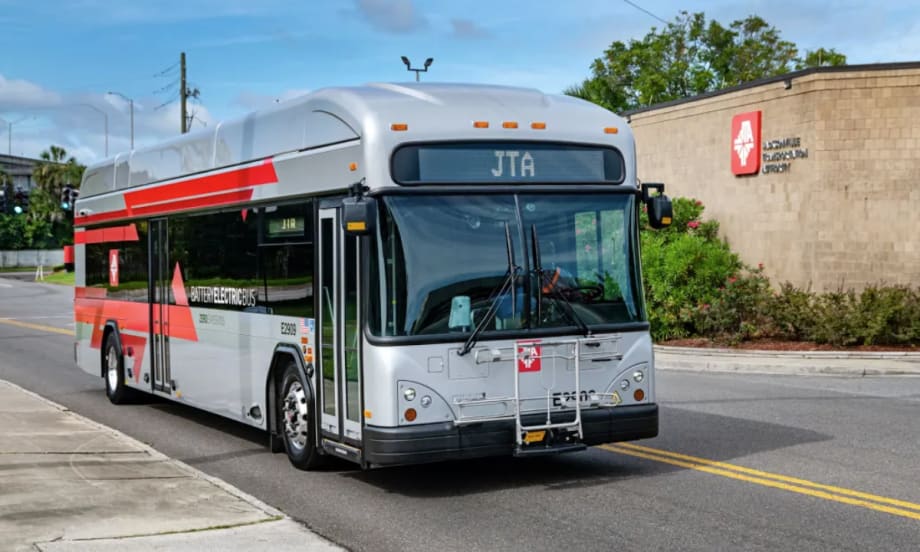
Jacksonville Transportation Authority used Optibus Predictive Runtimes, which uses real-time data to generate optimized runtimes that better reflect current operating conditions.
Photo: Optibus
2 min to read
Optibus recently released the results of how Florida’s Jacksonville Transportation Authority (JTA) is setting a new standard for on-time performance (OTP).
The JTA, which provides public transportation services across Jacksonville, offers core services like Route 30 Cecil/103rd Street — a key east-west corridor that serves major community destinations, including three local schools, a Walmart, and an Amazon fulfillment center.
In the Fall of 2024, JTA’s service department began searching for ways to improve OTP and enhance schedule reliability throughout the day. A particular concern centered on recurring delays near a local high school during peak student traffic hours.
“After implementing Predictive Runtimes, we improved OTP by more than ten percentage points, giving our riders more reliable service and making daily operations smoother for our team,” said Tavis Bader, a planner at JTA.
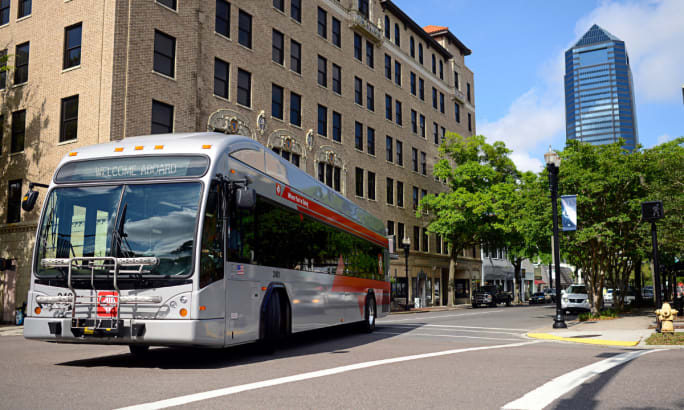
Drivers also appreciate the recognition that comes with operating high-OTP routes, boosting morale and motivation.
Photo: Optibus
Enhancing Schedule Accuracy with Predictive Runtimes
JTA used Optibus Predictive Runtimes, which uses real-time data to generate optimized runtimes that better reflect current operating conditions. The engine is powered by data from Snapper Services, whose Mosaiq Transit Intelligence Suite processed the agency’s real-time vehicle positioning data and made it available via API.
Using data collected in Fall 2024, Optibus’ software analyzed traffic patterns. It proposed refined timetable suggestions, which JTA cross-validated against CAD/AVL data in Power BI dashboards to reveal that the predictive runtimes closely matched actual performance metrics.
Immediate results included:
OTP improved by ten percentage points, from 83.4% to 94%.
Schedule reliability increased.
Drivers reported that trips were running “right on the nose.”
According to the assistant SDM, the route reached up to 98% OTP some days.
The agency noted cost savings from reduced timetable delays. The new schedules accounted more accurately for peak school traffic, especially westbound on 103rd Street, improving punctuality without overcompensating with excess layover time.
More Management

METRO Opens Submissions for 2026 Motorcoach Awards
Nominations are now being accepted for METRO Magazine’s Operator of the Year and Innovative Operator of the Year awards.
Read More →
New York MTA Advances Final Contract for Second Avenue Subway Expansion
Contract Four is the largest in the Second Avenue Subway Phase 2 project and includes construction of station infrastructure, tracks, and signals for the subway expansion, MTA officials said. Work on Contract Four will begin in 2027.
Read More →
Transit Agencies Highlight Safety Gains at National Summit
Leaders from 15 major transit systems shared crime-reduction results and safety initiatives while discussing the role of continued federal support.
Read More →

NITA Names New Leadership, Expands Reduced-Fare Program at First Board Meeting
The new regional transit authority appointed its first board chair and interim executive director while extending reduced fares across CTA, Metra, and Pace for eligible riders.
Read More →
Beyond the Checklist: A Structured Approach to Transit Maintenance
Reliability-Centered Maintenance helps transit agencies move beyond routine checklists to focus limited resources on the assets and failures that have the greatest impact on safety, reliability, and service.
Read More →
APTA 2026 Nominating Committee Selects Leadership Slate, Names Chair and Vice Chair Nominees
Leadership changes will help shape the association’s priorities and its representation of the transportation industry during the 2026–2027 term.
Read More →
DART Launches Major Security, Fare Enforcement Initiative
The 90-day demonstration will deploy coordinated security teams at five light rail stations while testing controlled access and gathering data to guide future investments.
Read More →
Sponsored•September 9, 2026
Advancing Fare Collection Through Technology and Innovation
Learn about delivering 1300 gates at 91 stations while managing fare evasion. Explore the large scale deployment, solution customization and real-world results that affect the region. Prepare for deployment in your region now.
Read More →
Game Day in Motion: Moving Millions During the 2026 World Cup
Between packed transit stations and team motorcoaches, see how agencies and operators across North America tackled the transportation demands of the 2026 FIFA World Cup.
Read More →
Surface Transportation Extension Averts Shutdown, Leaves Transit Funding Gap
The stopgap keeps federal transportation programs moving, but missing advance funding could complicate the transit and rail projects agencies are planning next.
Read More →