



San Diego MTS Ridership Continues Growth
The transit agency recorded 81,181,071 boardings during Fiscal Year 2025 (July 2024–June 2025), a 7.1% increase from the 75,663,343 trips taken in Fiscal Year 2024.

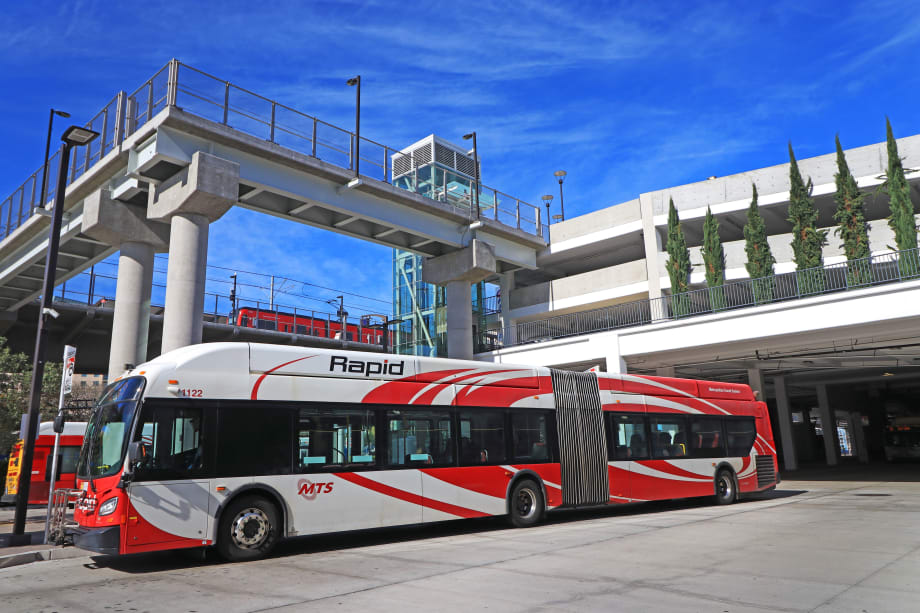
The annual ridership growth marks a significant post-pandemic milestone for MTS, with annual boardings now at 95.1% of the pre-pandemic peak in fiscal year 2019 (85,357,495 trips).
Photo: MTS
The San Diego Metropolitan Transit System (MTS) announced annual ridership surpassed 80 million passenger trips for the first time since the pandemic.
The transit agency recorded 81,181,071 boardings during Fiscal Year 2025 (July 2024–June 2025), a 7.1% increase from the 75,663,343 trips taken in Fiscal Year 2024.
“Surpassing 80 million trips shows that more San Diegans are choosing transit than ever before,” said Stephen Whitburn, MTS board chair. “It’s a testament to the investments we’ve made in reliability, safety, and service quality — and to the dedicated MTS team that works every day to keep our region moving.”
MTS Ridership Bouncing Back
During the pandemic, MTS experienced a steep decline in ridership as hundreds of thousands of San Diegans stayed home.
Since that time, ridership has continued to rebound year after year. This is due in part to the agency’s efforts to attract more riders by expanding its services, increasing Trolley service frequency, and bolstering security. These efforts have resulted in intense customer satisfaction and high community value ratings from riders.
The annual ridership growth marks a significant post-pandemic milestone for MTS, with annual boardings now at 95.1% of the pre-pandemic peak in fiscal year 2019 (85,357,495 trips).
“We’ve recovered more than 95% of our pre-pandemic ridership, which speaks volumes about the trust our riders place in MTS and the value of public transit in San Diego,” said Sharon Cooney, MTS CEO. “This milestone shows just how far we’ve come since the pandemic’s lowest point, and we’ll continue building on that momentum to reach even more riders in the years ahead.”
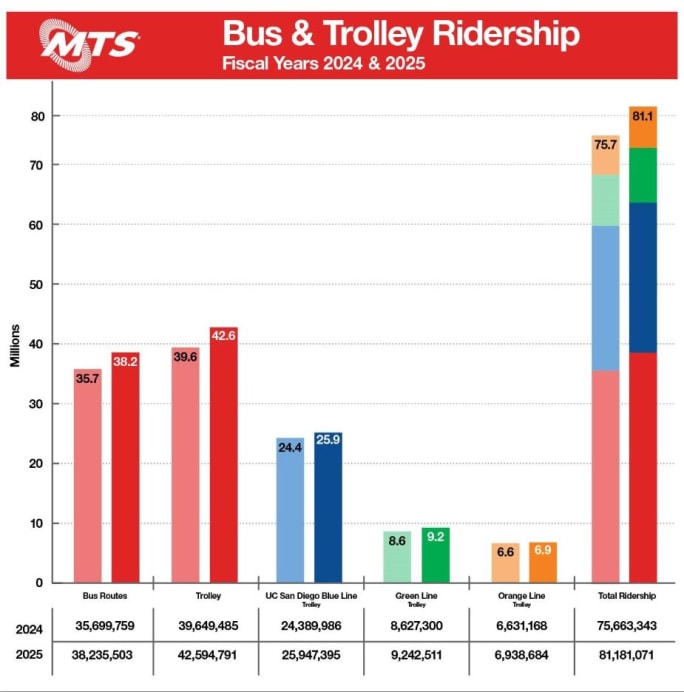
MTS ridership totals for Fiscal Years 2024 and 2025, broken down by bus service and Trolley service. Copper Line and MTS Access [paratransit] totals are not broken down in the chart above but are included in the total ridership column. Copper Line ridership is 464,981, with service starting in September 2024. Paratransit ridership is 314,099 for 2024 and 350,777 for 2025, a 11.7% increase.
Photo: MTS
Ridership Milestones
In October 2024, MTS logged 7,720,681 passenger trips, the highest ridership month in the fiscal year.
During a week in the same month, the agency reported an average of 281,972 passengers per day, the highest week on record since the onset of the pandemic.
Other ridership milestones for MTS include:
Twelve bus routes experienced ridership increases of 15% or higher.
Eleven (11) bus routes surpassed the million-trip mark.
Bus Routes 7 and 13 surpassed 1.9 million boardings. (1,900,135 and 1,900,795 respectively — a 660 boarding difference).
More Management

From Surviving to Thriving: Building Stronger Transportation Organizations
Bus Business Consultants founder Brian Dickson shares lessons on leadership, organizational health, and creating options for long-term success in a changing transportation industry.
Read More →
Everett Transit, Community Transit Outline Consolidation Agreement
The proposed agreement calls for a 50% increase in bus service in Everett, a new microtransit zone, continued paratransit service, and the transfer of Everett Transit operations to Community Transit.
Read More →
Strada360’s Steve Lassey on Turning Transit Data Into Better Decisions
From breaking down data silos to preparing for AI, Strada360 CEO Steve Lassey discusses how transit agencies can use technology to improve operations, customer information, and long-term decision-making.
Read More →
People Movement: Phil Washington Joins HNTB, Denver RTD Launches CEO Search, and More
In this edition, we also spotlight recent personnel moves at STV, the Eno Center for Transportation, and more, highlighting the people taking on new roles across the transportation industry.
Read More →
SEPTA Details Accelerate Vision for Transit System
The plan outlines investments in trolley modernization, new Metro and Regional Rail vehicles, accessible stations, and more frequent bus and rail service.
Read More →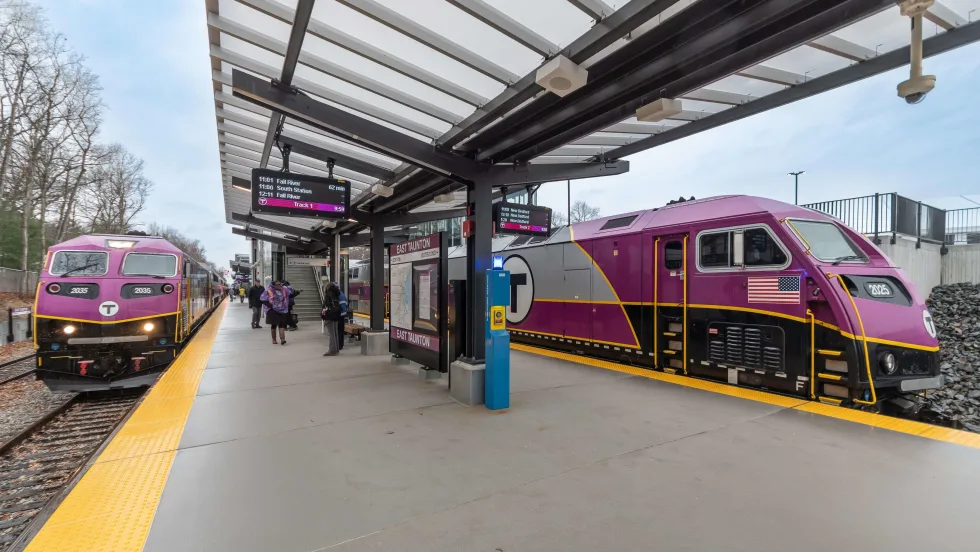
FTA Ends Direct Oversight of MBTA Safety Actions
The federal agency closed its remaining special directive to the Massachusetts Department of Public Utilities following a safety review that began in 2022.
Read More →
Report: Transit Bus Manufacturing Supports 34,100 Jobs, $5.1B in GDP
The “Buses Mean Business” report examines the transit bus manufacturing industry’s economic footprint, supply chain, and rising demand for vehicle replacements.
Read More →
LIT Marks 10-Year Milestone at Annual Summit
Hosted by the COTA from September 10 to 13, the Summit carried the theme “Celebrating 10 Years of Excellence, Leadership, and Impact,” with every part of the program honoring the people, agencies, and partners who built LIT over its first decade.
Read More →
People Movement: Dan Dipert Coaches Adds Third-Generation Leader, Keolis Names New Valley Metro VP/GM, and More
In this edition, we also cover recent appointments and announcements at the Wabtec, SilverRide, HNTB, and more, showcasing the individuals helping to shape the future of transportation.
Read More →
METRO Opens Submissions for 2026 Motorcoach Awards
Nominations are now being accepted for METRO Magazine’s Operator of the Year and Innovative Operator of the Year awards.
Read More →