



San Diego's Budget Maintains Full Service on Trolley, 92 Bus Routes in FY 2026
MTS has balanced its FY 2026 budget with projected revenues and expenses at $473.1 million.

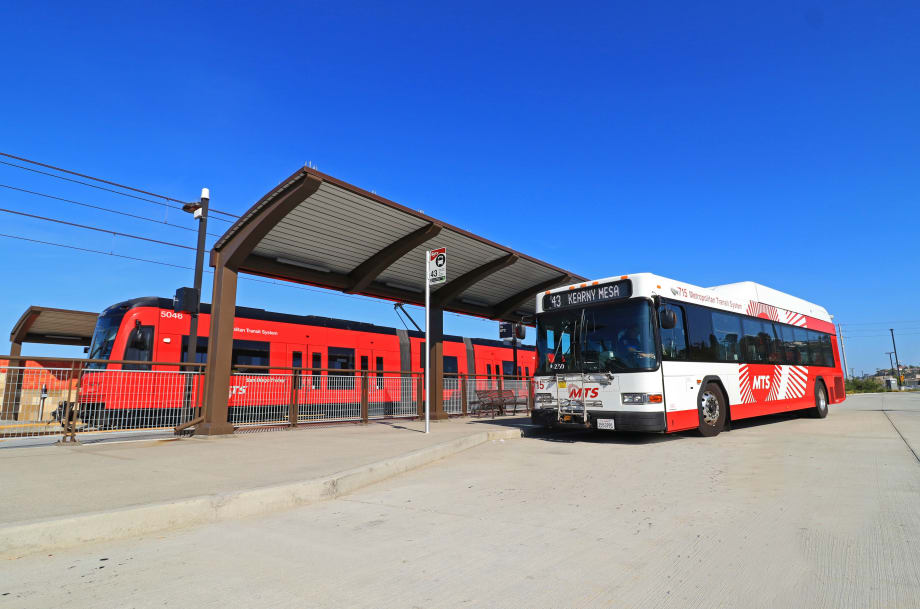
In parallel with the operating budget, MTS has committed to a $163.3 million Capital Improvement Program for FY 2026.
Photo: San Diego MTS
The San Diego Metropolitan Transit System’s (MTS) board unanimously approved a $473.1 million operating budget for Fiscal Year 2026.
The budget maintains current service levels across all Trolley light rail lines and 92 bus routes while initiating a long-range strategy to address future fiscal challenges.
The approved budget ensures that the 15-minute Trolley service frequencies introduced in January 2025 will remain intact, delivering consistent, high-frequency rail service across the region.
Balanced for FY 2026, but Long-Term Challenges Remain
MTS has balanced its FY 2026 budget with projected revenues and expenses at $473.1 million.
The balanced framework relies on short-term fiscal strategies, including using prior years’ stimulus reserves and capital fund reallocations, to maintain operations while addressing an anticipated structural deficit exceeding $120 million by FY 2029.
Key financial highlights:
$62 million in reserve funds from previously drawn federal stimulus allocations are being used to support operations.
$25 million in non-critical capital funds have been reallocated to maintain service levels in FY 2026, with further reallocations likely in FY 2027 and FY 2028.
Comprehensive Operational Analysis Underway
To help shape a more sustainable and efficient transit network, the MTS board also approved a contract with Transportation Management & Design Inc. (TMD) to conduct a Comprehensive Operational Analysis (COA) — a full-scale review of bus and rail services. The study will take place over the next 18 months and evaluate two planning scenarios:
Service expansion if new funding sources materialize.
Service reductions if current revenue levels persist or decline.
The COA will assess ridership trends, route performance, and regional mobility needs, offering recommendations for route redesigns, frequency adjustments, and system-level changes to enhance operational efficiency.
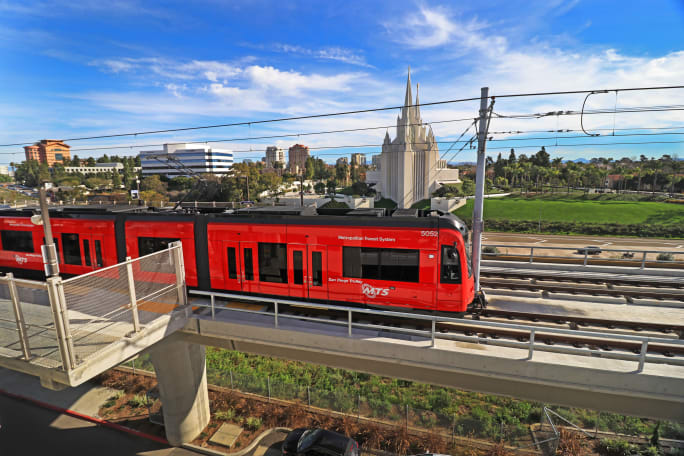
The approved budget ensures that the 15-minute Trolley service frequencies introduced in January 2025 will remain intact, delivering consistent, high-frequency rail service across the region.
Photo: San Diego MTS
Capital Program Supports Long-Term Modernization
In parallel with the operating budget, MTS has committed to a $163.3 million Capital Improvement Program (CIP) for FY 2026. The capital plan includes funding for 40 projects, focusing on:
State of good repair for bus and rail fleets.
Transit station and stop upgrades.
Facility modernization and safety enhancements.
The dual investment approach — sustaining near-term service while modernizing system infrastructure — is a critical pillar of MTS’s strategy to remain responsive to current riders while preparing for long-term transit demand.
More Management

METRO Opens Submissions for 2026 Motorcoach Awards
Nominations are now being accepted for METRO Magazine’s Operator of the Year and Innovative Operator of the Year awards.
Read More →
New York MTA Advances Final Contract for Second Avenue Subway Expansion
Contract Four is the largest in the Second Avenue Subway Phase 2 project and includes construction of station infrastructure, tracks, and signals for the subway expansion, MTA officials said. Work on Contract Four will begin in 2027.
Read More →
Transit Agencies Highlight Safety Gains at National Summit
Leaders from 15 major transit systems shared crime-reduction results and safety initiatives while discussing the role of continued federal support.
Read More →

NITA Names New Leadership, Expands Reduced-Fare Program at First Board Meeting
The new regional transit authority appointed its first board chair and interim executive director while extending reduced fares across CTA, Metra, and Pace for eligible riders.
Read More →
Beyond the Checklist: A Structured Approach to Transit Maintenance
Reliability-Centered Maintenance helps transit agencies move beyond routine checklists to focus limited resources on the assets and failures that have the greatest impact on safety, reliability, and service.
Read More →
APTA 2026 Nominating Committee Selects Leadership Slate, Names Chair and Vice Chair Nominees
Leadership changes will help shape the association’s priorities and its representation of the transportation industry during the 2026–2027 term.
Read More →
DART Launches Major Security, Fare Enforcement Initiative
The 90-day demonstration will deploy coordinated security teams at five light rail stations while testing controlled access and gathering data to guide future investments.
Read More →
Advancing Fare Collection Through Technology and Innovation
Learn about delivering 1300 gates at 91 stations while managing fare evasion. Explore the large scale deployment, solution customization and real-world results that affect the region. Prepare for deployment in your region now.
Read More →
Game Day in Motion: Moving Millions During the 2026 World Cup
Between packed transit stations and team motorcoaches, see how agencies and operators across North America tackled the transportation demands of the 2026 FIFA World Cup.
Read More →
Surface Transportation Extension Averts Shutdown, Leaves Transit Funding Gap
The stopgap keeps federal transportation programs moving, but missing advance funding could complicate the transit and rail projects agencies are planning next.
Read More →