




Keep Reading: New York MTA Set to Purchase 378 Modern Subway Cars
New York MTA Unveils Public-Private Plan to Rebuild Grand Central Train Shed
Two public-private partnerships will accelerate reconstruction of the Grand Central Train Shed, a critical yet aging piece of agency infrastructure.
December 17, 2025
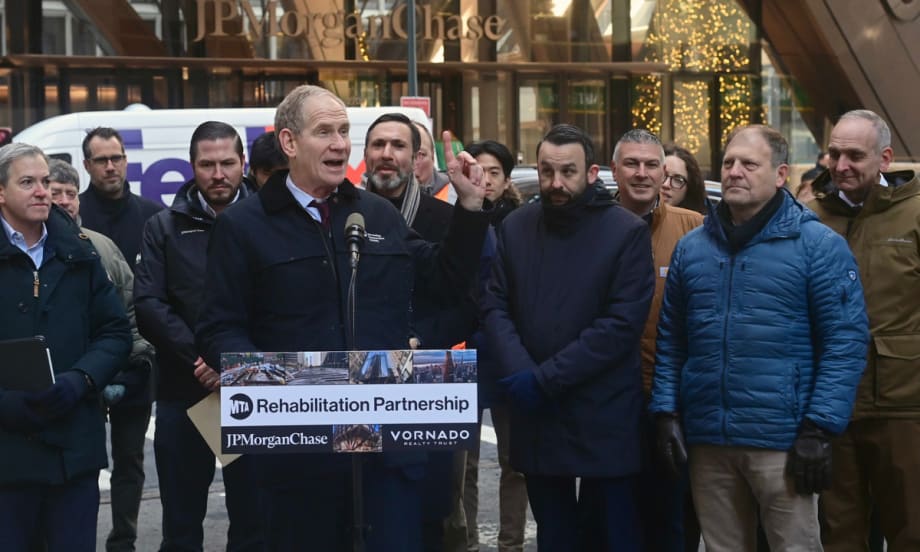
MTA Chair and CEO Janno Lieber and MTA Construction & Development President Jamie Torres-Springer announce partnerships with JPMorganChase and Vornado to make necessary repairs to the Grand Central Terminal Train Shed.
Photo: Marc A. Hermann/MTA
2 min to read
The Metropolitan Transportation Authority (MTA), JPMorganChase, and Vornado recently announced the advancement of two major public-private partnerships to rebuild the Grand Central Train Shed, kicking off a portion of the 2025-2029 MTA Capital Plan.
The Grand Central Train Shed is the structure below Park Ave from 42nd Street to 57th Street, where trains entering the terminal are sorted to passenger platforms.
According to an agency release, 98% of Metro-North trains transit the Train Shed on a daily basis. Decades of water, chemical, and salt infiltration from streets above have significantly deteriorated the concrete and steel beams that support Park Avenue and the real estate above the MTA’s infrastructure.
“The Grand Central Train Shed might be the most important piece of MTA infrastructure you’ve never heard of, and it’s been slowly deteriorating for decades,” said MTA Chair and CEO Janno Lieber. “This partnership is rebuilding and restoring this essential infrastructure on a faster timeline and at a lower cost to the public – a win for all involved.”
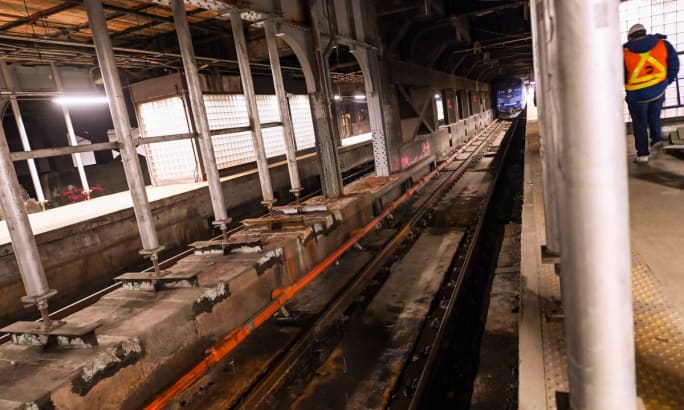
According to the MTA, 98% of Metro-North trains transit the Train Shed on a daily basis.
Photo: Marc A. Hermann/MTA
Sector 2 Train Shed Rebuild Moves Forward
This announcement builds on the public-private partnership between MTA and JPMorganChase, which saw Sector 1 of the Trainshed reconstructed in conjunction with JPMC’s reconstructed headquarters at 270 Park Avenue.
“New York City has been our home for more than 225 years, and JPMorganChase is proud to help strengthen the infrastructure that supports the Midtown community and to improve the public realm,” said David Beck, chief administrative officer at JPMorganChase.
Continuing the partnership, JPMorganChase will now manage the reconstruction of Sector 2 (East 46th Street to East 50th Street) of the Train Shed and contribute $50 million to support the work.
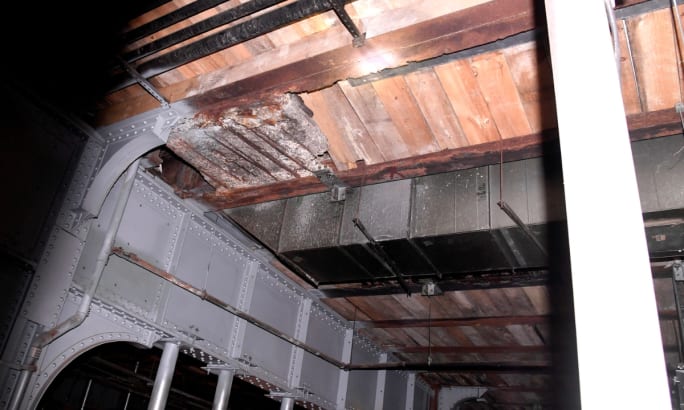
Decades of water, chemical, and salt infiltration from streets above have significantly deteriorated the Train Shed's concrete and steel beams.
Photo: Marc A. Hermann/MTA
Vornado Joins MTA to Lead Sector 3 Train Shed Upgrades
In a new public-private partnership, Vornado will play a similar role for Sector 3 of the Train Shed work, running from East 50th Street to East 53rd Street.
This work will be undertaken in coordination with Vornado Realty Trust, Ken Griffin, and Rudin’s reconstruction of 350 Park Avenue, which received rezoning approval earlier this year and is expected to enter construction starting in 2026. For its part, the 350 Park Avenue project will be contributing $25 million in addition to Vornado managing day-to-day construction activities similar to JPMorganChase.
"Our partnership with the MTA on this essential rebuilding of the Grand Central Train Shed underscores the impact of innovative public-private partnerships and will benefit the entire regional economy,” said Barry Langer, executive vice president of Vornado Realty Trust. “We're grateful to the MTA for our partnership and look forward to continuing our work with them as construction of 350 Park gets underway next year."
More Rail

New York MTA Advances Final Contract for Second Avenue Subway Expansion
Contract Four is the largest in the Second Avenue Subway Phase 2 project and includes construction of station infrastructure, tracks, and signals for the subway expansion, MTA officials said. Work on Contract Four will begin in 2027.
Read More →
San Diego MTS Breaks Monthly Trolley Ridership Record
Agency officials said July’s ridership indicates MTS’s continued recovery from the pandemic.
Read More →
Report Examines NJ TRANSIT Reliability, Funding Challenges
The Garden State Initiative analysis examines the roles of Amtrak infrastructure, fleet management, and agency operations while recommending a more performance-based approach to improving reliability.
Read More →
Stadler, CapMetro Sign Long-Term Rail Fleet Support Agreement
Beginning in 2027, Stadler will provide on-site technical expertise, spare parts support, training, and obsolescence management to help extend the reliability and longevity of CapMetro’s GTW fleet.
Read More →
Biz Briefs: Alstom Lands Canadian Contract, LYT to Supply California TSP, and More
In METRO's latest installment, we take a look at recent news from Complete Coach Works, Beep, FlixBus, and more partnerships making headlines across the transportation sector.
Read More →
CATS Gold Line Marks 5 Years of Service, 2.8M Passenger Trips
With a six-mile expansion planned, the Charlotte streetcar is positioned to connect more neighborhoods and major transit hubs across the region.
Read More →
Why Simulating Pedestrian Movement Has Become Essential for Modern Rail Stations
Pedestrian microsimulation is helping rail planners identify bottlenecks, test station designs, and prepare complex transit hubs for growing passenger volumes.
Read More →
Amtrak Begins Major Construction at New York’s Sunnyside Yard
The new maintenance facility will support Amtrak’s Airo trainsets while improving maintenance efficiency and turnaround times in New York.
Read More →
Chicago Leaders Unveil Plans for O’Hare Airport Express Train
The privately developed project would offer a 15-minute trip between downtown and O’Hare’s Terminal 2, with trains operating every 15 minutes on a dedicated track. The service would use battery-electric trains and three existing freight rail rights-of-way.
Read More →
OCTA Maps Out 30-Year Strategy to Protect Coastal Rail Corridor
The draft feasibility report identifies strategies to protect the coastal rail line for decades as the agency continues near-term stabilization and sand placement efforts.
Read More →