



2016 Women in Transportation: Margareth Bonds
Bonds' efforts on behalf of the industry includes outreach to educate elected officials on the need for a balanced approach to funding our nation’s transportation infrastructure.
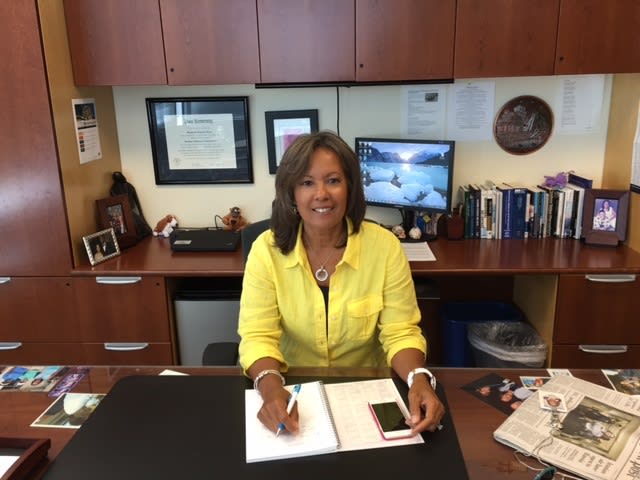
Bonds’ efforts on behalf of the industry includes outreach to educate elected officials on the need for a balanced approach to funding transportation infrastructure.
Bonds’ efforts on behalf of the industry includes outreach to educate elected officials on the need for a balanced approach to funding transportation infrastructure.
Born in Haiti, then moving to New York at age 11, Margareth Bonds studied math and science in preparation for a career in medicine. Realizing early on, however, that she couldn’t stand the sight of blood, and didn’t particularly care for hospitals, she switched her major to business administration. This decision ultimately led to her leadership of a highly-successful nonprofit and running her current employer’s nationwide state and local government relations program, all while raising a family as a single mom. “It’s funny how the things you study don’t necessarily always end up being what you do for a living,” she says while reflecting on her career path.
After taking time off to start a family, Bonds re-entered the workforce via the Conference of Minority Transportation Officials (COMTO), where she first came face-to-face with public transportation. In 1992, COMTO, the organization that was created to provide support and a forum for women and minorities in the transit industry, developed its first nationally-based position in Washington, D.C. Bonds was brought on as deputy director where she worked in all facets of the organization, from membership retention to chapter development and finance management. After a brief time away from the organization, Bonds returned in 1997 as CEO and provided the leadership that shaped it into a flourishing organization.
“The organization went through difficult times in the mid-1990s, but with the support of an amazing board, we developed into one of the most respected organizations in the industry. I was proud to be a part of something so exciting and rewarding,” says Bonds, who contributes much of that success to the support she received from transit leaders across the country and to her husband Andrew, who at the time, served on the board and led much of the fundraising efforts.
From there, the California-based national engineering and construction firm, Parsons, an active member of COMTO, offered Bonds a position in their Washington, D.C. office as a business development manager. Fifteen years later, Bonds is a sr. VP at Parsons, managing the company’s state and local government relations program, a role that requires a great level of people skills and diplomacy. She attributes those skills to her years at COMTO, where she had “all of the responsibility to accomplish the mission of the organization without much authority over the nearly all-volunteer staff.”
Her responsibilities at Parsons are vast. She is involved in all aspects of outreach to elected officials, from reviewing and approving political contributions and funding for ballot measures to facilitating meetings between Parsons’ senior level staff and elected officials. She loves problem-solving and describes her job as “solving puzzles.” “Often, when I get a call, it is to resolve an issue and when we can get all of the pieces to fit together, it’s exhilarating,” Bonds explains.
Bonds continues to be active in a number of industry organizations. Her efforts on behalf of the industry includes outreach to educate elected officials on the need for a balanced approach to funding our nation’s transportation infrastructure. Additionally, she works closely with Parsons’ federal liaison and industry associations to communicate to members of Congress the importance of passing a long-term transportation bill.
“If I could start over and choose my career again, I’d probably choose professional golf,” Bonds says about what she does outside of work. She is very active and also loves to swim, bike and play racquet sports. Her work involves extensive travel, but when she is not on the road, most of her free time is devoted to family. “My biggest accomplishment in life is always going to be my two children, but I am also fortunate to have had such terrific opportunities and support in my career at COMTO and Parsons,” she says.
More Management

METRO Opens Submissions for 2026 Motorcoach Awards
Nominations are now being accepted for METRO Magazine’s Operator of the Year and Innovative Operator of the Year awards.
Read More →
New York MTA Advances Final Contract for Second Avenue Subway Expansion
Contract Four is the largest in the Second Avenue Subway Phase 2 project and includes construction of station infrastructure, tracks, and signals for the subway expansion, MTA officials said. Work on Contract Four will begin in 2027.
Read More →
Transit Agencies Highlight Safety Gains at National Summit
Leaders from 15 major transit systems shared crime-reduction results and safety initiatives while discussing the role of continued federal support.
Read More →

NITA Names New Leadership, Expands Reduced-Fare Program at First Board Meeting
The new regional transit authority appointed its first board chair and interim executive director while extending reduced fares across CTA, Metra, and Pace for eligible riders.
Read More →
Beyond the Checklist: A Structured Approach to Transit Maintenance
Reliability-Centered Maintenance helps transit agencies move beyond routine checklists to focus limited resources on the assets and failures that have the greatest impact on safety, reliability, and service.
Read More →
APTA 2026 Nominating Committee Selects Leadership Slate, Names Chair and Vice Chair Nominees
Leadership changes will help shape the association’s priorities and its representation of the transportation industry during the 2026–2027 term.
Read More →
DART Launches Major Security, Fare Enforcement Initiative
The 90-day demonstration will deploy coordinated security teams at five light rail stations while testing controlled access and gathering data to guide future investments.
Read More →
Advancing Fare Collection Through Technology and Innovation
Learn about delivering 1300 gates at 91 stations while managing fare evasion. Explore the large scale deployment, solution customization and real-world results that affect the region. Prepare for deployment in your region now.
Read More →
Game Day in Motion: Moving Millions During the 2026 World Cup
Between packed transit stations and team motorcoaches, see how agencies and operators across North America tackled the transportation demands of the 2026 FIFA World Cup.
Read More →
Surface Transportation Extension Averts Shutdown, Leaves Transit Funding Gap
The stopgap keeps federal transportation programs moving, but missing advance funding could complicate the transit and rail projects agencies are planning next.
Read More →