



A Look at Modern Mirror Systems
Today’s mirror systems take on a different look, enhancing durability and functionality in addition to accommodating customer needs.

Key to vehicle function and safety, external mirrors are also one of the components most prone to breakage. In recent years, mirrors have been designed for greater durability. For example, some mirrors rotate and automatically return to their original positioning when bumped. The Boomerang Bracket, manufactured by Lucerix International Corp., returns to its original position after being struck and is strong enough to sustain repeated cycles through automated washes. When it gets bumped, the Boomerang will rotate either forward or backward and then automatically return to its operating position. A replacement mirror (including remote and heater systems) can be quickly installed, without tools, in less than five minutes. Remote control mirrors, widely used by both transit and motorcoach operations, are also becoming more common. Not only are they functional and practical, they also are stronger and more durable. “Remote mirrors are what’s come into being over the past several years,” says Danny Englander, vice president of Rosco Inc. “Unlike the previous generation of mirrors, they’re made of injection molding, which were made out of metal for the most part. The injection molded mirrors tend to give more, and that enhances their durability.” With so many drivers sharing buses, remote-control mirror systems are ideal. “I think along with the innovation and the introduction of remote-control mirrors, you saw mirrors get integrated into one housing,” says Lucerix’s Sales Manager Craig Dennis. “It looks better cosmetically. You’ve got a more appealing piece. You’ve obviously got a functional piece in terms of the remote control — operators are not up and down resetting mirrors, especially in an environment where there’s multiple operators operating one vehicle.” Mirrors of the future While, in general, remote-control mirror systems are favored, stationary mirror systems like the Eurostyle series by Rosco have been widely used by transit agencies. With its aerodynamic design, the Eurostyle Series Mirrors offer advantages like hidden wiring and fasteners and vibration resistance. The product uses space-age resins and stainless steel to make the mirrors durable and corrosion proof. The company’s newest mirror system, the Performa style, offers the motorcoach industry a more futuristic mirror, Englander says. “It’s an overhanging mirror for the coach industry that goes in front of the bus and comes down off the top pillar,” he says. The Performa style mirror comes down from the top right hand corner and the top left hand corner of the bus. It’s mounted at the driver’s eye level. Rosco also is getting into body color mirrors, which are painted to match the body of motorcoaches. The old standards Despite all of the innovations, standard mirror systems still prove popular. For Lucerix, the 15-inch mirror that comes with variations like single or double lens design, flat or convex glass, is still a strong seller. Lucerix’s Dennis says the dual lens design is most popular because it integrates old and new styles of mirrors, using flat glass in the upper portion and convex glass in the lower portion. Many of the company’s products have been designed to enhance the functionality and durability of mirror systems and their various components. The Smart Mirror System, for articulated vehicles, automatically rotates and tracks the position of the rear portion of the bus, eliminating blind siding when turning corners. The Quick Disconnect System is a dovetail bracket system that uses a cast aluminum mount that is fixed on the bus, but the bracket itself slides into it, Dennis says. “The reason we’ve gone with this Quick Disconnect System is really for the end-users in terms of them being able to very quickly and easily service the mirror without having to have a bus down scenario,” Dennis says. “By unlocking a mechanism that’s on the mount, they can slide the bracket off and basically put it on their work bench. If the bus is in the field and requires a quick replacement, they slide the replacement part on and send the bus on its way and take the piece that needs to be repaired back to the shop.” About 97% of Lucerix’s products are made from plastic, and though it has a few mirror designs in metal, those are sourced through outside vendors. “Plastics are becoming very big in all of the automotive industry,” Dennis says. “With innovations, some new plastics and resins and other things, they’re able to make pieces that are virtually as strong as metal. Plus, with plastics you can get as dynamic as you want in terms of the shape.” A modular design For Mirror Lite Co., a modular component design has helped sales and piqued interest among customers. One of the advantages of this design is that it allows the mirror lens to be replaced without having to replace adjacent parts inside, or take out all the guts of the mirror. “What we’ve done with our [single-head mirror designs] is tried to maximize field of view in the convex and give a slightly more generous flat mirror as well,” says Mirror Lite spokesman Paul Schuster. “All of that increases the overall field of view in driving.” Typically, Schuster says, transit-style mirrors are single-head mirror systems, like the American Eagle. It is a single- head mirror system that is more streamlined, with a flat glass lens above and a convex lens below. The remote-control version of that, the American Eagle Remote, is a dual-lens, transit-style remote-control mirror system. Each component can be serviced in the field without having to remove the mirror or risk handling broken glass. “My understanding is that the move to the single-head mirror is a little more recent even for transit buses,” Schuster says. “Most of the housings are fairly indestructible ABS material. In our tests, we’ve driven vehicles over them and they’re just super hard and very durable.” Although Mirror Lite mostly manufactures mirror systems for transit buses, the company also has products that could be used for the motorcoach industry. “Our mirrors are hand adjustable and remote capable so they can be easily upgraded to a remote system. They can be purchased either way,” Schuster says.
More Management
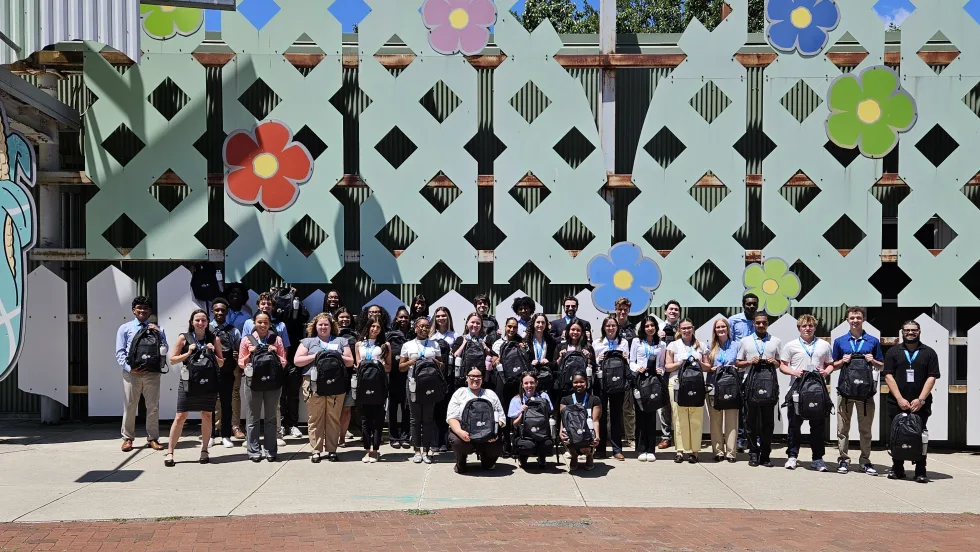
More Than a Summer Job: Building the Next Generation of Transit Talent
The Delaware River Port Authority and PATCO have transformed their internship program into a hands-on professional development experience that introduces students to the breadth of transportation careers — and creates a pipeline for future employees.
Read More →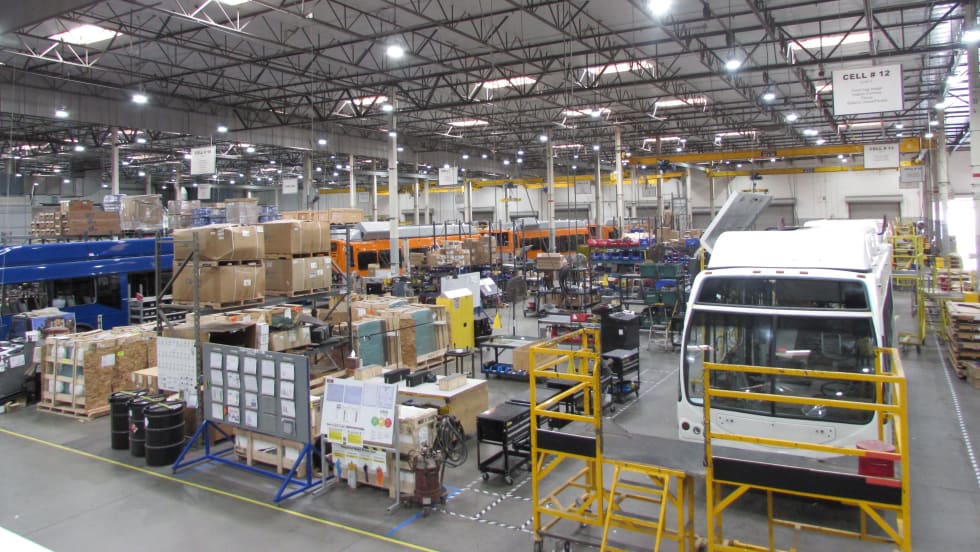
LA Metro Board Awards 220 Battery-Electric Bus Contract to ENC
The contract, which is the largest base award of battery-electric buses by a U.S. transit agency, will be built in Southern California, sustaining good jobs as LA prepares to welcome the world in 2028
Read More →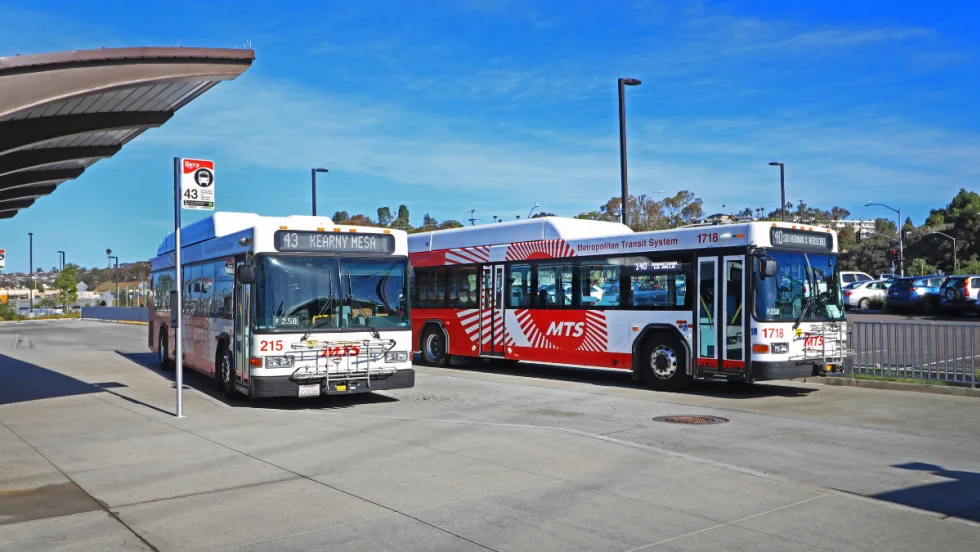
What’s Behind San Diego MTS’s Award-Winning Transit Strategy
Named one of APTA’s 2026 Outstanding Public Transportation Systems with 50 million or more annual passenger trips, California’s San Diego Metropolitan Transit System points to gains in ridership, safety, technology, and reliability as foundations of its success.
Read More →
Public Transit Conference Returning to GFX in 2027, Call for Papers Now Open
The Call for Papers is now open, allowing transit agency professionals and industry experts to help shape the PTC educational program by submitting session ideas for consideration.
Read More →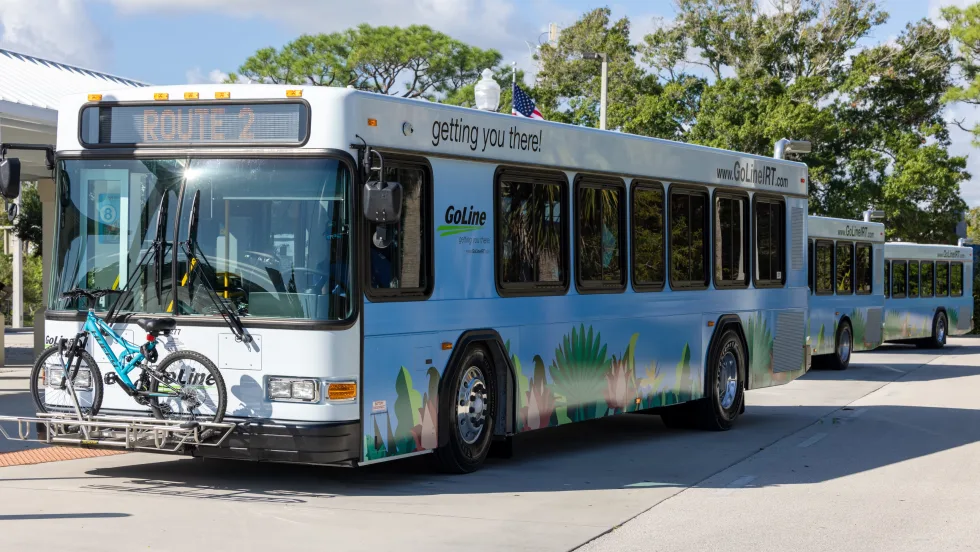
Indian River Transit’s Community-Focused Approach Earns National Recognition
Named APTA’s 2026 Outstanding Public Transportation System in its size category, Florida’s Indian River County transit system continues to grow ridership through fare-free service and a focus on evolving community needs.
Read More →
ENC Lands MATA Contract and More in Biz Briefs
In this edition of Biz Briefs, we spotlight the latest developments shaping the future of mobility.
Read More →
From Surviving to Thriving: Building Stronger Transportation Organizations
Bus Business Consultants founder Brian Dickson shares lessons on leadership, organizational health, and creating options for long-term success in a changing transportation industry.
Read More →
Everett Transit, Community Transit Outline Consolidation Agreement
The proposed agreement calls for a 50% increase in bus service in Everett, a new microtransit zone, continued paratransit service, and the transfer of Everett Transit operations to Community Transit.
Read More →
Strada360’s Steve Lassey on Turning Transit Data Into Better Decisions
From breaking down data silos to preparing for AI, Strada360 CEO Steve Lassey discusses how transit agencies can use technology to improve operations, customer information, and long-term decision-making.
Read More →
People Movement: Phil Washington Joins HNTB, Denver RTD Launches CEO Search, and More
In this edition, we also spotlight recent personnel moves at STV, the Eno Center for Transportation, and more, highlighting the people taking on new roles across the transportation industry.
Read More →