



BAE Systems' Latest HybriDrive Solution Cutting More Fuel, Maintenance
Maximizing regenerative braking energy to power amenities such as air conditioning, the Series-E is offering transit bus operators 30% more fuel economy and reducing emissions, noise and maintenance costs.

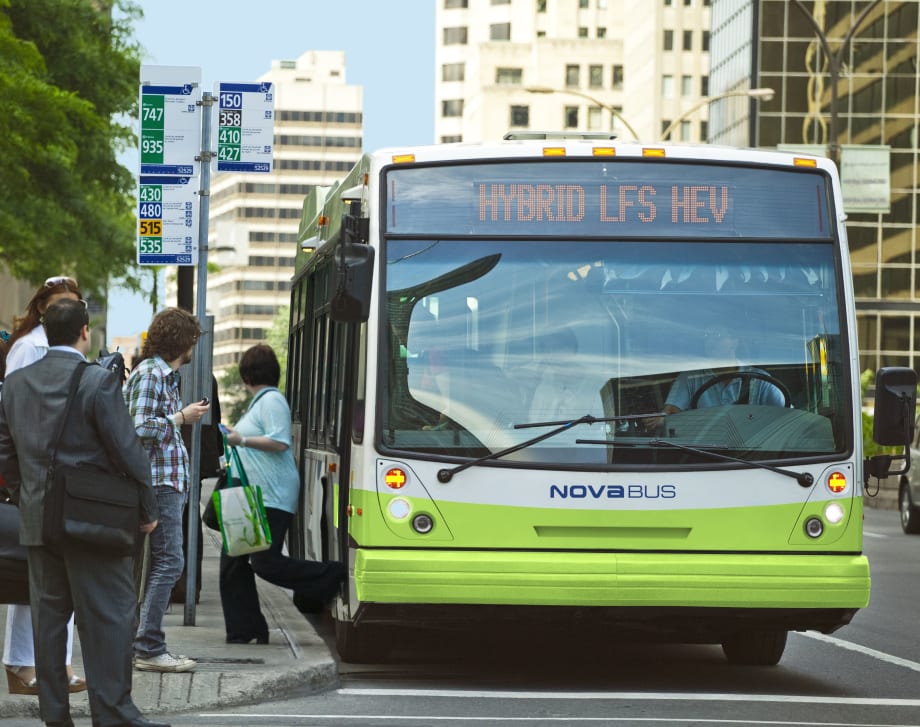
The Series-E uses regenerative braking to power power air conditioning, power steering, engine cooling fans and air compressors. Nova Bus recently equipped 475 buses with the system for the Association du Transport Urbain du Quebec.
The Series-E uses regenerative braking to power power air conditioning, power steering, engine cooling fans and air compressors. Nova Bus recently equipped 475 buses with the system for the Association du Transport Urbain du Quebec.
London-based BAE Systems, a global aircraft, aerospace, defense and security company with 93,000 employees worldwide, is involved in a variety of industries, including public transportation. Its HybriDrive technology is a hybrid electric drive propulsion system that is designed to help transit buses improve fuel economy. The propulsion systems — the HDS100, designed for the European bus market, the HDS200 , designed for standard North American non-articulated buses, and HDS300, created for 60-foot articulated buses.
BAE debuted HybriDrive in Daimler Orion hybrid city buses in New York City in 1998. The technology won the New York Metropolitan Transportation Authority the Clean Air Excellence Award from the Environmental Protection Agency a few years later. Meanwhile, Toronto, Ottawa, San Francisco and Houston adopted the technology on their transit systems.
In 2007, BAE introduced to the transit bus market a lighter, more efficient and longer lasting lithium-ion energy storage solution and a new, simpler, more capable and more reliable hybrid city bus power propulsion system adaptable to a wider range of bus models.
HybriDrive is now in transit buses all over the U.S. and the world, including those manufactured by Edinburgh, Scotland’s Alexander Dennis and Italy’s Iveco and powers nearly 4,000 buses worldwide today.
OEM partnerships
In the North American market, BAE Systems recently partnered with New Flyer Industries, Nova Bus and Gillig to equip their vehicles with HybriDrive.
New Flyer chose BAE Systems’ HybriDrive HDS300 propulsion system to power a fleet of new 60-foot, low-floor rapid transit buses for the Santa Clara Valley Transportation Authority in San Jose, Calif. The system will receive up to 29 articulated hybrid buses, with an option for up to 20 additional buses at a later date.
In April, Quebec received 475 Nova LFS electric buses equipped with HybriDrive, Series-E for the Association du Transport Urbain du Quebec.
Series-E
The Series-E, in which the "E" stands for electrification, is a set of features that can accompany an HDS200 or HDS300 HybriDrive system. It uses regenerative braking, capturing energy during the braking of the bus, to electrically power accessories on a bus, including air conditioning, power steering, engine cooling fans and air compressors, Shelby Cohen, communications manager, BAE Systems, says.
A lithium-ion battery in the energy storage system delivers power during acceleration and accepts power during regenerative braking deceleration.
BAE evolved the technology over more than 20 years while developing the aircraft technology it is known for, considering factors such as fuel economy and environmental concerns. The company saw a possible application in the bus, heavy-duty truck and other niche markets as well as third-tier markets, such as generators and mobile bases for the armed forces and marine and light rail applications. [PAGEBREAK]
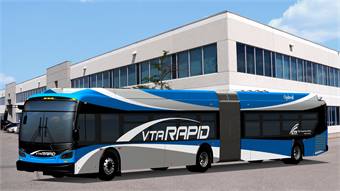
New Flyer chose BAE Systems’ HybriDrive HDS300 propulsion system to power a fleet of new 60-foot, low-floor rapid transit buses for the Santa Clara Valley Transportation Authority in San Jose, Calif.
Increasing fuel savings
The Series-E has improved upon fuel efficiency savings, increasing the average for most buses from 20% to 30% by powering accessories electrically off the power that’s saved during regenerative braking, Cohen says. It reduces the number of belts and hydraulic hoses in the buses, removes the alternator and tidies up the engine compartment.
The 10% improvement is attributed to the ability to store energy and power air conditioning, power steering, engine cooling fans and air compressors — features that used to have to run on belts and conventionally-driven mechanisms — and seeing greater fuel savings in the process, she adds.
Another factor that contributes to fuel economy is that BAE’s energy storage system is substantially smaller and lighter than other versions.
The Series-E also reduces carbon dioxide emissions. To date, according to Cohen, use of the system prevented the release of more than 520,000 tons of carbon dioxide into the atmosphere.
A long battery life also decreases the total lifecycle costs of the vehicle and improves reliability and performance.
Reducing noise, emissions
Two new modes on the Series-E, Start/Stop Drive and Quiet Drive, will let transit systems cut noise and emissions, making their buses even more environmentally friendly.
With Start/Stop Drive, as the vehicle decelerates to eight miles per hour, the engine shuts off. Then, once the vehicle accelerates to 10 miles per hour, the engine starts again.
Quiet Drive enables the driver to operate in service at a low speed just above idle, so the bus is significantly quieter.
“When you’re making stops to pick up passengers, the whole bus is running in hybrid mode. You’re not burning fuel so the bus is quieter [and emits] less exhaust,” Cohen explains. “In residential areas, that’s a really good feature to have.”
To date, according to Cohen, use of HybriDrive systems prevented the release of more than 520,000 tons of carbon dioxide into the atmosphere.
[PAGEBREAK]
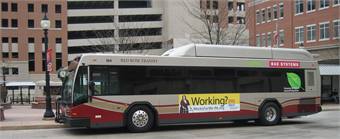
Lancaster, Pa.’s Red Rose Transit’s three Gillig low floor BRT model buses, equipped with Series-E, got the agency 30% more fuel efficiency.
Series-E Lowering fuel, maintenance costs for Pa. transit
Lancaster, Pa.’s Red Rose Transit’s three Gillig low-floor BRT model buses, equipped with Series-E, have brought the agency 30% fuel economy for the past year. While Red Rose expects that percentage to rise when it gets two more buses equipped with the Start/Stop Drive mode at the end of October, Dave Kilmer, executive director of Red Rose Transit, says, his main focus is cutting maintenance costs.
The two news buses will have full electric propulsion, including the hydraulics, steering and programming.
Red Rose decided to adopt the technology when it was time to replace some of its buses last year. As the agency reviewed a variety of hybrid systems, it was impressed with the replacement of the transmission and other parts as well as the fuel economy the HybriDrive offered, Kilmer says.
“From a maintenance standpoint, it just made a lot of sense, because we didn’t have to do anything to our infrastructure to operate it,” he explains. “We reduced maintenance costs [by] eliminating the transmission, starter and alternator, all wear items during the course of the life of a bus that we won’t have to replace now. And, hopefully reliability will improve because of that.”
BAE is remotely monitoring the fuel economy every day on Red Rose’s buses. The maintenance department receives an email showing the fuel economy on the three hybrid buses as well as the agency’s fleet diesel buses for comparison.
Additionally, the buses equipped with Series-E integrated seamlessly into the fleet because the drivers were already familiar with Gillig buses, so very little training was needed.
About one month after Red Rose put the first Bus with HybriDrive Series-E into operation, a customer commented to Kilmer about how much quieter the bus was and how it wasn’t “jerky from the transmission.”
“That was encouraging. I think we’re headed down the right path,” he adds. “We’re very happy with them.”
More Bus

New York MTA Plans Largest Bus Fleet Upgrade in More Than a Decade
The agency is seeking manufacturers for 650 new CNG buses to replace aging vehicles, improve reliability, and advance its broader fleet modernization strategy.
Read More →
Building a Flexible Path to Transit Electrification
John Hroncich discusses BAE Systems’ modular and scalable approach, lessons learned from decades of real-world operations, and how agencies can identify electrification strategies that fit their fleets.
Read More →
Bus Tech Talk: Keeping Transit Technicians Ahead of the Technology Curve
LA Metro’s Obed Mejia discusses technician training, evolving maintenance technology, fleet replacement, and strategies for getting the most out of today’s transit fleets.
Read More →
Biz Briefs: RIPTA Unveils New Frontrunners, Clevland RTA Adds New Siemens, and More
In METRO's latest installment, we take a look at recent news from Siemens, Prevost, Dodge, and more partnerships making headlines across the transportation sector.
Read More →
People Movement: Holly Arnold Joins Transdev and More
In this edition, we also cover recent appointments and announcements at Pace, CamTran, MCI, and more, showcasing the individuals helping to shape the future of transportation.
Read More →
The High Cost of Transit Buses: Industry Leaders Look to Procurement Reform
Transit leaders and policymakers examine how standardized bus designs, streamlined procurement, and predictable funding could help agencies stretch budgets and deliver better service.
Read More →
The Business Voice Behind Public Transportation
As chair of APTA’s Business Members Board of Governors, Ray Melleady explains how more than 850 business members are partnering with transit agencies to advance funding, innovation, and industry-wide collaboration.
Read More →
From Surviving to Thriving: Building Stronger Transportation Organizations
Bus Business Consultants founder Brian Dickson shares lessons on leadership, organizational health, and creating options for long-term success in a changing transportation industry.
Read More →
Finding the ‘Happy Medium’: Optimizing Maintenance Without Sacrificing Reliability
The key to maintenance optimization isn’t doing less work—it’s doing the right work at the right time on the right assets.
Read More →
LA Metro, City of West Hollywood, and Partners Advance Smarter Bus Lane Enforcement
The award-winning partnership combines AI-powered detection with human oversight to improve bus reliability, accessibility, and enforcement efficiency.
Read More →