



Campus Transit's Mixed Bag of Challenges
What makes a university transit system unique? What are the important issues faced on a daily basis? METRO discussed these and other worthy topics with a panel of college transportation professionals.

From the transit perspective, a college campus often presents a paradoxical environment. It has a captive core of riders in a densely populated area not unlike an urban city center, allowing the opportunity for high transit ridership. But at the same time, university transit systems face distinct challenges, such as sharing responsibility with parking and traffic control, searching for funding through an ever-changing list of sources and catering to the unique needs of a student body. Of course, that is not to say that city and university transit systems are so different that they cannot learn from each other. METRO posed a list of questions to a panel of five college transportation experts. Their feedback on these topics provides insight into the day-to-day challenges of moving people around a campus. What is the single biggest difference between a city transit system and a transit system on a college campus?Sarah Blouch: The populations are very different. City transit customers tend to be willing to invest a bit more effort into determining schedules, transfer points and routes than the typical college student, who in many cases has never ridden a large bus. The buses on a college campus are expected to “just come” on a regular basis, and the drivers are expected to be able to help with information. Al Byam: Both have similar challenges. Probably the biggest difference is most college systems are no-fare or pass-only and supported by pre-paid student fees. Hence they have large ridership. Larry Cohen: The college campus can make relatively quick changes — scheduling, vehicle adjustments to handle capacity, etc. — to meet the needs of its customers. Hugh Kierig: Generally, the biggest difference is that on college campuses you can direct people where to park and force them on buses if necessary. Also, for commuter services, you can raise the price of parking permits enough to provide an economic incentive for students to use the bus. For our purposes, we provide both campus bus service as well as public transit service for the city of Stillwater, Okla. Gary Smith: Actual on-campus routes are shorter in both distance and headway. A campus is a large ride generator, much as a downtown area is in a large city. Some campuses, ours for example, also operate in the city away from campus. In those cases, there is not much difference between a campus system and a city system. What lessons can you take from normal transit agencies and apply to the operation of a university system? Blouch: Marketing. While campus transit is usually implemented due to parking problems, that does not mean that the population required to use it will understand it. Marketing the services like a public or private entity is necessary to tout the positives, address the negatives and keep the riders informed. Byam: I feel most university systems are “normal” transit systems. They’re smaller but still labor intensive with the same challenges. Cohen: Both need to be run as self-sufficient businesses in an ever-changing environment with new challenges and yearly funding cuts. Kierig: Since we provide both campus and community transportation, all typical transit agency operational issues are things that we deal with. However, I would say that because the majority of our passengers are associated with the university, we must provide more attention to consumer input and satisfaction in order to be viable. Describe a few of the biggest challenges you are faced with? Blouch: A major challenge is the perception that campus transit is paid for with state funds or school tuition, which in my experience is rarely the case. Often it is subsidized by parking fees or transit fees paid directly to the bus service. When people believe they have already paid for a service, they tend to have unrealistic expectations of what their dollars buy. The other challenge is that the campus environment changes constantly. New customers arrive annually and need to be oriented to the system; buildings go up and come down at a remarkable pace; and events and logistics are always a new experience. Byam: My biggest challenge is that my 150 drivers are all students, which gives me a 40% turnover rate per year. Hiring, training and scheduling shifts is a full-time job. Cohen: Providing more service and higher pay and benefits to staff, while dealing with higher capital equipment costs and less funding. Kierig: The biggest challenge may be striking the balance between bus service needs and parking on campus. Also, we must be continually working toward better ADA services. Smith: Encouraging students to park and ride. Many students remember riding the bus in high school and think in college they should not have to ride the bus. The goal is to make riding the bus more convenient than driving. Is security a major concern? What are you doing to address security issues? Blouch: Security is not a problem for us, although we do require drivers to wear identifiable uniforms at all times, we drill them on proper response protocols when unusual or threatening situations arise and we provide annual training to help ensure they know how to minimize risks when interacting with people. Byam: Security is a major concern, but not so much in the traditional sense. Our system provides late-night service for campus security reasons. We use onboard cameras, two-way radio communications and an emergency alarm feature. Cohen: Security is a concern, especially here in Washington, D.C. We check IDs and oversized packages brought on board. Also, we train drivers to be the “eyes and ears” of what is going on around the campus. Kierig: Since universities attract a diverse student population, people won’t feel comfortable unless they feel secure on the bus. Operator training is key. Additionally, working closely with the campus and community police service is important. Smith: Security on the campus transit system is no more a concern than on city systems and in other areas of campus. Drivers need to be trained to spot security concerns and in tactics for dealing with riders. How do you feel about the charge that university systems often unfairly take charter business away from private operators? Blouch: A common goal of a university community is to provide a quality education to its customers at the best possible price, and while I am not sure all campuses operate as we do, 100% of our charter business is university business. Since at this time our costs are lower than a for-profit private operator’s, we are assisting the university in being good stewards of the public’s tax dollars and students’ tuition money by only charging exactly what it costs for the service instead of adding fees to create a profit. In many cases, if a group had to pay private rates for charters, it could not afford it. Byam: Our policy is if a trip originates or ends on our campus, then it is university business and in the best interest of the university to provide safe, reliable and affordable transportation. For long trips and athletic department trips, a private contractor is selected through competitive bid process. Smith: We charter primarily for university events and refer some charter requests to private operators. Some private operators refer requests to us if they are not able to provide the requested service. Are you dealing with a tight operating budget? What is specifically problematic? Blouch: Many transportation systems are supported 100% by parking, which was a popular trend about 10 to 15 years ago. The touted goal of the campus transportation system is to reduce cars on campus to minimize traffic congestion and address continual parking shortages. Yet if 100% of transit funding is paid for by parking and the number of people buying parking continues to be reduced, at some point you have a budget meltdown. Fortunately, enough people prefer to drive cars that this has not proven to be a problem yet for us — we seem to sell more parking permits every year — but it is constantly on our minds. Byam: Budgets are always tight. Presently this is due to the state of Massachusetts funding transit authorities at FY 2001 levels. Fortunately, we have the flexibility of raising student and parking fees to offset much of the shortfall to maintain essential services. Kierig: I think we struggle with, as do all transit services, finding a constant and dedicated funding source. Fortunately, we have dedicated funding from university students that pays for 75% of the transit budget. Smith: Most universities have limited funds on which to operate. Their primary mission is to educate students and perform research. The campus transit system is a vital part of the campus infrastructure but not a high priority for the use of scarce funds. Each campus must decide where their limited funds will be spent. What types of actions do you take to improve efficiency and/or increase revenue? Blouch: Clearly articulating the costs and benefits of transit is an important first step. When speaking with university groups, the first question I usually hear is “How much does it cost to…?” So it’s critical to know your hourly costs and to translate them into related service levels. For example, what would a specific route cost to run 12 hours a day, five days a week during the three academic semesters? Knowing this information helps when asking for funding for new services. Also, college campuses are a wonderful place to recruit and train student bus drivers to augment the core full-time staff. They are less expensive than full-time staff, more flexible with schedule requirements and quick learners. Cohen: Think outside the box. Sell advertising on the shuttles and buses and make sure the vehicles are in use as much as possible to keep an idle resource moving and generating revenue. Kierig: Prove that you can provide a reliable transportation service and that will go toward increasing revenue. Be attentive to the needs of the clients who use the service. Smith: Providing good information to the public, reliable service to appropriate destinations and clean, reliable equipment will help increase ridership. Since we do not charge a fare, increased ridership will not generate increased revenue. Therefore, we need to promote our service to the students and administration as a vital part of the campus. What role do university transit departments play in city or campus planning and development? Blouch: They should play a key role. Campuses are large draws for employment, entertainment and recreation in every city, and the campus staff should be informed and involved with what is going on in the city. Likewise, the campus staff should inform the city staff about campus activities. Byam: We play a significant role in campus and town planning and development. We are involved early on with almost all projects, and most buildings have transit enhancements such as bus shelters, bike racks and other amenities included in design. Cohen: From the transportation side, there isn’t as much interaction as there should be. Transportation is usually put in place to fix a planning problem on campus or bridge the gap in a campus that spreads out due to property acquisition and expansion. Kierig: University transit can play a vital role in campus and community planning. We view parking and transit services on our campus as being the “mobility” experts as we also “control” bicycles on and around the campus. Traffic control is another area that impacts the transit service, and we are very active in recommending and in some cases paying for major traffic control improvements to the campus area. Smith: Since we are also responsible for campus parking, we are consulted on almost every construction project on campus. We also meet with the city’s planner periodically to discuss routes. We were invited to participate in the city’s recent master planning project, and the city is participating in the campus transportation study currently underway. Can you describe any equipment issues that are particularly important to you right now? Blouch: Many university transit services started with old school buses, but as they continue to grow, 30- to 40-foot transit buses are becoming more popular. Maintenance of that equipment is critical, whether it is done in-house or outsourced. Few campuses have the budget to provide a large spare ratio, and downing a bus for more than a day can create havoc with the service. Accessibility equipment including wheelchair lifts, annunciators in the headers and Braille tags with the bus number on the handrails should be included so the population with disabilities can use the mainstream service rather than the paratransit services. Customer mandates for quick, convenient service have driven our campus to implement a “bus locator” system so a customer can see when the next bus arrives. Alternative fuels are always on the horizon. We’ve been using the B20 blend of biodiesel with great success. On a college campus, you are always expected to be on the “leading edge” in technology and environmental stewardship. How you fund that is the ongoing challenge. Cohen: Wheelchair lifts are always an issue. Kierig: Access to federal transit funding for major capital purchases is a challenge. Smith: We have been very fortunate to be able to obtain federal and state funding for rolling stock, when needed. Our buses range in age from two to 15 years. The 15-year-old buses are 12-year buses, but we only have about 350,000 miles on them. They are in good shape so we do not plan to replace them for a few more years.
More Management

Transit Expands Agency Partnerships, Reaching 200 Official App Partners
COO Jake Sion discusses Transit’s growth, the success of its Transit Royale program, and how technology is helping agencies improve the rider experience.
Read More →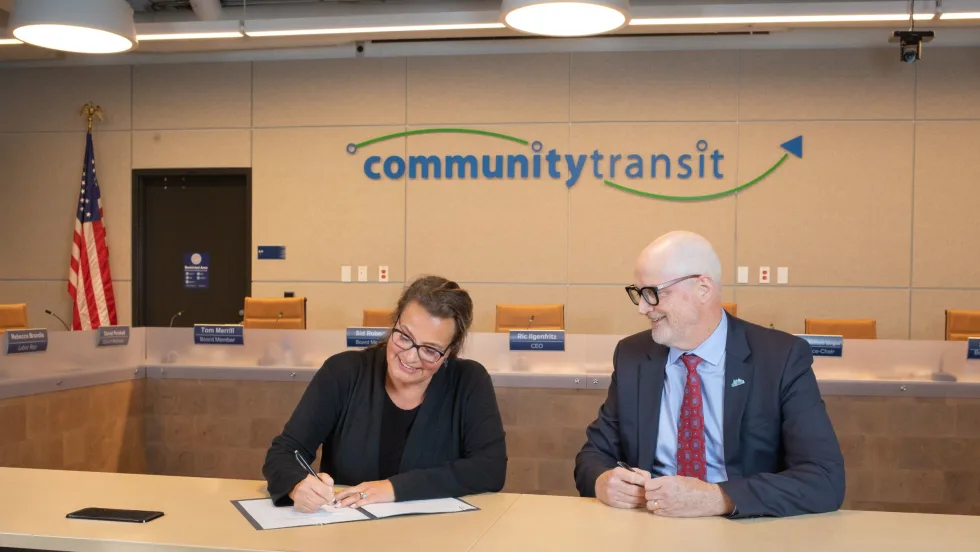
Everett Transit, Community Transit Approve Consolidation of Services
The agreement will bring Everett Transit into Community Transit’s network in April 2027, with plans to increase bus service by 50% by 2031 and expand regional connections.
Read More →
NITA Proposes $5B Operating Budget, $9.7B Capital Program for 2027
The proposed budget includes funding for expanded transit service, safety initiatives, fleet upgrades, and infrastructure improvements across CTA, Metra, and Pace.
Read More →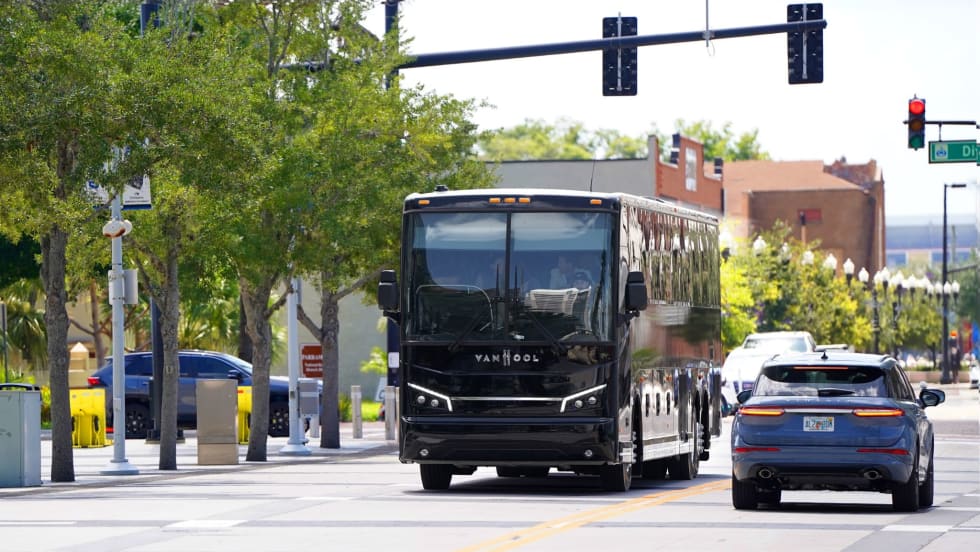
Financing, Fleet Replacement Requires a More Strategic Approach
Executives from ABC Companies and MCI discuss how rising costs, changing market conditions, and post-pandemic challenges are prompting motorcoach operators to rethink financing strategies, fleet replacement cycles, and long-term planning.
Read More →
Bringing Austin’s First Light Rail System to Life
Austin Transit Partnership CEO Greg Canally discusses the city's nearly 10-mile light rail project, its collaborative approach to project delivery, the importance of community engagement, and the milestones ahead as construction approaches in 2027.
Read More →
ETA CEO John Maglio on Transit Technology, Innovation, and Building Agency Trust
ETA founder and CEO John Maglio explores the evolution of transit technology, the importance of reliable systems, and how stronger partnerships can help agencies improve operations and the passenger experience.
Read More →
Metra Draft Plan Outlines Costs, Service Improvements for Regional Rail
The Systemwide Network Plan identifies infrastructure needs and potential investments to expand all-day, bidirectional rail service across the Chicago region.
Read More →
New Orleans RTA Names Augustine III as New CEO
In this edition, we also spotlight recent personnel moves at HDR, PATH, STV, and more, highlighting the people taking on new roles across the transportation industry.
Read More →
How Transit Agencies Are Using Free Rides to Improve Voting Access
Transit agencies are using fare-free service, trip-planning tools, and targeted rides to improve voting access. See what other agencies can learn from these efforts.
Read More →
Caltrain’s Electrification Drives a New Era of Ridership Growth
The railroad’s shift to electric service has brought more frequent trains, stronger customer satisfaction, and increased ridership, earning it APTA’s Outstanding Public Transportation System award.
Read More →