



Daimler Unveils EPA 2010-Compliant Orion Model
Employs SCR technology to meet EPA emission standards on the new Orion VII vehicle, which is also a showcase for new customer options such as BRT roof styling. Less visible changes were also made, including the standardization of various components.
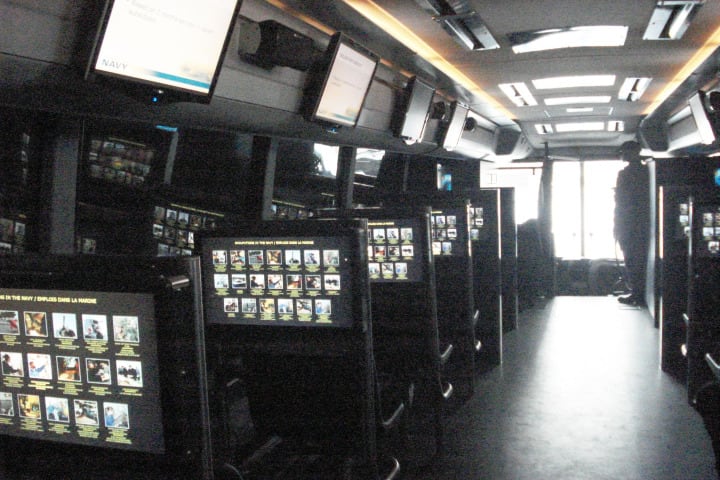
[IMAGE]Daimler.jpg[/IMAGE]In early February, Daimler Buses North America (DBNA) held a transit clinic at its Mississauga, Ontario, plant to give customers a sneak peak at its revamped transit offering — the EPA 2010-compliant Orion VII model. In addition to being equipped with a propulsion system that adheres to the Environmental Protection Agency (EPA) emission standards, the new vehicle is also a showcase for new customer options such as BRT roof styling, a 1:6 slope ramp and floor hatches. Other innovations that aren't as visible include the standardization of various components and the simplification of processes across the hybrid, diesel and CNG models.
"The first goal was to reach EPA 2010, as well as reach a new level of quality," says Danijel Miklaucic, project EPA2010 manager, of the undertaking.
EPA 2010 changes
To be compliant with the EPA emission standards, the company employed SCR (selective catalytic reduction) technology, which required some adjustments to the vehicle frame, said Ian Moger, senior engineer manager for DBNA. The SCR technology needed to occupy the space of the rear air- conditioning unit, which led to the use of a roof-mounted air conditioning unit. The CNG model still uses the rear engine compartment to house the air- conditioning unit.
The hybrid product is equipped with a Cummins ISB 280 Diesel engine; the diesel bus is equipped with Cummins ISL 280 Diesel; and the CNG model features the Cummins ISL-G 280 CNG engine. The company integrated the latest in transmissions for the vehicle as well to further improve fuel economy performance. A new T-Drive Hybrid arrangement was also developed with BAE Systems.
"We looked for optimizations of standardizations in the area of the cooling system, battery tray, driver's barrier and bridge panel," Moger says. "We eliminated the engine cradle with the EPA2010 design and we've made improvements to the front and rear suspensions."
Other design standardizations included the mounting brackets for pipes and harnesses. "We've reduced the number of studs on the vehicle as well as reduced the number of ways we attached harnesses from 20 to about eight," Moger says.
In addition, more customer options were added to the new EPA2010 Orion VII, including BRT roof styling, disc brakes, a ramp with 1:6 slope and floor hatches that provide easy access to such areas as connections on transmissions.
"Bad road" testing
Once the prototypes were completed, DBNA conducted structural durability testing on the vehicles. This program, also know as the "bad road" test, was an all-new testing process for the new EPA 2010 compliant Orion VII transit bus. Daimler's testing program is comprised of the following tests: Altoona, endurance, functional, all-season road testing and the bad road test. The structural durability testing evaluates the lifetime of the bus in a compressed timeframe, allows for three-dimensional testing for the frame and includes all driving maneuvers (steering, braking, etc.). It takes up to one year to complete, while the previous testing method includes the use of the "shaker" test, which lasts three months and simulates vertical forces in a controlled, indoor environment.
The Daimler Durability Testing program is conducted at the Bosch Proving Ground in New Carlisle, Ind. During the 12-month test period, the buses are driven 24 hours a day over a track, which includes numerous "bad road" conditions such as impact bumps, staggered bumps, resonance road and light cobblestones as well as the Altoona upper/lower track." Our goal is to simulate the service life of our customers," says Oliver Kurz, manager of testing and prototyping.
Following 2,400 laps on the Bad Road Proving Ground, the EPA 2010 Orion VII will have completed a simulation of driving conditions representative of over 500,000 transit service miles in North America's most severe operating environment. Vehicle engineers are able to assess the long-term structural durability; steering and drive train effects; wear and tear of brakes; and wear and tear of the engine and other components based on this testing process." It takes one year to complete this testing versus three months with the shaker test," says Kurz. "And the benefits are far superior."
[PAGEBREAK]
Enhanced communication
Because the engineering teams on the EPA2010 project were split between the Mississauga facility and the Oriskany, N.Y. plant, development of an optimized communications system was essential. A new meeting room with additional video communication equipment was installed as part of the project. Video cameras were used to provide live streaming from buses and design mock-ups for review from other locations. A projector and workstation with a 3D-CAD system were used for verification on the 3D model of the bus. This three-party live "conference call" is done on a weekly basis. "It saves time and increases efficiency."
Quality processes
Achieving a new level of quality was also a goal for the EPA2010 project. The company has achieved ISO 9000-certification for both the Mississauga and Oriskany, N.Y., locations. In January, the Canadian plant became ISO 14000-14001-certified. The New York-based plant starts the same certification process this year.
"We really feel that our ISO processes guide us from a quality and a manufacturing perspective," says Rob Cathcart, quality assurance manager.
From a supplier standpoint DBNA has a number of different initiatives in place for quality control. "It's sometimes easier to control what's going on within the walls of our manufacturing facilities than within the walls of our suppliers'," Cathcart says. "But, we have a number of different processes that we follow on the [quality/assurance] manufacturing side, to ensure that the materials that come into our facilities meet the high standards that we have and the high standards [our customers] have for the buses we are building."
Quality initiatives include sending a multidisciplinary team to a potential supplier to assess their capability to supply parts, as well as conducting first article inspections. "We do a very detailed analysis of the part to see whether it meets our expectations," Cathcart says.
DBNA also employs a quality feedback system, which ranges from the individual installing a specific part on a bus to getting feedback from the customer in the field about any issues. "We have a lot of different processes in place at different levels of the organization to receive feedback on any issues that occur and to make sure that the next bus coming off the line is corrected for that issue," Cathcart explains.
Other tools being considered to assess the bus quality and identify issues more efficiently include process audits, electronic data collection and laser scanning technology that will allow the company "to be able to very quickly and very accurately" inspect the frames.
"From a [quality assurance] perspective, from a manufacturing perspective, aided through the engineering groups, we are building the highest quality bus we've ever built," says Cathcart. "Potential customers are going to see the difference."
More Bus

Report: Transit Bus Manufacturing Supports 34,100 Jobs, $5.1B in GDP
The “Buses Mean Business” report examines the transit bus manufacturing industry’s economic footprint, supply chain, and rising demand for vehicle replacements.
Read More →
Biz Briefs: New Flyer Delivers in Columbus, Houston, Beep and Freebee Merge, and More
In this edition of Biz Briefs, we spotlight the latest developments shaping the future of mobility.
Read More →
People Movement: Dan Dipert Coaches Adds Third-Generation Leader, Keolis Names New Valley Metro VP/GM, and More
In this edition, we also cover recent appointments and announcements at the Wabtec, SilverRide, HNTB, and more, showcasing the individuals helping to shape the future of transportation.
Read More →
New York MTA Plans Largest Bus Fleet Upgrade in More Than a Decade
The agency is seeking manufacturers for 650 new CNG buses to replace aging vehicles, improve reliability, and advance its broader fleet modernization strategy.
Read More →
Building a Flexible Path to Transit Electrification
John Hroncich discusses BAE Systems’ modular and scalable approach, lessons learned from decades of real-world operations, and how agencies can identify electrification strategies that fit their fleets.
Read More →
Bus Tech Talk: Keeping Transit Technicians Ahead of the Technology Curve
LA Metro’s Obed Mejia discusses technician training, evolving maintenance technology, fleet replacement, and strategies for getting the most out of today’s transit fleets.
Read More →
Biz Briefs: RIPTA Unveils New Frontrunners, Clevland RTA Adds New Siemens, and More
In METRO's latest installment, we take a look at recent news from Siemens, Prevost, Dodge, and more partnerships making headlines across the transportation sector.
Read More →
People Movement: Holly Arnold Joins Transdev and More
In this edition, we also cover recent appointments and announcements at Pace, CamTran, MCI, and more, showcasing the individuals helping to shape the future of transportation.
Read More →
The High Cost of Transit Buses: Industry Leaders Look to Procurement Reform
Transit leaders and policymakers examine how standardized bus designs, streamlined procurement, and predictable funding could help agencies stretch budgets and deliver better service.
Read More →
The Business Voice Behind Public Transportation
As chair of APTA’s Business Members Board of Governors, Ray Melleady explains how more than 850 business members are partnering with transit agencies to advance funding, innovation, and industry-wide collaboration.
Read More →