



RELATED: Miami Electrifies Its Transformational Transit Future
How New Clean Energy Tax Credits Can Benefit Transit Systems
The $499-billion federal legislation is full of carbon reduction, resiliency, and clean energy incentives.
by David Smith
January 19, 2023
The $499-billion IRA legislation contains nearly $370 billion in carbon reduction, resiliency, and clean energy incentives.
Credit:
designer491
7 min to read
Starting this year, transit systems across the country can take advantage of significant financial incentives made possible through the 2022 Inflation Reduction Act (IRA).
The IRA breaks with decades of energy policy. For years, federal clean energy tax credits applied only to tax-paying entities or investors with sizable tax liabilities. Moving forward, these incentives can be leveraged by tax-exempt organizations as well. Beneficiaries can include state and municipal transit authorities.
The $499-billion legislation contains nearly $370 billion in carbon reduction, resiliency, and clean energy incentives. Once fully adopted, analysts forecast the combination of grants and tax credits will cut U.S. carbon emissions 40% by 2030.
Notable changes to the federal tax code include:
Larger tax credits for renewable energy, clean transportation, and energy efficiency projects.
Long-term certainty — certain credits will be available through 2032 or until the electric power sector achieves a 75% reduction in carbon emissions.
Broader eligibility rules will cover battery energy storage systems, microgrids, zero-emission vehicles, charging infrastructure, and hydrogen generation facilities, among others.
This article summarizes only a portion of the IRA’s many provisions. Readers are encouraged to consult a tax professional to best understand their eligibility and to maximize their financial opportunities.
Expanded Eligibility for Clean Energy Incentives
Previously, the federal government relied on the Investment Tax Credit (ITC) and Production Tax Credit (PTC) to spur clean energy adoption. Under these policies, however, only project owners or developers with tax income were able to fully take advantage of the credit value.
A common work around has involved investment banks who provide the upfront capital and, in return, take the credit for themselves. Recent project examples include the Washington Metropolitan Area Transit Authority’s agreement with SunPower and Goldman Sachs Renewable Power on a 25-year solar power agreement.
Involving tax equity investors generally reduces the tax credit’s value. A new “direct pay” option allows tax-exempt entities who install their own clean energy systems to receive the credit as a cash refund from the Internal Revenue Service (IRS).
Tip: If a project is financed by tax-exempt debt, the direct pay tax credit is reduced by a minimum of 15%.
Alternatively, the IRA offers greater flexibility for transferring credits. The IRA allows project owners or developers to sell the credit to anyone with a tax liability — regardless of whether the buyer is a project investor. Analysts predict this “transferability” option should retain more of the credit’s value, with buyers perhaps limiting their payment by 5% to 7%.
Longer Term Certainty for Renewable Energy Tax Credits
After years of Congressional funding cuts, the IRA now extends the ITC and PTC for up to a decade. It also establishes various pathways to increase each credit’s maximum value. While both credits may apply to a given project, the applicant can only choose one of these credit options.
The ITC lowers upfront installation costs for applicable energy projects. At minimum, the credit is worth 30% of relevant project costs — so long as the project pays prevailing wages during construction and fulfills apprenticeship requirements.
The PTC offers system owners an ongoing credit based on the amount of energy produced and sold (a minimum value of 1.5 cents per kWh). In general, the PTC is most beneficial for larger projects.
Bonus credits — each worth an additional 10% value — are available if the project is:
Located in low-income communities or on tribal land.
Sited on a brownfield site or within an area considered an “energy community,” meaning the local workforce is overcoming job losses due to a recently closed coal mine or coal-fired power plant.
Sourcing supplies from domestic steel, iron, or component manufacturing facilities.
Tip: Starting in 2025, the Clean Energy Investment/Production Tax Credit will replace the ITC and PTC. These technology-neutral credits will only apply to projects with zero greenhouse gas emissions.
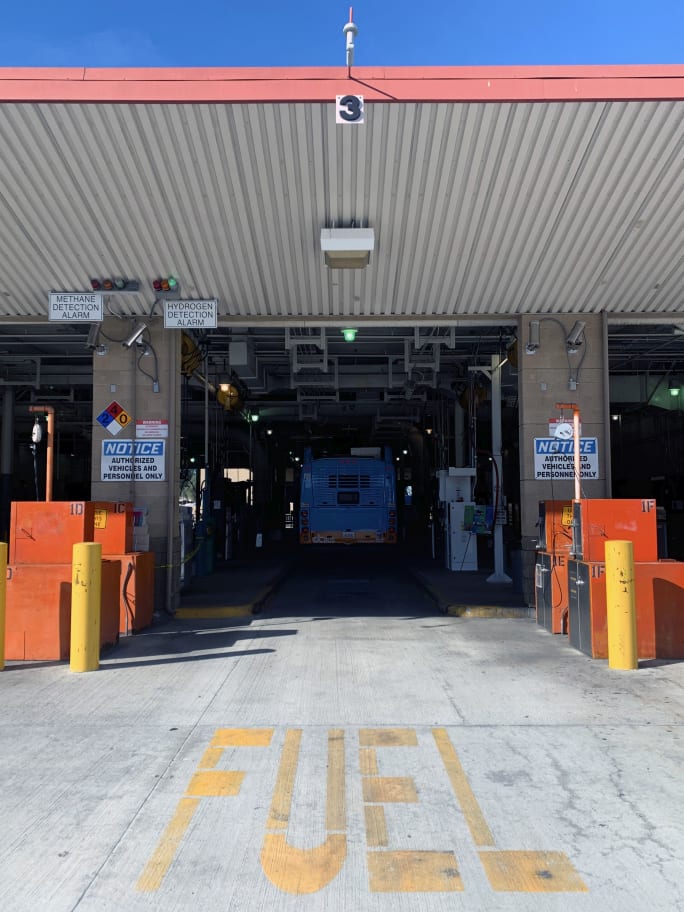
The IRA establishes new incentives for deep energy efficiency improvements integrated within transit facility new construction or retrofit projects.
Credit:
CTE/OCTA
Microgrid Tax Credits
The IRA acknowledges transitioning to a low-carbon economy involves much more than increasing renewable energy. Accordingly, the legislation also expands tax credit eligibility to a wide range of distributed energy resources.
Technologies previously eligible for the ITC or PTC included:
Solar photovoltaics
Wind turbines
Geothermal energy
Fuel cells
Combined heat and power
Hydropower
The IRA expands credit eligibility to include:
Energy storage
Biogas fuel
Microgrid controllers
Interconnection systems
Until now, the ITC only applied to battery storage projects if batteries were paired with solar PV. Moving forward, standalone storage can also qualify.
If a project is connecting to the grid, the IRA can help lower costs for power transmission or distribution infrastructure. An “interconnection property” can qualify for the ITC so long as the facility’s net power output does not exceed five Megawatts (MW).
If the project is part of a microgrid, certain technology costs can be included in the overall ITC value. The legislation specifically clarifies that eligibility applies to the microgrid controller — the component that determines how energy flows among distributed energy resources, balancing power delivery, and consumption.
Altogether, these IRA provisions are expected to lower the cost to install energy generation, storage, and transmission infrastructure. By lowering the costs of these energy assets, which comprise the critical components of a microgrid, the IRA is expected to drive further adoption of microgrids — particularly in areas with limited power supplies and higher energy costs.
Zero-Emission Fleet Incentives
The ITC and PTC are not the only tax credits worth exploring. The IRA creates a new credit for vehicle fleets that transition to zero-emission alternatives.
Vehicle purchases can qualify for a 30% tax deduction. The so-called “45W credit” maxes out at $40,000 for most medium- and heavy-duty vehicles or $7,500 for light-duty vehicles. Fleet operators without tax liabilities can use the “direct pay” option explained earlier.
Stacking incentives will become an attractive strategy. The 45W credit can be combined with the ITC as well as other credits that lower upfront costs for charging infrastructure, hydrogen-production facilities, or distributed energy resources. Section 1304, for example, offers a credit for charging infrastructure installed within low-income communities, valued up to $100,000 per installation.
The IRA also provides billions of dollars in new grant funding. Combined with existing federal, state, and utility incentives, fleet operators can significantly lower costs to transition to battery-electric or hydrogen fuel-cell electric vehicles.
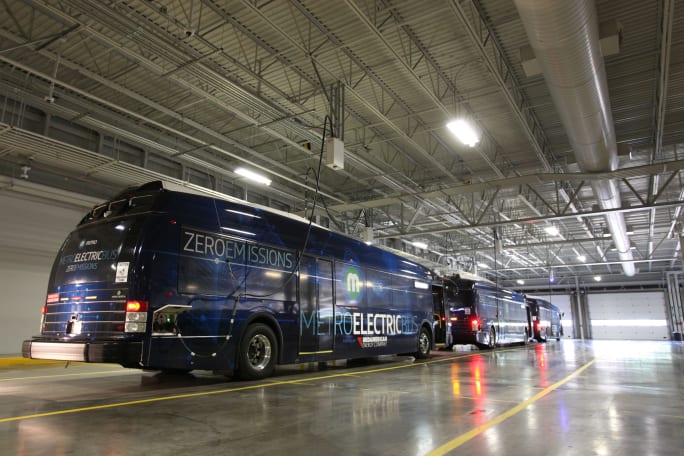
The IRA creates a new credit for vehicle fleets that transition to zero-emission alternatives.
Credit:
MetroLINK/Proterra
Energy Efficiency Tax Incentives
The IRA establishes new incentives for deep energy efficiency improvements integrated within transit facility new construction or retrofit projects.
An existing deduction, known as 179D, offers a credit of $1.80 per square foot for new construction projects that demonstrate energy savings of 50% or more. The IRA makes several revisions to 179D:
Expands eligibility to retrofit projects.
Increases the maximum deduction to $5 per square foot.
Lowers the eligibility threshold to projects that achieve savings of at least 25%.
The IRS previously clarified that governmental entities could take advantage of 179D by allocating the deduction to a qualified third party, such as the project design team. The IRA builds upon this arrangement, establishing that any tax-exempt organization — governmental or otherwise — can pass along the credit, effectively lowering the overall project cost.
The 179D revisions offer tremendous opportunities to shorten the payback of energy efficiency investments or to expand a project’s scope. Agencies are recognizing these benefits, revising Requests for Proposal language with suggestions for how design partners should negotiate the shared tax credit’s value.
Tip: Review jurisdictional requirements to determine 179D eligibility. Certain states prohibit public institutions from soliciting payments in exchange for the 179D deduction.
Transforming the Energy Economy
In the weeks ahead, look for new regulations to clarify how the IRS and other federal agencies will implement the IRA’s various provisions.
While some final details need to be sorted out, the overall picture is clear: the IRA will have a transformative impact on how energy is produced and consumed in the U.S. Expect record-setting levels of investment in renewable energy, battery energy storage systems, energy efficiency, and zero-emission vehicles.
After years of federal incentives benefitting mostly investors with sizable tax liabilities, the IRA will expand clean energy adoption across a much wider range of energy consumers. Transit agencies that choose to take advance of these credits not only lower their upfront capital costs. Greater clean energy adoption will lead to reduced energy costs, smaller environmental footprints, and more resilient transit facilities.
About the Author: Dave Smith is the Director of Energy Services at Burns Engineering, a national provider of specialized transit facility and power infrastructure engineering services.
Subscribe to Our Newsletter
More Zero Emissions
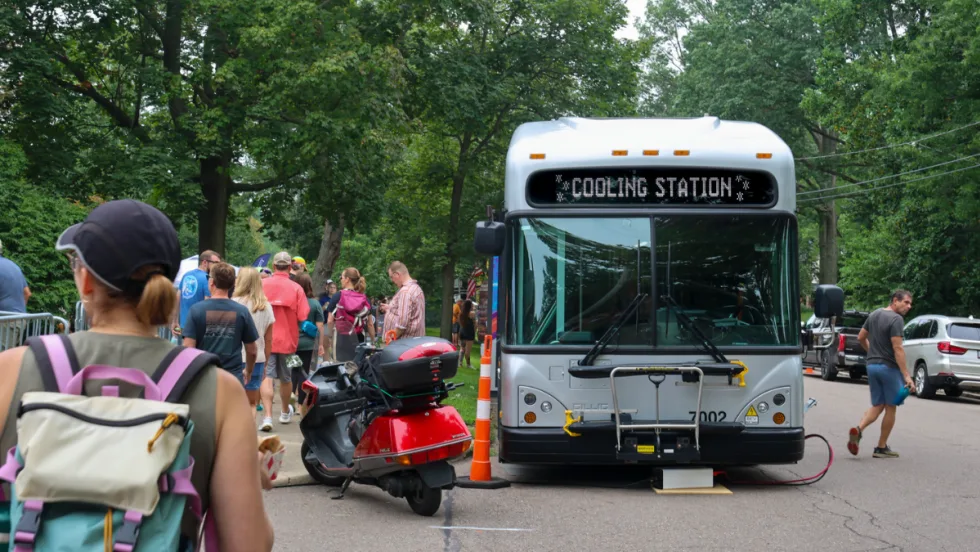
Ohio’s METRO RTA Turns Electric Buses into Mobile Power Sources at PorchROKR
See how three Gillig battery-electric buses powered festival stages while the agency’s new Park & Ride service carried approximately 1,000 attendees, demonstrating another potential use for transit agencies’ electric fleets.
Read More →
CALSTART and Forth Combine to Form Catalyst Mobility
The new name represents a renewed vision for the nonprofit focused on advancing clean, equitable, and affordable transportation solutions that move people and goods.
Read More →
Building a Flexible Path to Transit Electrification
John Hroncich discusses BAE Systems’ modular and scalable approach, lessons learned from decades of real-world operations, and how agencies can identify electrification strategies that fit their fleets.
Read More →
California's VVTA Begins Phased Rollout of Hydrogen Fuel Cell Buses
The agency is introducing 13 zero-emission buses into revenue service while evaluating performance across its urban, rural, and long-distance routes.
Read More →
Inside Look: University at Buffalo Puts First 8 Electric Buses Into Stampede Service
UB, transportation solutions provider WeDriveU, and fleet electrification specialist Zenobē marked the deployment in the presence of students, university administrators, and local officials.
Read More →
Biz Briefs: OCTA Taps Clean Energy for Hydrogen Station, Stadler to Supply Via Rail Vehicles, and More
From manufacturers and suppliers to transit agencies and motorcoach operators, these updates offer a snapshot of the projects, partnerships and business moves driving the industry forward.
Read More →
AC Transit’s Cecil Blandon on Building the Next Generation of Transit Maintenance Leaders
The agency’s maintenance chief discusses leadership, workforce development, zero-emission technology, and preparing technicians for the future of public transportation.
Read More →
CTDOT Taps STV for Electric Bus Facility Design
The firm will work with CTDOT and RVT to define the facility layout, operational requirements, and long-term flexibility for RVT’s growing electric fleet.
Read More →
Chicago’s Pace Deploys 24 Hybrid-Electric Buses in Will County
The new buses reduce emissions and fuel consumption while advancing the agency's long-term goal of transitioning to a fully zero-emission fleet.
Read More →
DASH Breaks Ground on First On-Route Electric Bus Chargers in D.C. Region
The fast-charging infrastructure will help extend electric bus range, improve fleet utilization, and support DASH's goal of transitioning to a fully zero-emission fleet.
Read More →