



Related: Driving Force Releases Driver Recruitment/Retention Toolkit
Keys to Recruiting, Retaining Motorcoach Employees Post COVID-19
With the devastating impacts of COVID-19, it is more important than ever to pull out all the stops when it comes to finding creative ways to both hire and keep quality employees.
by Amy Nixon
August 12, 2021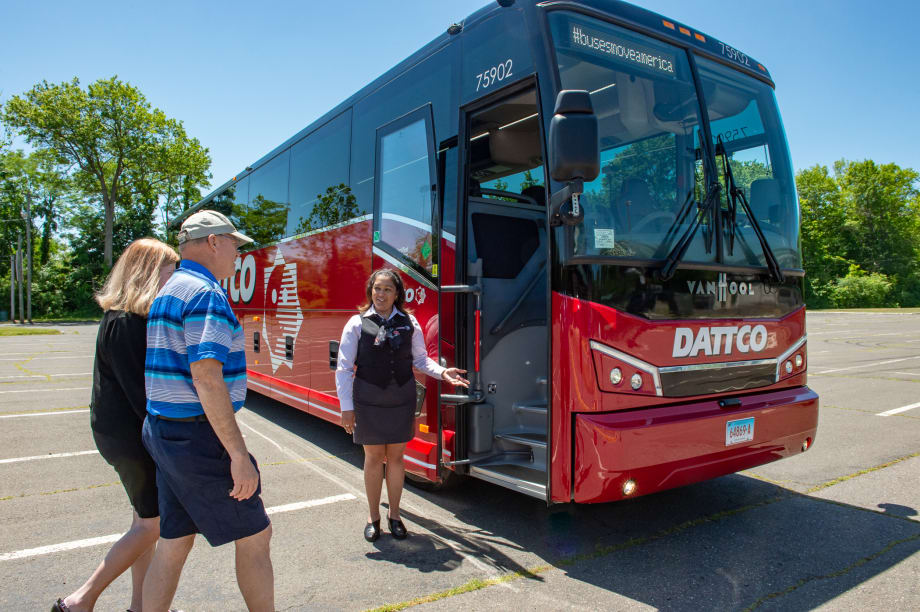
Keeping your employees happy is important to retention.
Credit:
DATTCO
8 min to read
- The COVID-19 pandemic has made hiring and retaining quality motorcoach employees increasingly challenging.
- Creative strategies are essential in recruiting new employees to address workforce shortages.
- Innovative retention tactics are crucial to maintain employee satisfaction and stability.
*Summarized by AI
Recruiting and retaining employees has long been a struggle within the bus and motorcoach industry. But amid the devastating impacts of COVID-19, it is more important than ever to pull out all the stops to find creative ways to both hire and retain quality employees.
What COVID Has Done to the Industry
According to a study by John Dunham & Associates for the American Bus Association, the motorcoach industry took a massive hit in 2020. In 2018, the industry generated a reported $15.35 billion in revenue. It provided nearly 98,000 full-time equivalent jobs. The study showed that all charter bus services were canceled from March through July 2020, and as of September 2020, scheduled service operations were estimated to be down by 70% to 80%. Commuter operations were down between 80% to 90%.
The report states that the industry was facing a shortage of commercial drivers and mechanics even before the shutdown.
“These employment impacts on the industry will be long-lasting. For motorcoach operators in general, even before this crisis, the industry was facing a shortage of both commercial drivers and qualified mechanics,” the report states.
“These positions are not easily replaced and require both the investment of time and money to procure,” the report continues. “As a result of the crisis and its duration, motorcoach operators report the critical loss of both drivers and mechanics, and in some cases, these employees were recruited by public transit agencies who received relief funding under the CARES Act. For charter operators, most companies are also reliant on trips and events scheduled months or even years in advance. Therefore, short-term grants/loans pursuant to the CARES Act, including the Paycheck Protection Program and Economic Impact Disaster Loans, have not been effective in retaining necessary employees and sustaining these essential transportation businesses.”
Driver recruitment and retention specialist Lynn Sansone shares this sentiment.
“We already had a shortage in the industry,” says Sansone, VP of the consulting firm On Your Mark Transportation LLC. “But now, we’ve lost a lot of drivers to other industries. They had to get by during COVID, and with so many operators completely shut down, they were forced to leave.”
The question then becomes, “How do we get the majority of these drivers to come back to the industry?” asks Sansone.
Are Your Recruitment and Retention Efforts Enough?
Sansone says owners and managers need to up their game when it comes to driver recruitment. While the old ways of doing things — posting on job boards and job recruitment websites — are still important, more focus should shift to social media and bonuses, she explains.
“There are several driver groups on Facebook, and that’s a good place to start,” Sansone says. “Owners and managers really need to get involved in these driver groups. This will give you key insight into what the drivers are thinking and what they are looking for.”
These pages are also great places to share job openings — and to find drivers who might be looking for jobs.
When posting job openings, make sure you are responsive, Sansone suggests. And although it may seem obvious, be sure your responses are kind and respectful. A timely response is also important. Drivers will not wait days for a response to their questions, she adds.
“Competition is fierce, and you need to do everything you can to stand out,” Sansone explains.
Owners may also need to recruit drivers on a part-time basis, especially since many former employees may now be working in other industries.
“As always, don’t allow dispatchers to play favorites, or have some drivers sitting more than others,” Sansone says. “If you hire part-time, be careful not to overhire and leave some sitting.”
“And as things pick up and grow, you can get employees in more full-time when they can sustain a living again as a professional driver,” she adds.
Next up: sign-on bonuses. Sign-on bonuses are a great way to recruit new drivers. Even better, utilize your current drivers to help recruit. Drivers can use the bonuses to recruit other drivers they meet who want information about your company.
“Owners and managers will go farther by using their current employees’ connections,” Sansone says. Their drivers will likely know others in the industry, and if they are happy in their job, they can share that with others. Often, drivers who are not happy with their own company will come to your bus with your driver to ask how they like working for your organization. If your driver can let this possible recruit know that your company offers a sign-on bonus, it will help catch the recruit's ear.
This speaks to the next key point, says Sansone — taking care of your current employees.
Keeping your employees happy is important to retention.
“People like to be heard,” says Sansone. “Talking to your current drivers, listening to their ideas, getting their feedback. These are all things you can do to help them feel like they are being heard.”
Sansone suggests bringing in an outside firm to sit and ask questions of the current driver pool. “Drivers will feel they can be more open if they can give their opinion to an outsider in an anonymous way,” she says. “Many times, we hear, and you will see on Facebook posts, that drivers feel companies will play favorites with work assignments, or other issues that owners and managers may not be aware of.”
Owners might also consider offering referral bonuses to employees who bring in new drivers. One way to facilitate this, Sansone suggests, might be to print business cards for your employees that they can pass out to potential recruits for their referral bonus. These business cards should include the name, phone number, and email of the person in charge of driver recruitment at your organization. Even better, they should include your driver’s names on them.
Business cards are fairly inexpensive, but if you do not want to go that far, Sansone suggests leaving a blank space for the driver to write their name and other possible contact information. Remember, these cards may be the first introduction that a recruit has to your company. If they look low quality, like they were printed on a home computer, you are leaving the impression that the recruit isn’t worth the time and money to do things right.
It is also important that the company pays the referral bonuses it offers its own drivers, or it risks losing the recruit and its current driver.
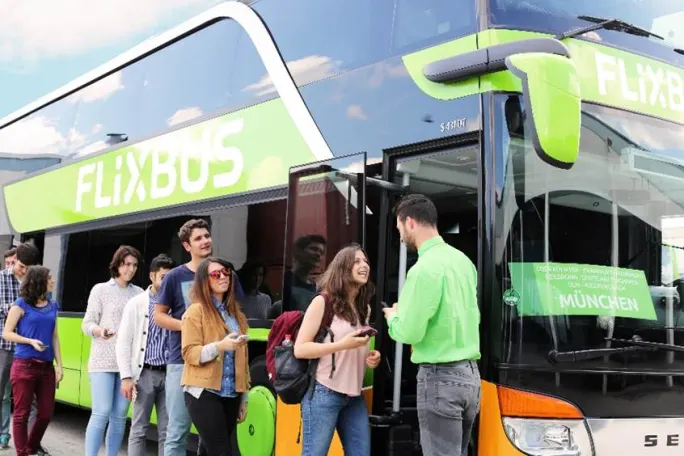
Now is the time to set your rate accordingly so you can pay competitive wages and all the extras, such as retention and recruitment bonuses.
Credit:
FlixBus
Be Positive
More than ever, it is important to “catch” a driver doing positive things for your organization, Sansone explains. So many companies have a wall filled with “Don’t do this-"type memos, with items telling drivers what they cannot do. How about a “Wall of Fame” filled with thank-you notes from customers, or other positive items, she suggests. Ask your drivers to share their pictures from their trips so you can post them on your social media. If you see them post something positive in one of the driver groups, ask if you can share it on your company page, as well. Also, if you “catch” a driver doing positive things, do not be afraid to have a simple $25 Visa Gift Card or restaurant card handy. It doesn't take much to tell someone you appreciate them.
Speaking of social media, what does your company’s social media say about your organization? Many recruits will conduct their own inspection of your company by reading your social media posts and visiting your website. Is your website up to date? Are you posting consistently about positive things on social media? Most importantly, is your social media free of any political or religious leanings? You may not be in favor of a particular political party or religious group, but those thoughts should never cross into your company’s social media, Sansone says.
Also to consider: are your website and social media platforms full of pictures of your pretty buses, or do you also show happy employees engaged in activities?
Making sure you have positive reviews is also imperative. Are you using Google My Business, where customers can leave positive reviews about your organization? When an employee comes to you to say they were happy with something you did for them, you may want to ask if they can post a positive review about your organization. This is important for other places as well, such as Indeed.com and Glassdoor.com, she explains.
Another possibility is for the large bus and motorcoach associations to offer scholarships to attract people to the industry, Sansone suggests.
“Possibly paid training or scholarships to pay for your CDL or medical certification,” she says. “These might be ways to get some interest at least.”
Listening is Key to Retention
As previously stated, listening to current employees is a key way to keep them happy in their jobs.
Owners might also consider offering retention bonuses to keep current employees on board.
“It’s so hard right now because we don’t know what lies ahead,” Sansone says. “And while things are starting to pick up, we are only at about 50 percent capacity right now. We are all just learning together. “But the driver groups are just amazing because you can learn what people are thinking out there. And that is so important. Owners and operators need to really listen and respond to what’s important to drivers.”
How Do I Fund All of This?
“When it comes to bonuses, it’s surprising how far a little appreciation goes,” Sansone says. “Recruiting bonuses are paid out over time, not all at once, so if the recruit helps you run equipment that would have been sitting, they are helping to bring in new work.”
Now is the time to set your rate accordingly so you can pay competitive wages and all the extras, such as retention and recruitment bonuses.
And train your office sales staff to be salespeople, and not just “order takers.” There are things your company does to serve your customers, and your staff needs to make those distinctions clear to your clients, not just drop your price to meet the competition.
“So many of these suggestions, other than the bonuses, are low-cost, or no cost,” Sansone says. “Maintaining your website and keeping up with your social media, returning phone calls, and responding to emails don’t cost you anything but time, and they will all pay dividends when those buses are rolling with an increased driver pool.”
Quick Answers
COVID-19 has significantly impacted the recruitment of motorcoach employees by reducing the available talent pool and increasing the need for creative hiring strategies.
*Summarized by AI
Subscribe to Our Newsletter
More Motorcoach

METRO Opens Submissions for 2026 Motorcoach Awards
Nominations are now being accepted for METRO Magazine’s Operator of the Year and Innovative Operator of the Year awards.
Read More →
Biz Briefs: Alstom Lands Canadian Contract, LYT to Supply California TSP, and More
In METRO's latest installment, we take a look at recent news from Complete Coach Works, Beep, FlixBus, and more partnerships making headlines across the transportation sector.
Read More →
Biz Briefs: RIPTA Unveils New Frontrunners, Clevland RTA Adds New Siemens, and More
In METRO's latest installment, we take a look at recent news from Siemens, Prevost, Dodge, and more partnerships making headlines across the transportation sector.
Read More →
People Movement: Holly Arnold Joins Transdev and More
In this edition, we also cover recent appointments and announcements at Pace, CamTran, MCI, and more, showcasing the individuals helping to shape the future of transportation.
Read More →
ABA Report: Motorcoach Travel Generates $161.6B Economic Impact
The 2025 analysis finds motorcoach travel supported nearly 900,000 jobs and generated $28 billion in federal, state, and local taxes.
Read More →
CharterUP’s Armir Harris on Technology, AI, and the Future of Group Mobility
In a recent episode of METROspectives, CharterUP Founder/CEO Armir Harris discussed the company’s evolution from an online charter bus marketplace into a technology platform supporting public- and private-sector mobility and much more.
Read More →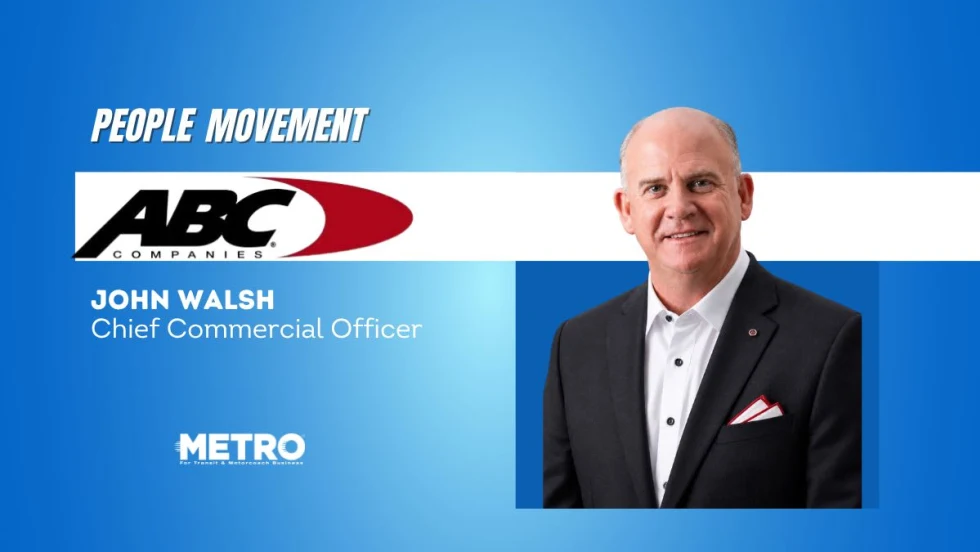
People Movement: ABC Names John Walsh as Chief Commercial Officer
In this edition, METRO also covers recent appointments and announcements at the DART, STV, and more, showcasing the individuals helping to shape the future of transportation.
Read More →
From Surviving to Thriving: Building Stronger Transportation Organizations
Bus Business Consultants founder Brian Dickson shares lessons on leadership, organizational health, and creating options for long-term success in a changing transportation industry.
Read More →
Biz Briefs: Luminator Marks Milestone and More
From manufacturers and suppliers to transit agencies and motorcoach operators, these updates offer a snapshot of the projects, partnerships and business moves driving the industry forward.
Read More →
ABAF Study Reveals Growing Insurance Crisis for Motorcoach Operators
Preliminary findings show 98% of operators faced premium increases over the past five years, while shrinking insurer participation is putting added pressure on businesses and customers.
Read More →