



In This Together: How Motorcoach Associations Have Stepped Up and Helped Out
The heads of the American Bus Association and United Motorcoach Association weigh in on how banding together has made it possible for the industry to survive the COVID-19 pandemic.
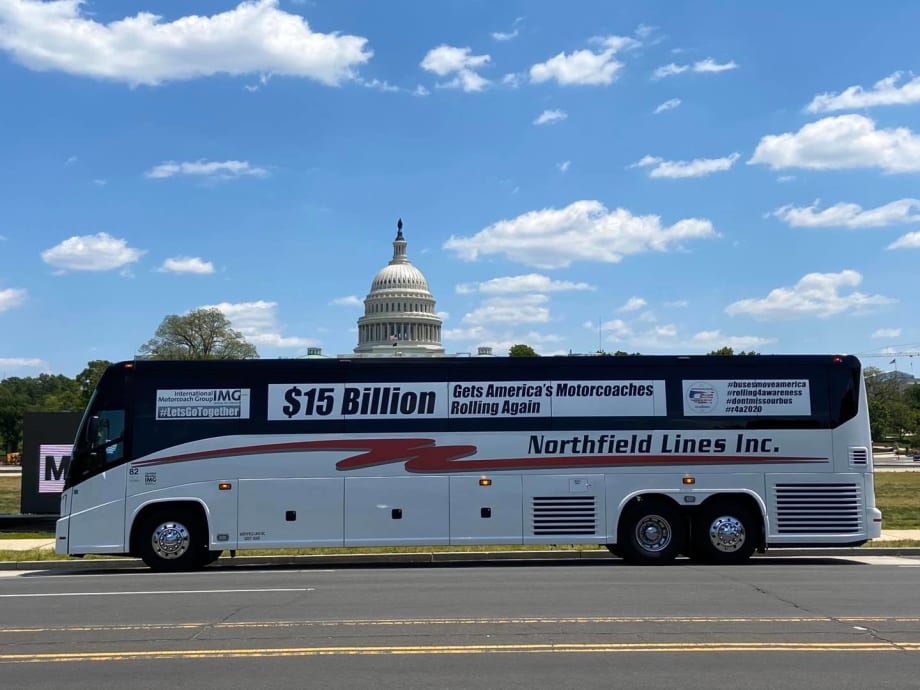
Motorcoach companies need to establish relationships with their representatives in Congress if they want their voices to be heard.
When it comes to getting through a crisis, it’s beneficial to have others to talk to who know what you’re going through. Industry associations are often an incredible resource to reach out to for assistance and advice. METRO spoke to Peter Pantuso, president and CEO of the American Bus Association (ABA), and Larry Killingsworth, outgoing president and CEO of the United Motorcoach Association (UMA), to discuss pandemic recovery and what they are doing to help their members power through these tough times.
Clearly, navigating the pandemic has been one heck of a ride. What are some of the lessons the industry learned?
Pantuso: Much of what we've been doing at the ABA has been to try to get financial assistance for the industry. We had a bill in the House and a bill in the Senate that we got two-thirds of all members of the House and Senate to co-sponsor. The lesson through that process is just how unknown of an industry we are to Congress, and despite all our staff’s efforts, it was a little like pushing a rope up a hill. I think we got the two-thirds to co-sponsor because of the active and engaged work that almost everybody in the industry did; not just the professionals, but the actual owners, operators, and suppliers.
We were starting from such a deficit position as an unknown entity. The takeaway is everybody in the industry needs to be engaged in government affairs on a regular basis. The government is your business partner. It’s important to create a relationship with them by getting members of Congress into your facility for a tour, telling them about how you're operating your company, or how regulations have impacted your business so when these things come before Congress, they have a much better understanding of companies like yours. The reality is members of Congress want to hear from people back home. When they can go to a bus yard and see 20 or 30 vehicles parked there, talk to the workers, and understand what they do and why they do it, that makes a big difference.
Killingsworth: I stepped into this role as an interim president and CEO on March 1, 2020. Little did I know what the industry was about to be thrust into, but my background has been in leading change in organizations. So, I fortunately was able to apply some of those skills to help lead and support our members. One of the big things we learned was the importance of communication. We had to communicate much faster and more frequently compared to what it had always been like because things were changing daily. We created a daily NewsFLASH and hosted a weekly live UMA Town Hall digital meeting. Bus and Motorcoach News, our publication, went all digital so there was no information lag through the print process. Those changes were instrumental to help keep our members and the industry as a whole up to speed on the latest news on how to combat the virus, use best practices, advocate for the industry, and tips on staying alive as a business — conserving cash, downsizing, and more.
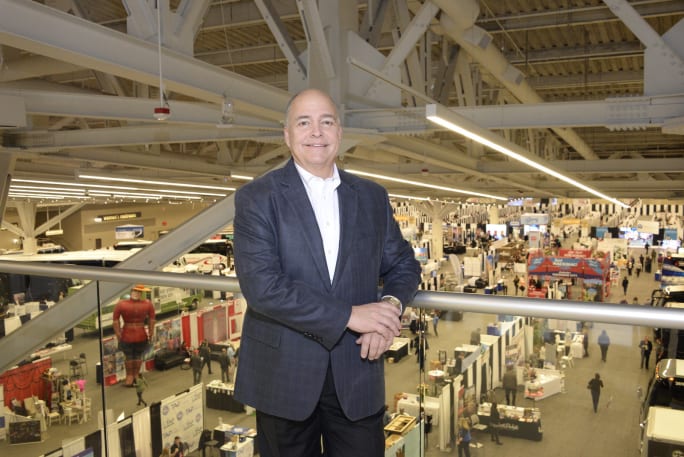
Peter Pantuso
Based on feedback from your members, what's the current state of operations at this time?
Pantuso: We did a lot of research last year through our Foundation and were able to track how the industry was performing at different points in time. In the heat of the pandemic, we saw the industry was operating about 10 to 20 percent, compared to 2019, depending on what segment it was and where they were located. In 2021, the prediction was we were probably going to be operating at about 30 to 40 percent across the board. Right now, we're probably closer to 40 to 50 percent. Historically, we've seen recovery has been a lot more difficult in the northeast. Commuter service operations are really struggling with more people working from home now. When it comes to charter and tour, hardly anybody took tours in 2020. Coming into this year, there was definitely an uptick due to high school and college sports.
Killingsworth: With 2019 as a baseline, 2020 was about 20 percent of normal. Work was down about 80 percent across the board. There were exceptions, but that was probably the average. In 2021, right now we are up in the 50 to 75 percent of normal of historic normal range. It steadily climbed as we went through 2021 and things begin to reactivate.
How do you think the Delta or other possible variants are going to impact operations for the rest of the year? What's the outlook for the industry, and when do you think it'll start looking like itself again?
Pantuso: I think the variant is still going to linger in people's mindset about travel for a period. At some point, we’re going to need to start thinking about how to live with this virus, not just how to combat it. Recognizing that it's going to be around, and that we need to figure out what we must do to be able to move on with our lives? With more people vaccinated, there’s certainly a mindset of ‘I want to get out’ and ‘since the people on the coach have been vaccinated, I feel comfortable.’ Like the flu, I’m assuming there will be other variants out there at some point in time. But the world can't stop every time there's something different coming along; we just have to figure out how to live with it while also being as safe as possible.
At this point in time, I don't see a full recovery for the industry until maybe the end of 2023. Even then, I think there are some segments that have changed forever, commuter being one of them. It's going to be forever different than it was two years ago.
Killingsworth: The variants will definitely have a dampening effect. The delta variant has caused a few cancellations so far. We just hope it stays minimal. As Peter said, we're having to learn how to live with this virus and its variants. I think that's the learning curve the whole world is on right now. So, I see the industry steadily gaining strength back. We're bullish on the spring of 2022 as the time we could be coming back close to historic levels of business.
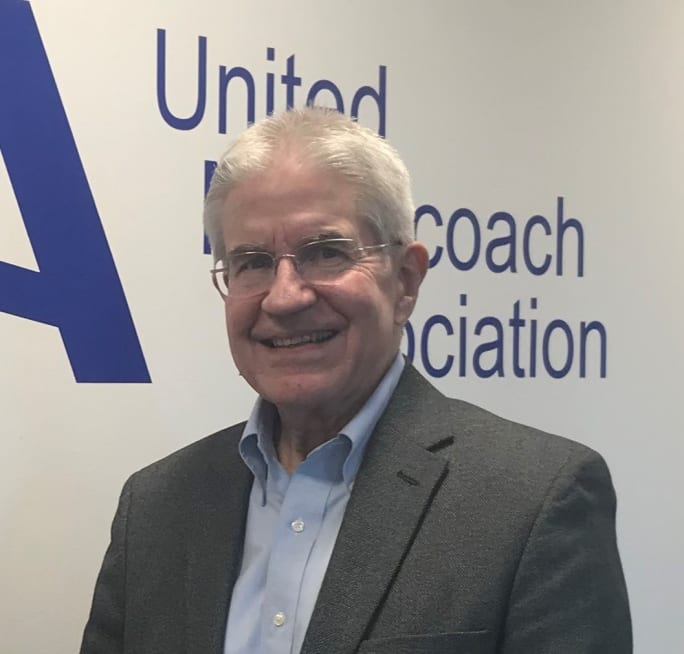
Larry Killingsworth
From an association standpoint, have you seen many members either drop their membership or leave the industry altogether? What have you done to maintain membership during the pandemic and help with operations?
Pantuso: In terms of the industry, we saw about 25 percent of motorcoach companies lose operating authority or give up operating authority at some point in time over the last year-and-a-half. Many of those companies are gone forever and are not coming back. Some of them lost operating authority because they took their insurance off the buses and were trying to save money during a very difficult time, which I certainly understand. As they started getting some business, they started bringing those buses back online and getting their authority back from the FMCSA. This is an industry made up of small, hardworking family businesses. I'm guessing a lot of them didn't belong to any association, but a few of them were ABA members. We've had a fair number of members who have been relatively slow in paying their dues, since they’re struggling. We are being very lenient with them, as we want them to get back on their feet.
Early on in March and April of 2020, we called every single operator to talk to them or a member of their staff to see how they're doing and what they needed. We've been in constant contact with them. As the government was getting ready to take Coronavirus Economic Relief for Transportation Services (CERTS) applications, we made sure we communicated, not just our own members, but to the entire industry, when the applications were out and to assist them if they needed help completing the applications. What we did during the pandemic was what we always do, which is serve our members and the industry at the highest level, to do anything we can to make sure we help them continue their business operations.
Killingsworth: A lot of the time, it's hard to tell what companies are left because they often just go dormant or quiet. We see a percentage of them that have either merged with somebody else or left the industry.
UMA suspended membership dues for one year to support every operator in the industry, and we also changed our dues structure so it is now based on the number of vehicles you have. We also put in a monthly payment option so they could pay up front or start a payment plan. That's been well received. We are continuing to find key benefits that will help them and showcase those weekly during our town hall meetings. For example, the last two or three weeks, we've been focusing intensively on driver recruiting and retention. In addition to the pandemic, the number one challenge is bringing drivers back. So many of them have had to go find other jobs or decided to retire.
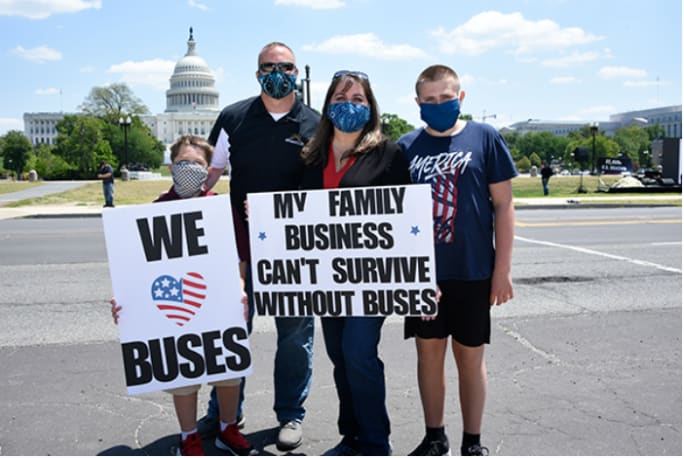
Pantuso stated the importance not just telling but showing congressional representatives how regulations have impacted business.
How has this current administration impacted the industry, if at all?
Pantuso: I wouldn't say I've seen a huge impact yet. But understand, we're only in the first nine months of the administration. The focus has been almost totally combating the pandemic, which impacts all of us. The administration has created a mask mandate for public transportation, and that includes charter and scheduled buses. We’ve seen other administrations who, after they get on their feet, start moving a regulatory agenda forward very quickly. We haven't seen anything on the regulatory side that's really impacted our industry so far. We’ve got three-and-a-half more years of this administration, so I'm sure there will be some things coming along.
Killingsworth: We don't see it right now. The one impact we are concerned about is, traditionally, Democratic leaders tend to favor more constraints or regulations. We are lobbying hard now to avoid adding any restrictive regulations that will impede our ability to provide service to our customers. We are monitoring that closely. We think the infrastructure bill and everything around that could have some real benefits for the industry by improving roads and bridges. We are also continuing to lobby for additional funding for the CERTS program. We ended up getting $2 billion out of a requested $8 billion. So now we're requesting an additional $6 billion to help us get completely through the COVID-19 crisis for our industry.
Are you still on track to hold your conventions in early 2022?
Pantuso: Our annual ABA Marketplace is slated for January 8 to 11, 2022, in Grapevine, Texas. We've gotten close to 1,000 people already signed up. We've got a lot of things from a meeting planning perspective that are a little bit different that we're putting in place to ensure everybody's safe, like social distancing, mask requirements, and temperature checks. We want to make sure everybody feels comfortable coming. It's all about building your business and getting back to it again.
Killingsworth: We were very fortunate because we were able to hold this year’s Motorcoach EXPO in Orlando. We have been through the paces of producing a successful live, in-person event during a pandemic and are confident in our ability to replicate that in Long Beach, Calif., February 23 to 27. It’s looking like we will have double the exhibit space we had this past year. People are stepping up to exhibit and I think we'll see attendance grow.
More Motorcoach
Rethinking the Road: Transportation Challenges for Smaller College Athletics
Smaller college athletic programs are rethinking fleet strategies as rising costs, driver shortages, and longer travel distances put new pressure on transportation budgets.
Read More →
Brian Dickson on Building Stronger, More Resilient Transportation Organizations
Bus Business Consultants Founder Brian Dickson discusses the leadership principles, operational discipline, and strategic planning that separate transportation companies positioned for long-term success from those stuck in survival mode.
Read More →
Roman Cornell on ABC Companies’ Evolution and the Future of Passenger Transportation
The company’s CEO discusses carrying forward a third-generation family legacy, ABC’s continued evolution in passenger transportation, support for increasingly complex fleets, and how technology and continued investment could help operators improve uptime.
Read More →
From Surviving to Thriving: Building Stronger Transportation Organizations
Bus Business Consultants founder Brian Dickson shares lessons on leadership, organizational health, and creating options for long-term success in a changing transportation industry.
Read More →
Report: Canadian Motorcoach Industry Generates $4.4B in Economic Impact
The 2025 Motorcoach Economic Impact Report finds motorcoach travel supported nearly 25,000 jobs and generated $980 million in federal, provincial, and local taxes.
Read More →
Prevost Opens Expanded Chicago-Area Service Center
The $8.1 million Elk Grove Village investment nearly triples facility space while adding service capacity, parts storage, and customer amenities.
Read More →
People Movement: Dan Dipert Coaches Adds Third-Generation Leader, Keolis Names New Valley Metro VP/GM, and More
In this edition, we also cover recent appointments and announcements at the Wabtec, SilverRide, HNTB, and more, showcasing the individuals helping to shape the future of transportation.
Read More →
METRO Opens Submissions for 2026 Motorcoach Awards
Nominations are now being accepted for METRO Magazine’s Operator of the Year and Innovative Operator of the Year awards.
Read More →
Biz Briefs: Alstom Lands Canadian Contract, LYT to Supply California TSP, and More
In METRO's latest installment, we take a look at recent news from Complete Coach Works, Beep, FlixBus, and more partnerships making headlines across the transportation sector.
Read More →
Biz Briefs: RIPTA Unveils New Frontrunners, Clevland RTA Adds New Siemens, and More
In METRO's latest installment, we take a look at recent news from Siemens, Prevost, Dodge, and more partnerships making headlines across the transportation sector.
Read More →