



MCI leads cross-country convoy to mark history
An MCI coach was one of several vehicles that traveled from San Francisco to Washington, D.C., in June to celebrate the 50th anniversary of the signing of the historic federal highways bill.

Two MCI coaches were part of a historic cross-country convoy that celebrated the 50th anniversary of President Dwight D. Eisenhower’s signing of the Federal Highways Act, which paved the way for the construction of the nation’s interstate highway system.
The American Association of State Highway Officials sponsored the convoy, which also included RVs, vans and antique cars. The convoy departed San Francisco June 16 and made 18 celebratory stops along its I-80 route before arriving in Washington, D.C., on June 29.
MCI President and CEO Tom Sorrells and his family joined the convoy as it came through Chicago suburbs, riding all the way to its final destination, where U.S. transportation officials held a ceremony.
The MCI coaches, a J4500 and D4500, performed “flawlessly” during the 3,357-mile cross-country journey, according to Dave Kane, one of the drivers.
Kane made the historical journey with fellow driver Bud Gilley, who drove the MCI Commuter Coach. Kane, who has been an MCI driver for 22 years, said his most memorable moment was a choreographed 44-motorcycle police escort on the way out of San Francisco, where the convoy was led by NFL broadcaster John Madden’s MCI E4500 cruiser.
In the half century that has followed Eisenhower’s signing of the federal highway bill, the system has grown to include 46,837 miles of roadway, 55,500 bridges, 104 tunnels and 14,750 interchanges. Yet the system isn’t keeping pace with the growth in vehicle miles traveled, noted Norman Mineta during the June 29 ceremony, a few weeks before announcing his retirement as U.S. Secretary of Transportation. “Building the system is a journey not a destination,” he said.
MCI, in cooperation with the American Bus Association, used the convoy as an opportunity to highlight the advantages of travel by motorcoach. With its “Go Green, Go Coach, Go MCI” slogan, MCI made the point that a fully-occupied motorcoach can take the place of 57 cars on the road.
“Most of us take our excellent highway system for granted, but the high price of fuel has everyone thinking about what they’re spending on the road,” said MCI’s Sorrells. “MCI motorcoaches offer greater fuel efficiency per passenger mile than cars, planes or trains. The cross-country convoy provided an opportunity for motor coaches to get out front, and MCI was pleased to represent the industry in this historical event.”
More Management

NITA Proposes $5B Operating Budget, $9.7B Capital Program for 2027
The proposed budget includes funding for expanded transit service, safety initiatives, fleet upgrades, and infrastructure improvements across CTA, Metra, and Pace.
Read More →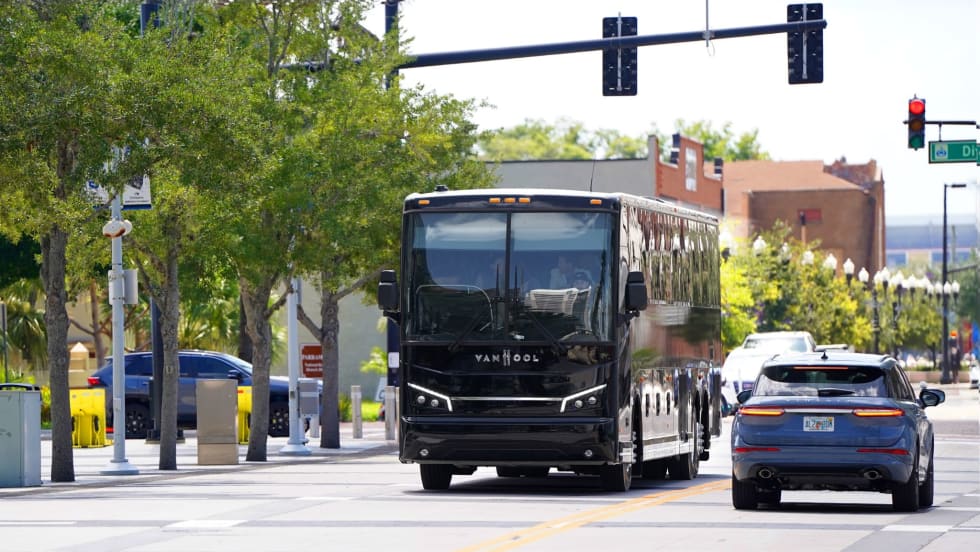
Financing, Fleet Replacement Requires a More Strategic Approach
Executives from ABC Companies and MCI discuss how rising costs, changing market conditions, and post-pandemic challenges are prompting motorcoach operators to rethink financing strategies, fleet replacement cycles, and long-term planning.
Read More →
Bringing Austin’s First Light Rail System to Life
Austin Transit Partnership CEO Greg Canally discusses the city's nearly 10-mile light rail project, its collaborative approach to project delivery, the importance of community engagement, and the milestones ahead as construction approaches in 2027.
Read More →
ETA CEO John Maglio on Transit Technology, Innovation, and Building Agency Trust
ETA founder and CEO John Maglio explores the evolution of transit technology, the importance of reliable systems, and how stronger partnerships can help agencies improve operations and the passenger experience.
Read More →
Metra Draft Plan Outlines Costs, Service Improvements for Regional Rail
The Systemwide Network Plan identifies infrastructure needs and potential investments to expand all-day, bidirectional rail service across the Chicago region.
Read More →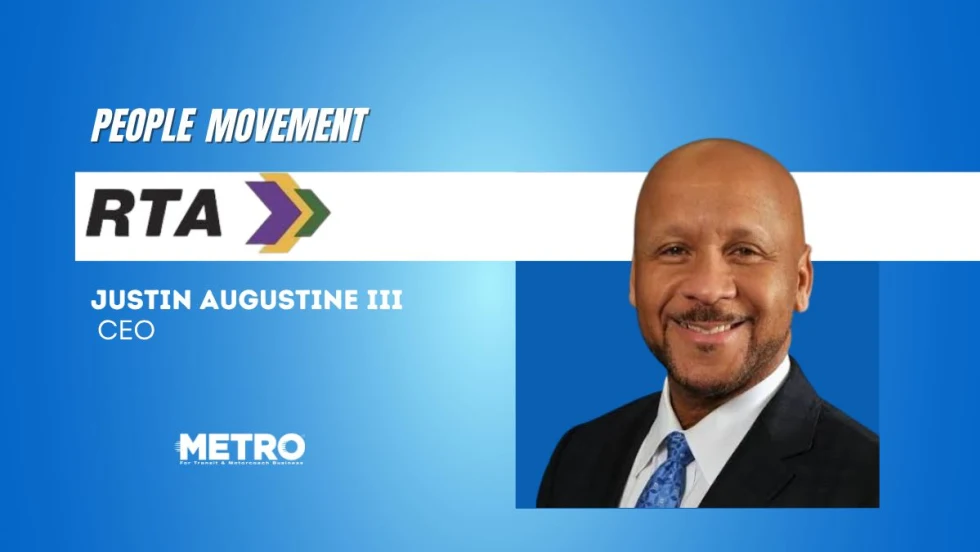
New Orleans RTA Names Augustine III as New CEO
In this edition, we also spotlight recent personnel moves at HDR, PATH, STV, and more, highlighting the people taking on new roles across the transportation industry.
Read More →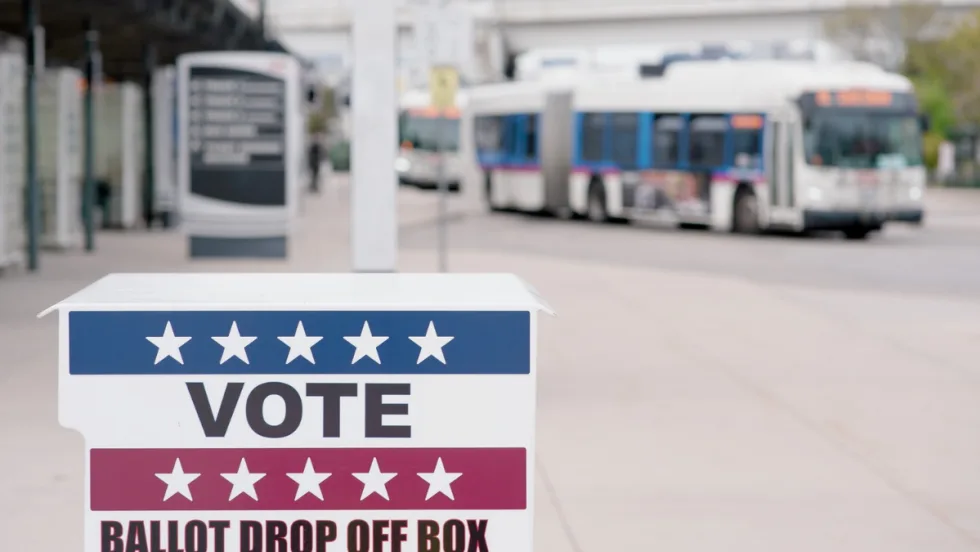
How Transit Agencies Are Using Free Rides to Improve Voting Access
Transit agencies are using fare-free service, trip-planning tools, and targeted rides to improve voting access. See what other agencies can learn from these efforts.
Read More →
Caltrain’s Electrification Drives a New Era of Ridership Growth
The railroad’s shift to electric service has brought more frequent trains, stronger customer satisfaction, and increased ridership, earning it APTA’s Outstanding Public Transportation System award.
Read More →
Chicago, Charlotte Transit Agencies Expand Rider Support Programs
CTA launched crisis intervention teams as CATS prepares to deploy fare ambassadors, expanding customer assistance and security efforts across both systems.
Read More →
New York MTA Launches Historic $1.9B Signal, Track Modernization Project
Funded in part by congestion pricing revenue, the project will replace nearly century-old signals along the A and C lines in Brooklyn and Queens.
Read More →