




Read More: An Inside Look at L.A. Metro’s New Fare Capping Program with Cubic
New Cubic President Outlines Approach in New Role, Goals for Company
Peter Torrellas, newly appointed president of Cubic Transportation Systems, shares how he is tackling the challenges of new leadership, his short- and long-term goals for the company, and provides an update on where Cubic stands with its latest projects.
November 30, 2023
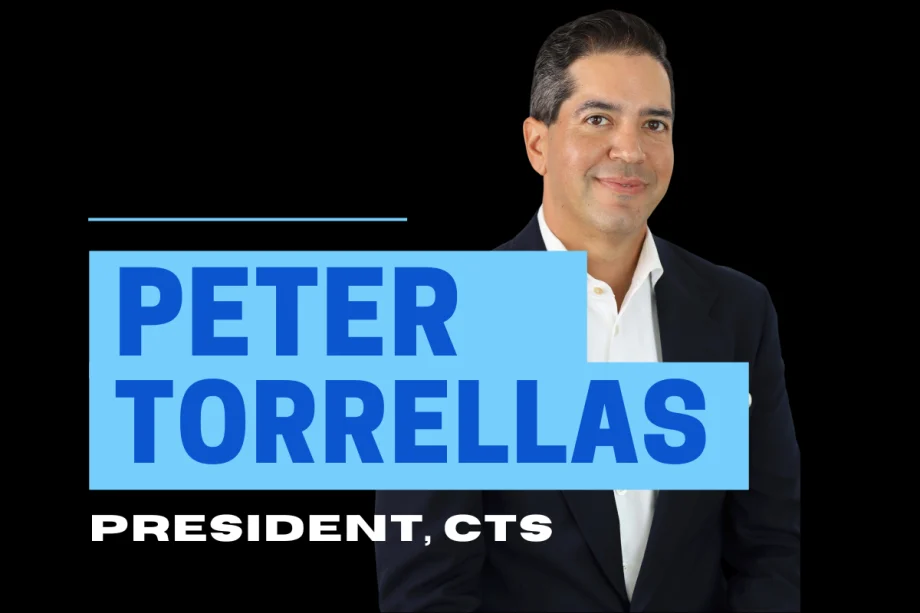
Peter Torrellas is tasked to focus on leading CTS’ strategic vision, growing its customer base, enhancing partnerships with existing customers, and building on the history of fare and ITS technology innovation around the world.
Photo: METRO
4 min to read
Peter Torrellas has only been the president of Cubic Transportation Systems and senior vice president of Cubic Corporation since August, but he is ready to make a difference in public transportation.
Torrellas is tasked to focus on leading CTS’ strategic vision, growing its customer base, enhancing partnerships with existing customers, and building on the history of fare and ITS technology innovation around the world.
“My immediate goal is to listen,” Torrellas said. “I spent most of my time traveling around the world to meet our customers.”
Torrellas has traveled to London, Dublin, Sydney, Brisbane, New Zealand, Boston, and New York to engage with CTS’ customers.
“It's just been a journey to try to understand ‘what are the challenges facing the transit agencies around the world and challenges facing their riders?’” he added. “How can we, as we move into our future do our best to meet those challenges?”
Torrellas’ experience can help overcome the challenges ahead, as he has dedicated the last 20 years of his life to creating value by digitally transforming infrastructure in North America, Europe, the Middle East, and Asia.
Torrellas’ Goals at CTS
While the short-term goal for Torrellas is to listen, he also shared what the future holds for CTS.
“The long-term goal is to continue to set the North Star for the industry,” Torrellas said. “Since its foundation in 1971, Cubic has really been the market leader in fair collection. We look forward to answering questions like ‘What is the role of artificial intelligence in the next phase of a fair collection?’”
Torrellas is also prepared to look at how the ecosystem is evolving and how the user experience to infrastructure is evolving.
“If you think about fare collection, it is essentially most people's user interface to their mobility infrastructure,” he said. “We have over 38 million people a day using our system. We have an incredible amount of data and insights into how people are experiencing transportation, especially public transportation in urban settings. That's an increase of opportunity for us to keep innovating and providing that guiding light.”
The Metropolitan Transportation Authority (MTA) announced in October that officials unveiled OMNY vending machines at six subway stations, which marked the latest step in the agency’s push to phase out Cubic’s MetroCards as the fare payment system for subways and buses.
The MTA board approved a contract with Cubic in 2017 to launch the tap-to-pay system.
“The future for us, especially in the next two to five years, is to expand that experience across the entire MTA infrastructure,” Torrellas said.
Cubic also said it is working to roll out a nationwide New Zealand ticketing system.
“We are unifying one experience for the entire country when it comes to journey management,” Torrellas said about the company’s partnership. “They have 13 different operators, 13 different regions who are operating everything a little bit differently. We're making it easier for people to use public transit, which has not only economic development benefits but also environmental benefits.”
The partnerships with MTA and New Zealand highlight the work CTS is doing within public transit.
Torrellas doesn’t specifically predict what lies ahead, but he acknowledges the challenge is confronting the unknown.
“The uncertainty and how you navigate that together, that's typically where the biggest challenges lie,” he said. “It's not often that it's a technical challenge or an engineering challenge. It's the social complexity of massive organizations coming together with millions of people involved to safely deliver a completely new modern experience.”
Changes Since Becoming President
CTS is showing the work is being done in the field, but what about within the organization?
Leadership changes can provide an opportunity for growth, and CTS has been expanding its team since appointing Torrellas as president.
CTS created two new roles, the chief growth officer and the chief digital officer. Rich Varos has been named as the chief growth officer, Torrellas said.
“We will also resource a new role, which is somebody who's focused on that digital transformation that we and our customers are making, adopting emerging technologies, and taking advantage of AI,” Torrellas said. “We want to make sure that we have somebody who's dedicated to the digital transformation part so that we have the right skills and leadership to shepherd us into that future.”
The future of CTS is seemingly bright with the company’s focus on technology.Not only does CTS’ technology provide financial inclusion and social equity so that everybody in the community has access to transportation, but Torrellas added that there's another portion of the population that needs different fair discounts so that they can participate in the economy.
“Our technology provides for that, as well,” he said. “We're incredibly excited about our future. I think the industry is at an inflection point, and we have an opportunity as a market leader to help co-author and co-create the future with our customers.”
Subscribe to Our Newsletter
More Management

Bringing Austin’s First Light Rail System to Life
Austin Transit Partnership CEO Greg Canally discusses the city's nearly 10-mile light rail project, its collaborative approach to project delivery, the importance of community engagement, and the milestones ahead as construction approaches in 2027.
Read More →
ETA CEO John Maglio on Transit Technology, Innovation, and Building Agency Trust
ETA founder and CEO John Maglio explores the evolution of transit technology, the importance of reliable systems, and how stronger partnerships can help agencies improve operations and the passenger experience.
Read More →
Metra Draft Plan Outlines Costs, Service Improvements for Regional Rail
The Systemwide Network Plan identifies infrastructure needs and potential investments to expand all-day, bidirectional rail service across the Chicago region.
Read More →
New Orleans RTA Names Augustine III as New CEO
In this edition, we also spotlight recent personnel moves at HDR, PATH, STV, and more, highlighting the people taking on new roles across the transportation industry.
Read More →
How Transit Agencies Are Using Free Rides to Improve Voting Access
Transit agencies are using fare-free service, trip-planning tools, and targeted rides to improve voting access. See what other agencies can learn from these efforts.
Read More →
Caltrain’s Electrification Drives a New Era of Ridership Growth
The railroad’s shift to electric service has brought more frequent trains, stronger customer satisfaction, and increased ridership, earning it APTA’s Outstanding Public Transportation System award.
Read More →
Chicago, Charlotte Transit Agencies Expand Rider Support Programs
CTA launched crisis intervention teams as CATS prepares to deploy fare ambassadors, expanding customer assistance and security efforts across both systems.
Read More →
New York MTA Launches Historic $1.9B Signal, Track Modernization Project
Funded in part by congestion pricing revenue, the project will replace nearly century-old signals along the A and C lines in Brooklyn and Queens.
Read More →
Brian Dickson on Building Stronger, More Resilient Transportation Organizations
Bus Business Consultants Founder Brian Dickson discusses the leadership principles, operational discipline, and strategic planning that separate transportation companies positioned for long-term success from those stuck in survival mode.
Read More →
LA Metro Breaks Ground on Vermont BRT Project
The 12.4-mile corridor is projected to serve 66,200 daily riders, reduce travel times by up to 24%, and create the nation's busiest bus rapid transit corridor.
Read More →