



Practicum focuses on innovative funding, financing solutions
The event was hosted by APTA and CUTA and held prior to APTA’s Rail Conference in Montreal in mid-June.
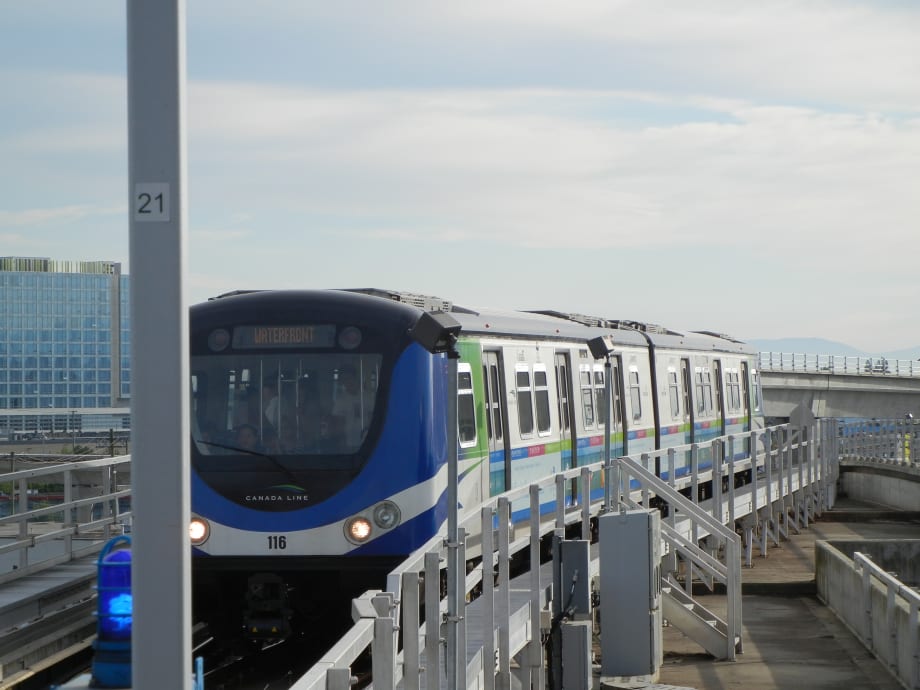
The practicum, held in June in conjunction with APTA’s Rail Conference, focused on projects around the world that used innovative funding and financing solutions, including the TransLink Canada Line, which uses a public-private partnership.
Courtesy Jeremy Andrews
The practicum, held in June in conjunction with APTA’s Rail Conference, focused on projects around the world that used innovative funding and financing solutions, including the TransLink Canada Line, which uses a public-private partnership.
Courtesy Jeremy Andrews
Hundreds of professionals from both the public and private sector gathered in Montreal for the International Practicum on Innovative Transit Funding & Financing — an in-depth, hands-on, and interactive workshop exploring new and non-traditional funding and financing tools for public transportation agencies.
The event was hosted by the American Public Transportation Association (APTA) and the Canadian Urban Transit Association (CUTA) and held prior to APTA’s Rail Conference in Montreal in mid-June.
“If you poll the average transit agency or business member at APTA, and asked what their top concern is, funding and financing is always number one,” said Petra Mollet, APTA’s chief of staff. “We feel we need to really help the industry look at experiences other agencies from around the world have had in finding new business models and revenue sources, in an in-depth way, so it can be discussed and examined to see how those models could transfer over here in North America.”
“Transit is trending upward, yet in spite of those very favorable trends, very often transit agencies are caught up in a budget crisis.” Added Art Guzzetti, APTA’s VP, policy. “The trends are good, but if there’s an annual budget crisis, there is a piece missing. Internationally, they have some things that work from the funding side, so we can really learn from that.”
The practicum featured six modules, with each examining a successful case study of a funding or financing solution from agencies around the world.
Representing the U.S., public and private sector partners from Los Angeles, spoke about a successful ballot initiative that imposed a half-cent sales tax to support the development of regional transportation projects, providing the foundation for a major capital initiative in the city.
Other modules discussed everything from the private-sector’s role in the development of London’s CrossRail system to ways Japan was able to generate revenue outside of the farebox, as well as congestion pricing in Stockholm, Sweden; public-private partnerships in Canada; and price-to-market fare strategies in Germany.
“Because they are public sector financed, many of our members do not have the opportunity to go out and see other models firsthand, so it’s our responsibility to bring those models to our members,” Mollett said of the practicum.
This is the first time APTA has held a practicum focused solely on international funding and financing solutions. To put the modules together, APTA, CUTA and UITP formed an advisory council rounded out by U.S. and Canadian transit agencies and businesses. The council selected a case study to base each module around that took a fresh funding or financing approach, which could also be adapted by North American agencies.
To maintain the opportunity for audience participation, the attendance for the practicum was capped at 180 people.
“We deliberately kept it small because we wanted to maintain an intimate atmosphere so we can have a maximum amount of interaction between the audience, the speakers and the participants,” Mollet said.
Both audio and video presentations from many of the modules and speeches from were set to be available for anybody interested, following the practicum.
Mollet and Guzzetti explained that APTA is planning an international study tour next year to help build on the practicum and provide members a chance to see successful transportation projects from around the world.
“Our day-to-day reason for being is to constantly help members network and make connections,” said Mollet. “This Practicum is just a sample of the extra effort we are making as an organization to give access to these innovative funding and financing tools.”
More Management
People Movement: Dan Dipert Coaches Adds Third-Generation Leader, Keolis Names New Valley Metro VP/GM, and More
In this edition, we also cover recent appointments and announcements at the Wabtec, SilverRide, HNTB, and more, showcasing the individuals helping to shape the future of transportation.
Read More →
METRO Opens Submissions for 2026 Motorcoach Awards
Nominations are now being accepted for METRO Magazine’s Operator of the Year and Innovative Operator of the Year awards.
Read More →
New York MTA Advances Final Contract for Second Avenue Subway Expansion
Contract Four is the largest in the Second Avenue Subway Phase 2 project and includes construction of station infrastructure, tracks, and signals for the subway expansion, MTA officials said. Work on Contract Four will begin in 2027.
Read More →

Transit Agencies Highlight Safety Gains at National Summit
Leaders from 15 major transit systems shared crime-reduction results and safety initiatives while discussing the role of continued federal support.
Read More →
NITA Names New Leadership, Expands Reduced-Fare Program at First Board Meeting
The new regional transit authority appointed its first board chair and interim executive director while extending reduced fares across CTA, Metra, and Pace for eligible riders.
Read More →
Beyond the Checklist: A Structured Approach to Transit Maintenance
Reliability-Centered Maintenance helps transit agencies move beyond routine checklists to focus limited resources on the assets and failures that have the greatest impact on safety, reliability, and service.
Read More →
APTA 2026 Nominating Committee Selects Leadership Slate, Names Chair and Vice Chair Nominees
Leadership changes will help shape the association’s priorities and its representation of the transportation industry during the 2026–2027 term.
Read More →
DART Launches Major Security, Fare Enforcement Initiative
The 90-day demonstration will deploy coordinated security teams at five light rail stations while testing controlled access and gathering data to guide future investments.
Read More →
Advancing Fare Collection Through Technology and Innovation
Learn about delivering 1300 gates at 91 stations while managing fare evasion. Explore the large scale deployment, solution customization and real-world results that affect the region. Prepare for deployment in your region now.
Read More →
Game Day in Motion: Moving Millions During the 2026 World Cup
Between packed transit stations and team motorcoaches, see how agencies and operators across North America tackled the transportation demands of the 2026 FIFA World Cup.
Read More →