



Q&A: Lauren Skiver, GM/CEO of SunLine Transit Agency
At SunLine, which also recently celebrated its 40th anniversary, Skiver leads an agency that operates 14 local fixed-routes, one express line, a commuter service, and curb-to-curb paratransit. It is also extremely progressive in its usage and testing of alternative fuels, including hydrogen-powered fuel-cell electric buses.
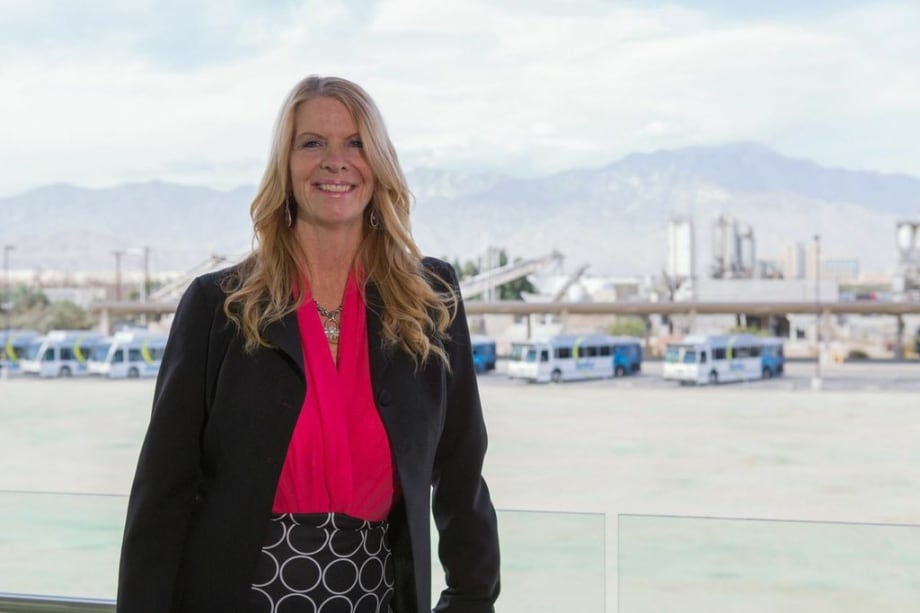
Lauren Skiver was named GM/CEO of SunLine Transit in 2013 after serving as CEO of the Delaware Transit Corp., where she helped lead an agency with 500 revenue vehicles, 500 employees, an annual operating budget of $100 million, and a capital budget of $10 million. At SunLine, which also recently celebrated its 40th anniversary, Skiver leads an agency that operates 14 local fixed-routes, one express line, a commuter service, and curb-to-curb paratransit. It is also extremely progressive in its usage and testing of alternative fuels, including hydrogen-powered fuel-cell electric buses.
METRO spoke to Skiver about her agency’s recent milestone and its alternative-fuel usage, as well its unique 111 Music Fest, which takes place on the agency’s bus system.
The agency recently celebrated its 40th anniversary…how has it changed over the years, both operationally and in the eyes of your customers?
SunLine has focused on transforming our service to meet our rider’s needs. We are executing a first mile/last mile service using zero-emission vehicles operated by our partner agencies. We understand that we can’t continue to ‘sell what riders aren’t buying,’ so we are open to flexible services that are still transit, even if we are not using a traditional transit bus. Forty years has created a smart, motivated workforce here at the agency, which is focused on our product, customers, and our environment.
Discuss the reasons for your focus on alternative fuels, as well as your recent grant for hydrogen fuel-cell buses and the necessary infrastructure.
SunLine has been focused on alternative fuels for more than 20 years. Our fuel-cell program has been in place for almost 15 years. This commitment has become part of the fabric of our everyday operations and all employees understand the benefit and value of the pioneering work SunLine has accomplished.
Fuel-cell technology launched all over the world, but was developed, tested, and brought to commercialization by SunLine. We are extremely proud to be a part of history and the future of this technology platform. That long-standing success has landed another first for the agency in operating the largest Hydrogenics Electrolyzer in the U.S. SunLine competed and won an [Air Quality Improvement Program] grant from the California Air Resources Board for $12.5 million for the electrolyzer and five hydrogen fuel-cell buses manufactured by New Flyer.
Separately, you’ve also secured funding for maintenance training. How important is that for staff as well as the agency as it looks to continue to move forward to using new technologies?
Our agency has been working for close to four years on a Center of Excellence. The purpose of the center is to provide a training facility for zero-emission vehicles and systems training. We believe that for every investment in technology, there must be an investment in expertise and training. This facility will be available to transit, light- and heavy-duty operators, and manufacturers for education, meetings, and other activities related to workforce development, zero-emission bus education, and procurement and successful deployments. The project was awarded a $1.5 million FTA Lo/No grant for the construction of the facility and both program and curriculum development is underway.
Where did the idea for the 111 Music Fest (where local musicians perform on buses) come from, how did it come together, and what is SunLine trying to accomplish through events like it?
This idea came from a group of riders who were active in the music scene in the Coachella Valley. They worked with SunLine staff to create an event that connected the bus system and getting around the Valley to the wide variety of artists that live here. I am continually impressed with the enthusiasm the SunLine team approaches new and ‘out-of-the-box’ ideas, even though there was some skepticism about the risks. It has become an annual event that has been supported by the Valley cities through contributions and is a favorite among the team.
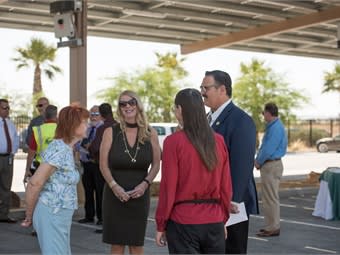
At SunLine, Skiver has been working on the continual development and testing of hydrogen fuel-cell electric buses, as well as a Center of Excellence, which will include learning opportunities for operators and manufacturers.
What is the latest technology you’ve introduced to customers, as well as internally? What has its impact been?
We have recently added Wi-Fi to all of our fixed-route buses and this amenity has been well-received by our riders. We’ve experienced some ridership changes and usage is high. Internally, we have been concentrating on updating our IT systems and ensuring that the most automated processes and tools are in place to help our employees’ productivity and create an increased sense of accomplishment within our team. A ‘Culture of Excellence’ program has been in place for just under a year and we are seeing results in employee satisfaction and position expertise.
Besides funding, what is your agency’s greatest challenge and how are you trying to overcome it?
Ridership is our current challenge. We are looking at restructuring all of our services to meet the needs of our current customers and entice new riders to try transit. We are open to providing the new paradigm of transit and are not waiting for disruption to get creative.
What ‘tools,’ advice or best practices have you brought from your past experiences that have helped you do your job and move the agency forward?
I fell in love with transit as a maintenance administrative assistant. Being a woman in this business, I knew that I had to learn everything about how the business works to be successful. I’ve spent the past 20 years ensuring that I have in-depth knowledge about how the buses get out every day and all the people, systems, and processes that it takes to accomplish that mission. I have been able to impart some of that knowledge to my property and support my team through their transformation. Success in this business requires knowledge, integrity, and the ability to support measured risk. I have been extremely fortunate to come to an agency that is forward-facing and routinely overcomes great challenges to be a leader in zero-emission technology, to bravely enhance and change our product, and deeply support each other.
More Management
Report: Transit Bus Manufacturing Supports 34,100 Jobs, $5.1B in GDP
The “Buses Mean Business” report examines the transit bus manufacturing industry’s economic footprint, supply chain, and rising demand for vehicle replacements.
Read More →
LIT Marks 10-Year Milestone at Annual Summit
Hosted by the COTA from September 10 to 13, the Summit carried the theme “Celebrating 10 Years of Excellence, Leadership, and Impact,” with every part of the program honoring the people, agencies, and partners who built LIT over its first decade.
Read More →
People Movement: Dan Dipert Coaches Adds Third-Generation Leader, Keolis Names New Valley Metro VP/GM, and More
In this edition, we also cover recent appointments and announcements at the Wabtec, SilverRide, HNTB, and more, showcasing the individuals helping to shape the future of transportation.
Read More →

METRO Opens Submissions for 2026 Motorcoach Awards
Nominations are now being accepted for METRO Magazine’s Operator of the Year and Innovative Operator of the Year awards.
Read More →
New York MTA Advances Final Contract for Second Avenue Subway Expansion
Contract Four is the largest in the Second Avenue Subway Phase 2 project and includes construction of station infrastructure, tracks, and signals for the subway expansion, MTA officials said. Work on Contract Four will begin in 2027.
Read More →
Transit Agencies Highlight Safety Gains at National Summit
Leaders from 15 major transit systems shared crime-reduction results and safety initiatives while discussing the role of continued federal support.
Read More →
NITA Names New Leadership, Expands Reduced-Fare Program at First Board Meeting
The new regional transit authority appointed its first board chair and interim executive director while extending reduced fares across CTA, Metra, and Pace for eligible riders.
Read More →
Beyond the Checklist: A Structured Approach to Transit Maintenance
Reliability-Centered Maintenance helps transit agencies move beyond routine checklists to focus limited resources on the assets and failures that have the greatest impact on safety, reliability, and service.
Read More →
APTA 2026 Nominating Committee Selects Leadership Slate, Names Chair and Vice Chair Nominees
Leadership changes will help shape the association’s priorities and its representation of the transportation industry during the 2026–2027 term.
Read More →
DART Launches Major Security, Fare Enforcement Initiative
The 90-day demonstration will deploy coordinated security teams at five light rail stations while testing controlled access and gathering data to guide future investments.
Read More →