



Q&A with Proterra CEO Ryan Popple
Talks growth of the battery-electric bus industry, the electrification of small fleets, and if suppliers will be prepared for sales boost.
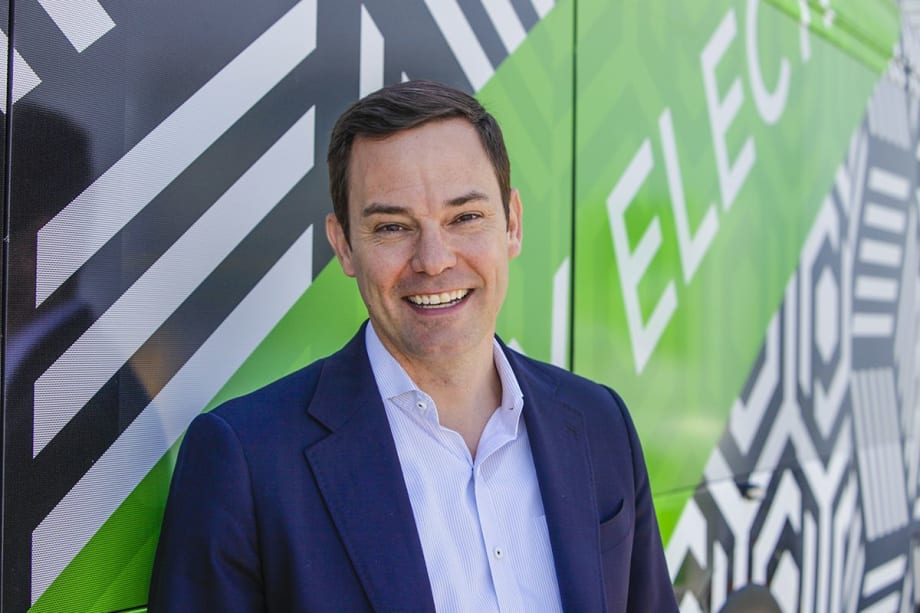
Ryan Popple

Ryan Popple
Ryan Popple has served as president and CEO of Proterra since 2014. Prior to Proterra, Popple was a partner at Kleiner Perkins Caufield & Byers. An early employee of Tesla Motors, he was senior director of finance, with a focus on strategic planning, technology cost reduction and corporate finance. Popple serves as a board member of the Silicon Valley Leadership Group and is focused on increasing access to affordable, sustainable transportation solutions throughout Silicon Valley and the Bay Area, through strategic partnerships and policy initiatives.
METRO spoke with Popple to discuss the growth of battery-electric bus technology, the electrification of small fleets, and how suppliers will respond to the possible growth in sales, as agencies in states like California face mandates to go all-electric in the relatively near future.
Many smaller transit agencies are looking at electrification. Do you think that movement is because of community-based mandates, or is it more driven by the maturation of the technology?
It’s a bit of both, in that there is more attention being paid by communities on emissions, as well as the quality of their transit systems. So, there’s definitely kind of a bottoms-up or grassroots effect that’s going on right now. We frequently hear from cities we didn’t approach that just proactively reached out to us to start their journey toward a zero-emission fleet. But at the same time, if the technology hadn’t improved in leaps and bounds over the last five years, I don’t think you’d have the same level of groundswell interest.
I think one of the things that is starting to happen is cities are starting to read about other cities that have put electric buses into operation. And, they’re learning you can replace a lot of your basic routes that are served by diesel buses with electric. So many of the questions that were unanswered five years ago, like charging and range, we can now answer with tangible data.
Are the smaller agencies looking at full electrification, or simply making it part of their overall fleet?
I think all of the fleets do a good job of managing risk as they implement new technology, because what they tend to do, whether it’s a new technology or just a new vehicle vendor, is they’ll start with a subset of a route and then see how it performs — although, we’re getting to the point where cities no longer feel like they need to do their own R&D project to verify that electric buses work. They now can visit another agency that’s nearby and see what experience they’re having with the electric buses, and then, make a larger initial deployment than they would have done a few years back.
So I would say, for most of the fleets that start going down the route of electrification, they have a vision to completely electrify the fleet. Because, once you start thinking about how conventional internal combustion engine vehicles work, and the alternatives to them, it’s just hard to justify in the long term that you would keep a third of your vehicles running on something that emits four to five times more greenhouse gases, or has such a different community experience within the neighborhood.
Do you feel the medium and smaller transit agencies will continue the transition to battery-electric buses?
One of the things I think is really fascinating about electric vehicle technology is how well it scales up and down. In terms of the history of alternative fuels in transit, in the past, you really couldn’t implement an alternative fuel if you were a relatively small agency. Part of the issue was you just didn’t have enough volume to justify somebody putting in multimillion-dollar natural gas or biofuel infrastructure.
What we’re seeing with medium-sized and even smaller agencies is that if you literally have one route and one bus, you can implement electric, because all you’re doing is putting in a charging station for one vehicle. So it scales at the unit level really easily. One of the exciting things about what’s going on with electric is it’s not just the biggest, most well-funded transit agencies that are doing this. It’s really happening across the board. And an agency like [Illinois'] MetroLINK has been as innovative as any of the largest cities out there. We’re actually seeing large cities look at what they’ve done with vehicles and with charging infrastructure as an example. So the role of small- and medium-sized agencies as early adopters in electric really can’t be overstated. They’ve been incredible to help move the industry forward.
In the past, it’s been larger size agencies so it’s really interesting to see this growth into the smaller agencies.
Well, if you have electricity at your facility, you can start implementing electric buses. And I think it’s the same reason why electric cars outpaced the deployment of some of the other old fuel technologies like hydrogen and natural gas and even some of the biofuel technologies. You can control your own destiny with electric, versus waiting for another fuel provider to show up and install infrastructure.
From a supplier standpoint, what’s the biggest misconception that’s been flipped over the last few years?
I would say, three, four years ago, it was all about range. Could electric buses do a full day’s route? And I think at this point, a properly designed electric bus route with good charging infrastructure has no trouble doing real-world service of anywhere between 150 and 200 miles. We’re seeing that in agencies around the country. So, that initial kind of range anxiety has been relieved with a lot of the improvements in the technology, as well as fast-charge technology that can add a lot of range in mid-day. More recently, I think one of the misconceptions about electric vehicles that has been pushed out of the market is the concern that they don’t have enough power for things like carrying a lot of passengers or getting up steep hills.
Two, three years ago, some of the vehicles in the market, which were kind of early prototypes, were borrowing components from the electric car industry, and I think, they were a little bit underpowered. They made good R&D vehicles for pilot vehicles, but they couldn’t necessarily do the most mountainous or high-speed highway routes. But as we’ve started to bring out higher power drivetrains and dual motor systems, we’ve been able to demonstrate to customers, like the city of San Francisco, that we can go up their steepest hills faster than the diesel bus can.
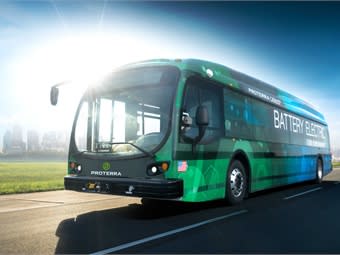
Proterra's Catalyst E2 battery-electric buses are currently in service at several transit agencies.
Proterra
Is the uptick in interest in battery-electric buses translating to an increase in orders and deployments? Every year since we’ve started shipping vehicles, we’ve had to grow to continue to supply the business, and this year has been no different. Every quarter for Proterra is kind of a new level of capacity that we have to achieve, which definitely keeps us busy. But yes, we absolutely continue to see more cities signing up for electric buses and doing larger initial deployments, especially in the big cities, where they’re doing 10, 20, or 50 electric bus deployments at a time now.
I think we are more confident than ever that the long-term future of this market does not have a tailpipe. In fact, the California Air Resources Board recently passed a regulation that stated that all airport buses in the state of California now have a zero-emission mandate, as well as the transit industry. So we continue to see momentum, and it’s becoming a common sense best practice.
With mandates like CARB's, do you feel that the industry, as a whole, will be able to take on the increase in sales?
I do. What I generally see is that if you give businesses an opportunity to grow by bringing out something new, they will respond. Because businesses are so competitive and so hungry for growth, that if you set a challenge out there, or target, you’ll see investors and businesses respond. So I have no doubt that it won’t just be Proterra. I think a lot of businesses will be very hungry to deploy factories and engineering teams and to really go after that prize.
More Zero Emissions
Ohio’s METRO RTA Turns Electric Buses into Mobile Power Sources at PorchROKR
See how three Gillig battery-electric buses powered festival stages while the agency’s new Park & Ride service carried approximately 1,000 attendees, demonstrating another potential use for transit agencies’ electric fleets.
Read More →
CALSTART and Forth Combine to Form Catalyst Mobility
The new name represents a renewed vision for the nonprofit focused on advancing clean, equitable, and affordable transportation solutions that move people and goods.
Read More →
Building a Flexible Path to Transit Electrification
John Hroncich discusses BAE Systems’ modular and scalable approach, lessons learned from decades of real-world operations, and how agencies can identify electrification strategies that fit their fleets.
Read More →
California's VVTA Begins Phased Rollout of Hydrogen Fuel Cell Buses
The agency is introducing 13 zero-emission buses into revenue service while evaluating performance across its urban, rural, and long-distance routes.
Read More →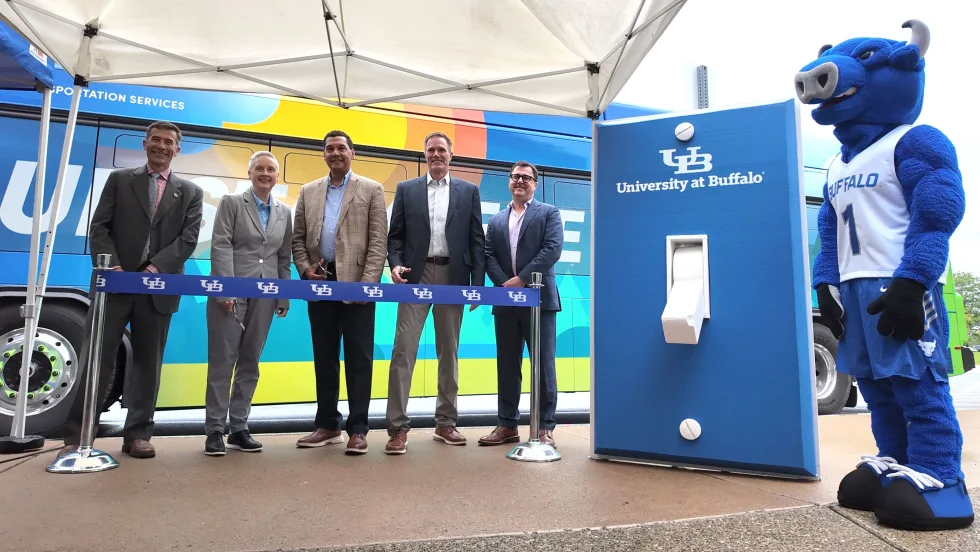
Inside Look: University at Buffalo Puts First 8 Electric Buses Into Stampede Service
UB, transportation solutions provider WeDriveU, and fleet electrification specialist Zenobē marked the deployment in the presence of students, university administrators, and local officials.
Read More →
Biz Briefs: OCTA Taps Clean Energy for Hydrogen Station, Stadler to Supply Via Rail Vehicles, and More
From manufacturers and suppliers to transit agencies and motorcoach operators, these updates offer a snapshot of the projects, partnerships and business moves driving the industry forward.
Read More →
AC Transit’s Cecil Blandon on Building the Next Generation of Transit Maintenance Leaders
The agency’s maintenance chief discusses leadership, workforce development, zero-emission technology, and preparing technicians for the future of public transportation.
Read More →
CTDOT Taps STV for Electric Bus Facility Design
The firm will work with CTDOT and RVT to define the facility layout, operational requirements, and long-term flexibility for RVT’s growing electric fleet.
Read More →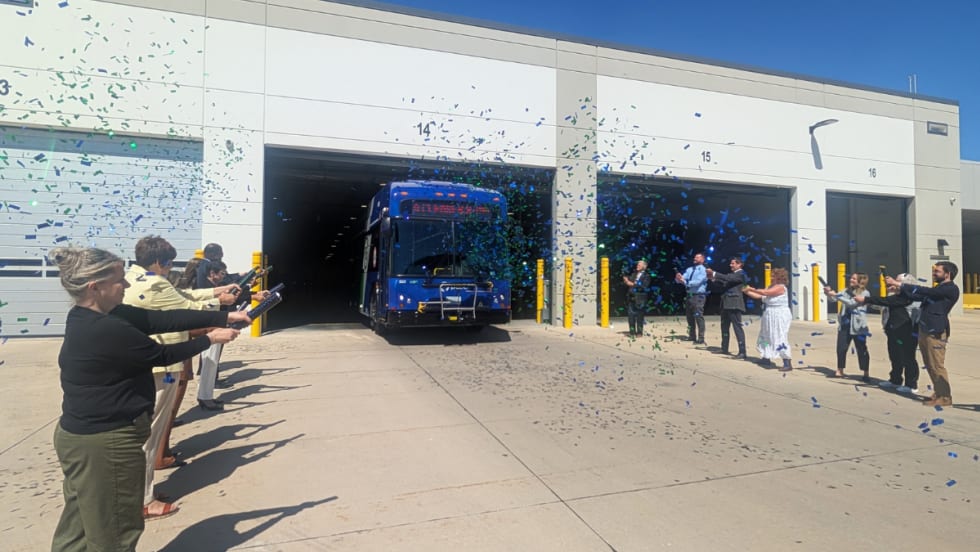
Chicago’s Pace Deploys 24 Hybrid-Electric Buses in Will County
The new buses reduce emissions and fuel consumption while advancing the agency's long-term goal of transitioning to a fully zero-emission fleet.
Read More →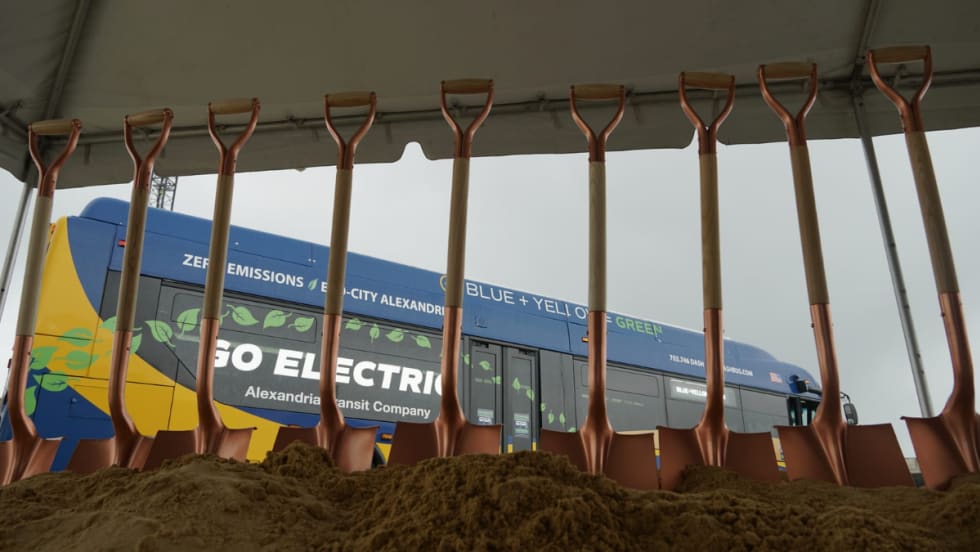
DASH Breaks Ground on First On-Route Electric Bus Chargers in D.C. Region
The fast-charging infrastructure will help extend electric bus range, improve fleet utilization, and support DASH's goal of transitioning to a fully zero-emission fleet.
Read More →