



RELATED: Fare agreement to provide mobility for Ark.'s homeless
Rock Region METRO exec. dir. talks transit, community service
Charles D. Frazier joined the North Little Rock, Ark.-based agency in June 2018.
by Janna Starcic, Executive Editor
August 5, 2019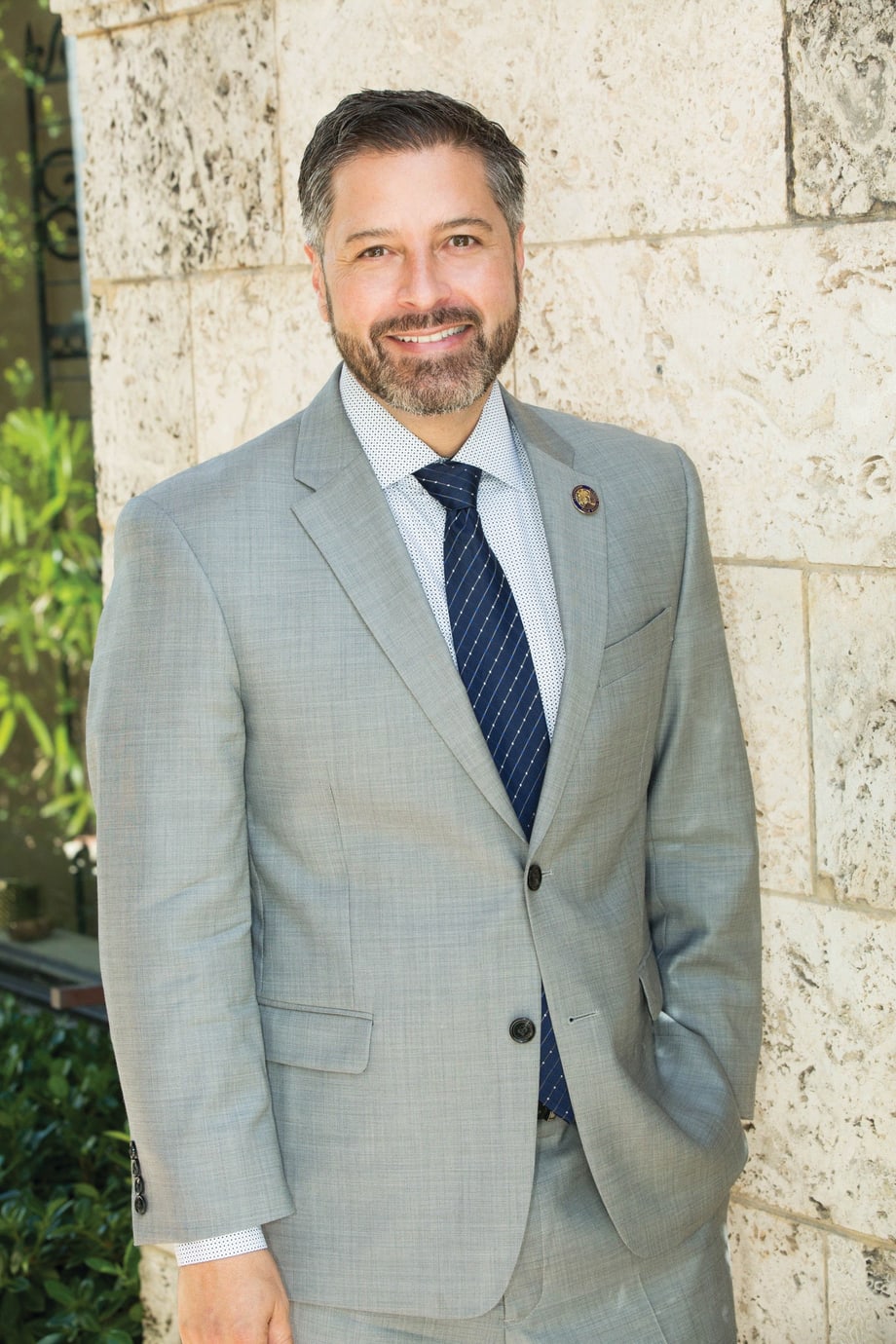
Frazier
6 min to read
Frazier
Charles D. Frazier, executive director of the North Little Rock, Ark.-based Rock Region METRO, joined the organization in June 2018 and is responsible for the oversight of the agency, including providing strategic vision and guidance, serving as an effective transit advocate within the greater community and exercising strong fiscal management in service of METRO’s mission to provide safe, reliable, convenient and cost-effective public transit to central Arkansas. Prior to joining METRO, Frazier worked for Palm Beach County, Fla., for 17 years, including serving more than six years as assistant executive director/director of support services for Palm Tran Inc., Palm Beach County’s bus system. We talked to Frazier about the agency’s challenges, new microtransit service and giving back to the community.
What key challenge does your agency face and how are you trying to deal with it?
Like many other public transit agencies, increasing ridership is a top challenge. We’ve been able to increase our year-over-year ridership in 2019 with effective management of fare agreements with area academic institutions, an innovative transit partnership with the Arkansas Homeless Coalition, a fare-free pilot project for our streetcar system, numerous transit trainings with various organizations and unique grant opportunities (we partnered with our regional library system to provide transit passes for a summer feeding program funded by the National Parks and Recreation Association and are exploring other grant opportunities). We are also engaging in a comprehensive operational analysis this fall to see how we can better serve our community’s needs and gain ridership.
Discuss the pending comprehensive operational analysis. What do you hope to accomplish with it?
METRO’s fixed-route network has not changed significantly in 30 years, nor have the types of services that it provides. This comprehensive operational analysis will re-imagine the fixed-route network, analyzing job and housing centers, noting local travel patterns (origin/destination), identifying unmet needs, analyzing the productivity of existing routes and incorporating new services (such as same-day door-to-door service, microtransit, community shuttles and vanpool service). The outcome will be a more ridership-focused network design.
What types of initiatives are being discussed regarding funding the plan?
Before we can address funding, we first need to better understand the unmet transportation needs in our community. For example, we already know that changes in the health care system are increasing demand for non-emergency medical transportation and as the Greater Little Rock area incorporates more multi-modal transportation, such as electric scooter-sharing, bike-sharing and ride-hailing services, there will be related first and last mile needs. Once we’ve identified these needs, we’ll consider funding options, which could include restructuring the current funding formula our local partners have, public-private partnerships, a countywide mileage tax, a local sales tax, improvement districts, etc.
Discuss a current project your agency is involved with and how it will benefit your operation and/or community?
On August 5, we’re launching our first microtransit pilot project. The initial microtransit zone replaces one of the lowest-ridership routes in our system, which has a 65-minute frequency. Although we don’t expect this service to grow ridership in a known low-demand, low-ridership area, we believe it will be a major improvement in travel times for transit riders in the area and be well-received. We are also eager to learn how this service might work in other areas of our system where there are transit needs but perhaps too low of a demand for a traditional fixed route service. As we launch the project, we’ve been able to land valuable face time with various businesses within the zone to garner more community support, and it’s nice to see businesses excited about how the service can benefit them.
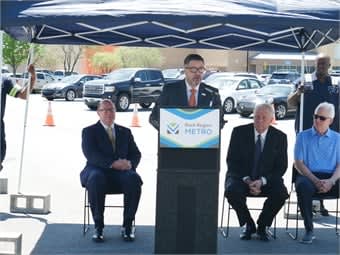
Prior to joining METRO, Charles D. Frazier worked for Palm Beach County, Fla., for 17 years, including serving more than six years as assistant executive director/director of support services for Palm Tran Inc., Palm Beach County’s bus system.
Rock Region METRO
Tell me about the agency’s involvement with the Be Mighty METRO program?
The city of Little Rock and Arkansas Hunger Relief Alliance began a summer meal program this year called Be Mighty Little Rock. It’s designed to ensure that children and youths 18 and younger don’t go hungry during the school summer break, when they are not able to access free or low-cost school breakfasts and lunches. We saw an unrelated Access to Healthy Foods grant opportunity through the National Parks and Recreation Association and, as I mentioned, approached our regional library system to be the grant administrator. It’s a win-win for all the community partners, and it’s also boosting our ridership over the program’s June-July duration. As part of the partnership, we mapped meal sites with existing routes and found that 95 percent of the locations were located adjacent to fixed routes. We then hosted transit trainings for meal site coordinators, city community programs staffers and school administrators so they could help educate the families participating in the meal program about how to ride to the meal sites using grant-funded bus passes.
What is your thought on transit agencies’ involvement with programs that help/give back to their respective communities? Should this be a requirement?
In February, METRO launched a yearlong pilot program with the Arkansas Homeless Coalition to address one of the top barriers to permanent housing: a lack of transportation available for persons experiencing homelessness. The coalition created an eligibility rubric for participation. A key tenet of the program is that it is for those people who are actively trying to exit homelessness. The coalition funds up to 1,000 riders per month at a discounted rate so participants can access vocational training, jobs, health care and other vital resources. So far, the program has worked well, with few headaches and more than 52,000 rides in the first five months. My thoughts are: The buses are running anyway. Why not fill them up while addressing a true need in the community?
How is the agency working to fill service gaps and/or provide alternative mobility options to its riders?
In addition to the August microtransit pilot project launch, we also recently wrapped the RFP process for implementing a new vanpool service to jobs in the Little Rock Urbanized Area and Conway Urbanized Area (Conway is about 20 minutes away from Little Rock and has many residents who work in Little Rock). In recent years, Conway surpassed the 50,000 residents population threshold to be considered its own Urbanized Area, but, with its share of 5307 funding, could not implement a full-scale transit service. This vanpool program will be the second program of its kind in FTA Region 6 and the first in Arkansas. It gives Conway a way to claim their transit funds on a right-sized project, and it provides the first public transit connection between Conway and Little Rock. The Little Rock program will help us address jobs access to area industrial parks, which tend to be in outer, low-density areas, and major employers that are increasingly land-locked as development within the city continues. We are also exploring ways to address non-emergency medical transportation, as the need for it in our community has greatly increased.
Tell me about a favorite experience using public transportation in U.S. or beyond?
There are too many to count, but my favorite experience was in Japan. My first job after college was in Japan, where I worked for the Japanese Consulate. I had studied some Japanese before going but found myself unable to effectively communicate when I initially got there. The commuter train system is highly utilized and on one of my first solo outings, I made several mistakes. First, I traveled at the height of rush hour and found myself literally stuffed onto the train — search “people stuffed onto a train in Tokyo” for a visual. Second, I misunderstood the direction signs and got on the wrong train, and it was an hour before I realized my mistake. Fortunately, I was able to find my way back with the assistance of some kind locals. Once I learned my way around, I found the public transit system there awesome.
Subscribe to Our Newsletter
More Management

METRO Opens Submissions for 2026 Motorcoach Awards
Nominations are now being accepted for METRO Magazine’s Operator of the Year and Innovative Operator of the Year awards.
Read More →
New York MTA Advances Final Contract for Second Avenue Subway Expansion
Contract Four is the largest in the Second Avenue Subway Phase 2 project and includes construction of station infrastructure, tracks, and signals for the subway expansion, MTA officials said. Work on Contract Four will begin in 2027.
Read More →
Transit Agencies Highlight Safety Gains at National Summit
Leaders from 15 major transit systems shared crime-reduction results and safety initiatives while discussing the role of continued federal support.
Read More →

NITA Names New Leadership, Expands Reduced-Fare Program at First Board Meeting
The new regional transit authority appointed its first board chair and interim executive director while extending reduced fares across CTA, Metra, and Pace for eligible riders.
Read More →
Beyond the Checklist: A Structured Approach to Transit Maintenance
Reliability-Centered Maintenance helps transit agencies move beyond routine checklists to focus limited resources on the assets and failures that have the greatest impact on safety, reliability, and service.
Read More →
APTA 2026 Nominating Committee Selects Leadership Slate, Names Chair and Vice Chair Nominees
Leadership changes will help shape the association’s priorities and its representation of the transportation industry during the 2026–2027 term.
Read More →
DART Launches Major Security, Fare Enforcement Initiative
The 90-day demonstration will deploy coordinated security teams at five light rail stations while testing controlled access and gathering data to guide future investments.
Read More →
Sponsored•September 9, 2026
Advancing Fare Collection Through Technology and Innovation
Learn about delivering 1300 gates at 91 stations while managing fare evasion. Explore the large scale deployment, solution customization and real-world results that affect the region. Prepare for deployment in your region now.
Read More →
Game Day in Motion: Moving Millions During the 2026 World Cup
Between packed transit stations and team motorcoaches, see how agencies and operators across North America tackled the transportation demands of the 2026 FIFA World Cup.
Read More →
Surface Transportation Extension Averts Shutdown, Leaves Transit Funding Gap
The stopgap keeps federal transportation programs moving, but missing advance funding could complicate the transit and rail projects agencies are planning next.
Read More →