



Smooth Sailing for Oahu Transit Services, Despite Economic Slump
Hawaii’s recessionary economy hasn’t prevented Oahu’s transit system from delivering award-winning service and advancing in the areas of safety, efficiency and maintenance.
Physical isolation, heat, humidity, salty air and the worst recession since Hawaii achieved statehood have not kept Oahu Transit Services (OTS) from providing quality transportation to nearly a quarter-million passengers daily. Its success was validated last year when TheBus—operated by OTS in Honolulu—received the American Public Transportation Association’s Outstanding Achievement Award for systems providing at least 30 million passenger trips annually. OTS officials credit the success to significant improvements in safety, maintenance, cost efficiency, routing, human resources and teamwork. “It’s just like a car engine. If one system is not working properly, the performance of the entire car suffers,” says OTS President James Cowen. “Only through a team effort is it possible for an organization to win such an award.” The agency also won the award in 1994. The large-system category includes about 50 of the largest transit agencies in the United States and Canada. 30 years of success TheBus has been a transportation success since 1971, when the city and county of Honolulu assumed ownership. Since the takeover, the transit system has expanded its ridership from 30 million to 72 million passengers annually. The system, which includes a paratransit service called TheHandi-Van, is available to Oahu’s 840,000 residents as well as approximately 100,000 daily visitors. TheBus is essential to Hawaii’s tourist industry. About 25,000 visitors use the system each day. According to the Hawaii Visitors and Convention Bureau, 47% of these users are Japanese and 21% are from the U.S. mainland. As a testament to TheBus’ efficiency, about 85% of vacationers who use the system rate the service as having exceeded expectations. Although the poor performance of the economy has bruised local tax revenue, TheBus was able to expand service by controlling the growth of operational costs. “We’ve been good stewards of public tax dollars,” says J. Roger Morton, director of operations. “Over the past three years, we have been able to cut our unit operating costs by 7%. Most of the savings come as a result of our good safety performance and an innovative, nationally recognized risk-management program.” Morton says the agency’s operating cost per passenger trip is the fifth-lowest of the top 50 bus transit systems in the United States. “We also enjoy community support,” he says. “The Honolulu City Council has followed a long-term policy of fairly low fares and abundant transit service.” Diverse workforce TheBus has one of the most ethnically diverse workforces in the United States. About 90% of employees are members of recognized minority groups, says Morton. “We have more native Hawaiians and Samoans than the general population, and slightly fewer individuals of Japanese or Caucasian ancestry. We have significant representation by Portuguese, Filipino, Korean, Chinese, Hispanic and African-American employees,” he says. Despite its ethnic diversity, the agency recognizes that it still has to address a paucity of women in management positions. Since 1992, OTS has gone from essentially no women in senior supervisory positions to its present situation in which 25% of senior managers (10 of 40) are women. OTS has set a goal of 35% women managers within the next five years. Meanwhile, women comprise 22% of TheBus and The Handi-Van operators. Safety improvements seen TheBus’ safety record, as measured by its collision accident rate, improved by more than 50% in the past three years, resulting in fewer public and employee injuries, reduced claims costs and a safer ride. Accident reduction is attributed to improved driver training and street supervision and the implementation of a strong safety policy. But the agency’s maintenance program also deserves credit, says Richard Hardy, vice president of maintenance. “In the past 10 years I don’t recall a single instance in which there was an accident that could be related to mechanical failure,” he says. Hardy strives for a 70/30 split, with 70% of garage time spent on preventive maintenance and the remaining 30% on corrective maintenance. “It has worked well for us in the 10 years that I’ve been here,” he says. Improvements in the fleet’s lighting systems have helped to reduce the collision rate. “We use LED lights to make our buses more visible,” Hardy explains. “We also have brighter headlights on our buses and brighter lights on our destination signs.” In addition, a large number of the fleet’s buses have daytime running lights. With regard to industrial safety, TheBus has improved from about 5.5% lost time due to absences caused by workers’ compensation in 1995 to only 2.3% lost time in 2000. Officials believe the lost-time trend seems headed toward 2% when an additional five cents-per-hour safety incentive is permanently added to pension contributions. Fleet’s in good shape The fleet of 525 buses operated by TheBus and TheHandi-Van travel approximately 80,000 miles daily. The average bus is slightly less than 71/2 years old. “Because of this, our buses are in fine shape,” says Hardy. Roughly three-fifths of the agency’s buses are Gillig Phantoms. Hardy noted that OTS has a good rapport with the manufacturer and always sends a management team for on-site inspection during the building process. “These are people who expect 100% and look for everything from smudges in the paint to any kind of problem with the installation process,” Hardy says. “They are empowered to make decisions on the spot. The advantage to that is that the managers become intimately familiar with the buses that mechanics work on, which makes them more efficient managers as well.” Hawaii’s tropical climate, specifically heat, humidity and salty air, can be tough on buses. To prevent rapid corrosion, all buses are undercoated. The fleet has also gone to aluminum and stainless steel bodies, which have proven to be the most weather-resistant products to date. OTS washes its buses every other day—a policy that was implemented about seven years ago. Although the agency has no problems finding skilled mechanics, it can be a challenge to keep them abreast of the latest technological developments. “We are strong believers in training,” says Hardy. “Every time the city buys new buses, it will buy over 400 hours of training. When we get new systems in, we buy training hours to bring our mechanics up to speed.” The emphasis lately has been on computer training. Says Hardy, “We have personnel in the continuing education programs here to learn about computers, because the old tools of the trade are being replaced by laptops and Palm Pilots.”
More Management

Bus Tech Talk: Keeping Transit Technicians Ahead of the Technology Curve
In this episode of Bus Tech Talk, Complete Coach Works’ Business Development Manager Mark Hollenbeck and METRO’s Executive Editor Alex Roman sit down with Obed Mejia, Senior Technical Trainer for Bus Maintenance, at LA Metro to discuss how rapidly evolving bus technology is changing the maintenance shop — and the skills technicians need to keep pace.
Read More →
Michael Schneider Joins Paslay Group to Expand Transportation Practice
The longtime transportation executive will help Paslay Group grow its advisory and program management work across transit, highway, and other infrastructure sectors.
Read More →
People Movement: Connectpoint Expands Leadership Team, Stadler Names New Group CEO, and More
In this edition, we also spotlight recent personnel moves at Burns, UZURV, and more, highlighting the people taking on new roles across the transportation industry.
Read More →
More Than a Summer Job: Building the Next Generation of Transit Talent
The Delaware River Port Authority and PATCO have transformed their internship program into a hands-on professional development experience that introduces students to the breadth of transportation careers — and creates a pipeline for future employees.
Read More →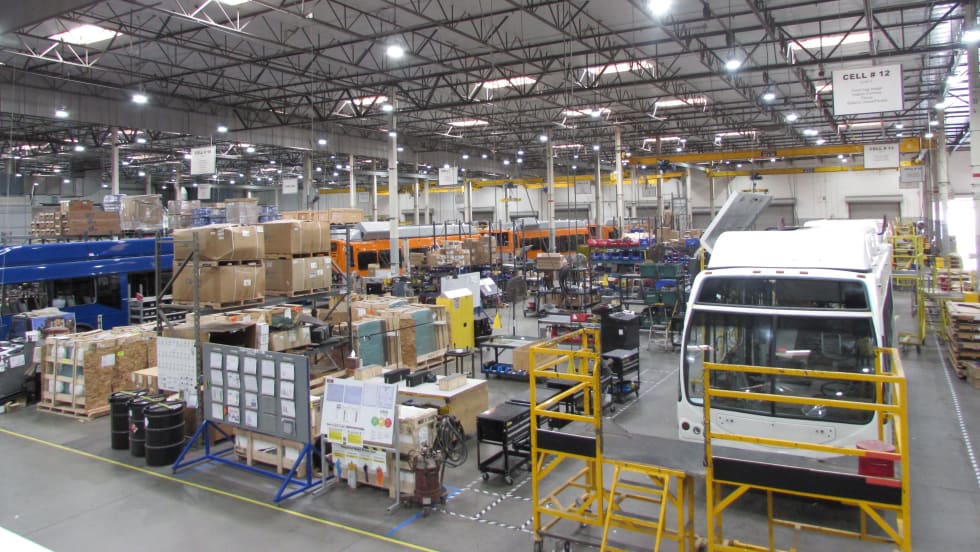
LA Metro Board Awards 220 Battery-Electric Bus Contract to ENC
The contract, which is the largest base award of battery-electric buses by a U.S. transit agency, will be built in Southern California, sustaining good jobs as LA prepares to welcome the world in 2028
Read More →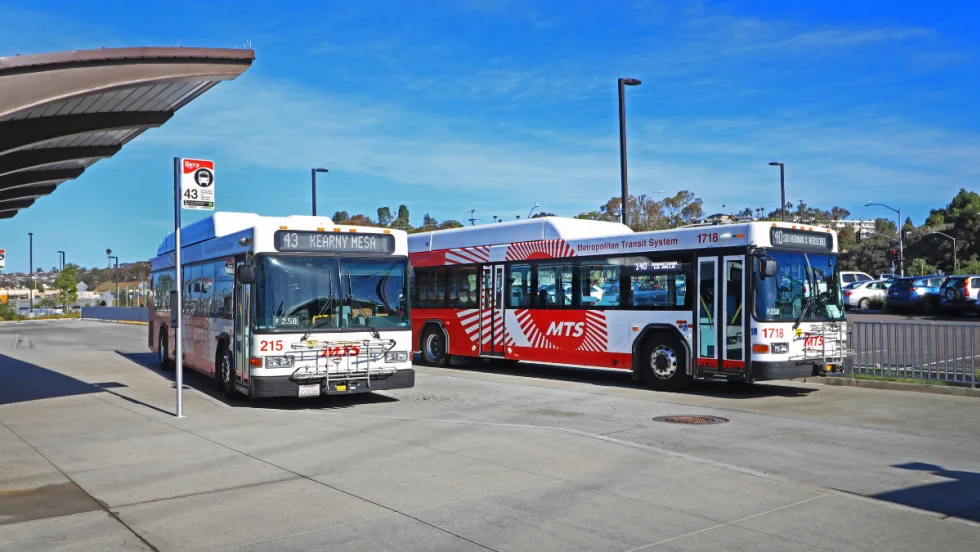
What’s Behind San Diego MTS’s Award-Winning Transit Strategy
Named one of APTA’s 2026 Outstanding Public Transportation Systems with 50 million or more annual passenger trips, California’s San Diego Metropolitan Transit System points to gains in ridership, safety, technology, and reliability as foundations of its success.
Read More →
Public Transit Conference Returning to GFX in 2027, Call for Papers Now Open
The Call for Papers is now open, allowing transit agency professionals and industry experts to help shape the PTC educational program by submitting session ideas for consideration.
Read More →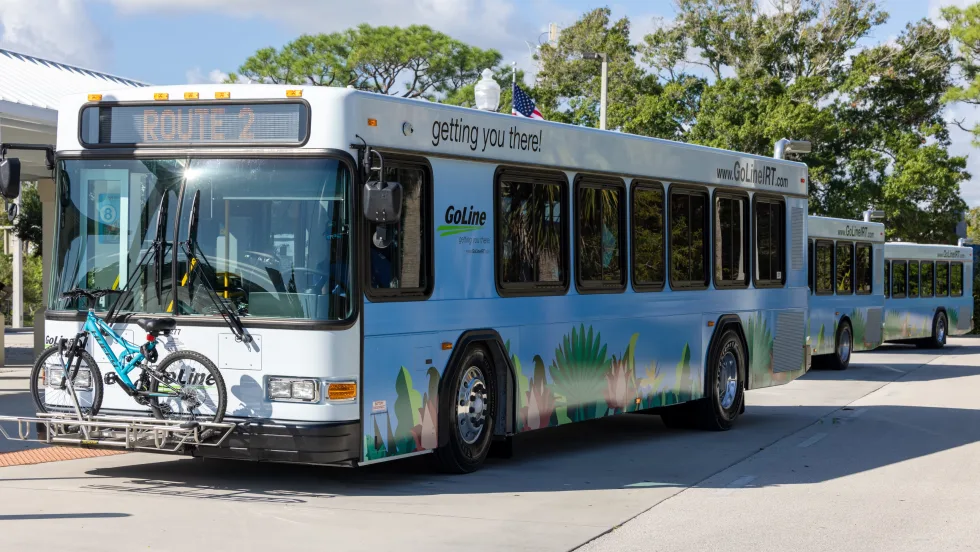
Indian River Transit’s Community-Focused Approach Earns National Recognition
Named APTA’s 2026 Outstanding Public Transportation System in its size category, Florida’s Indian River County transit system continues to grow ridership through fare-free service and a focus on evolving community needs.
Read More →
ENC Lands MATA Contract and More in Biz Briefs
In this edition of Biz Briefs, we spotlight the latest developments shaping the future of mobility.
Read More →From Surviving to Thriving: Building Stronger Transportation Organizations
Bus Business Consultants founder Brian Dickson shares lessons on leadership, organizational health, and creating options for long-term success in a changing transportation industry.
Read More →