




Related: New York MTA Highlights Ridership Gains on LIRR, Metro-North Railroad
STV Makes its Mark with Grand Central Madison
STV has played a significant role in the Grand Central Madison project for more than 30 years, and now the company is celebrating the station’s completion.
May 11, 2023
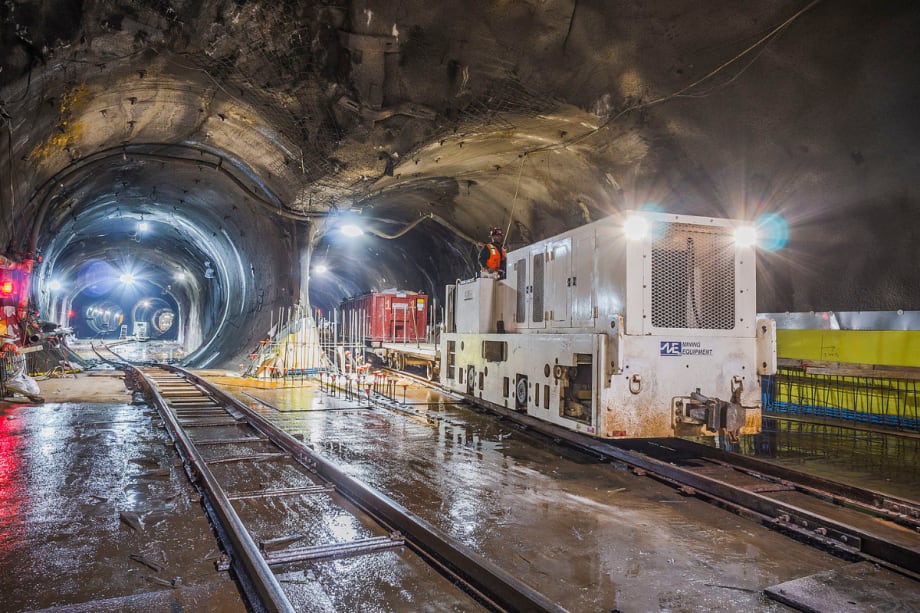
STV has played a role in supporting this program since its inception more than 30 years ago.
Photo: STV
5 min to read
STV recently joined New York City’s Metropolitan Transportation Authority (MTA) and MTA Long Island Rail Road (LIRR) to celebrate the opening of Grand Central Madison — a new 700,000-square-foot terminal and concourse below Grand Central Terminal.
The new facility and service is a key part of a long-term plan to expand LIRR capacity and bring commuters from Long Island and Queens directly to the East Side of Manhattan.
Richard Amodei, president of Northeast Transportation at STV, discussed the history of the project, STV’s role, and more.
The Project’s Origins
Grand Central Madison dates back to the 1970s, as Long Island was undergoing a massive population boom.
“There was an enormous strain on the region’s transportation system,” Amodei said. “There was a growing need for commuters to get from Long Island to Manhattan along an efficient and affordable route, which is really where the story of Grand Central Madison begins.”
Nelson Rockefeller, New York’s Governor at the time, proposed a new LIRR connection on Manhattan’s East Side as part of his larger effort to expand LIRR service. And so, construction began for the 63rd Street Tunnel under the East River, connecting Queens to Manhattan.
The tunnel was completed by 1975, but public opinion changed and it resulted in an indefinite hold on the project.
This all changed in the late 1980s when Penn Station was near its capacity, and the push from New Yorkers for an East Side LIRR connection returned.
With the 63rd Street Tunnel already constructed, the idea was to finish the job — starting with a feasibility study by STV.
With new federal funding, “East Side Access” — as the project was known back then — started to take shape. Since then, it went through the full lifecycle of a project: from determining the location of the terminal, to design, construction, and completion.
“STV has been there every step of the way. Now, this project, 50 years in the making, is a fully integrated link in New York’s transit infrastructure,” Amodei said.
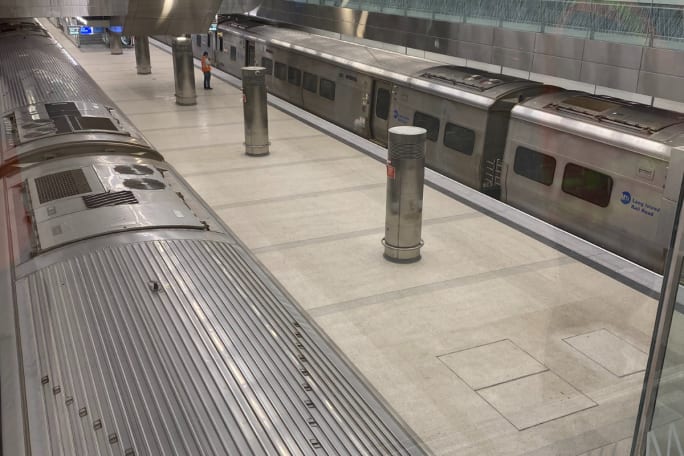
Grand Central Madison dates back to the 1970s, as Long Island was undergoing a massive population boom.
Photo: STV
STV’s Role in the Project
STV has played a role in supporting this program since its inception more than 30 years ago.
The company prepared the initial feasibility study and Major Investment Study (MIS) planning for the $11.2B project in 1998; as well as served on the General Engineering Consultant joint venture team that provided tunnel, structures, systems, terminal design, and environmental engineering services for the initiative.
“Once that funding was secured, STV performed preliminary design engineering and construction services in a joint venture for the project’s intricate tunneling system,” Amodei said. “From there, we crossed the finish line with final design services in a joint venture during the project’s final sprint to construction.”
In total, more than 200 STV employees worked directly on the Grand Central Madison project over the years.
Amodei has been involved with Grand Central Madison since he joined STV 23 years ago and added that he “is so proud to be part of the team that brought this transformative transportation infrastructure to the region.”
What Makes Grand Central Madison Unique
Grand Central Madison is the largest single construction program ever undertaken by MTA Capital Construction, according to STV.
The LIRR will reach both sides of Manhattan for the first time, with trains to both Penn Station and Grand Central Madison. Two new tunnels between Manhattan and Queens will increase train capacity to and from New York City by 50% and improve reliability for customers.
There were several considerations that contributed to the exact location of the terminal, according to Amodei.
“We were modifying the busiest and most complicated interlocking in North America, plus including how best to incorporate storage and maintenance capacity for LIRR,” he said. “Not to mention traction power systems, pedestrian flow, and countless other considerations.”
Part of STV’s feasibility study initially looked at the possibility of locating the new terminal under Third Avenue, or within the existing Grand Central Terminal (GCT) complex.
“We analyzed site conditions at GCT for an approach that might minimize the number of property easements required, but eventually opted not to recommend that course,” Amodei said. “It made far more sense to start from scratch.”
Another factor was the increasing ridership across multiple services.
Metro-North Railroad, which is Grand Central Terminal’s primary tenant, saw a significant increase in ridership which actually decreased the available capacity for accommodating the increase in LIRR service anticipated at GCT’s Lower Level.
Amodei also mentioned the engineering aspect of the project.
In a program filled with engineering achievements, he said that one of the most impressive demonstrations of Grand Central Madison’s engineering was STV's design for the modifications at Harold Interlocking in Queens.
Harold Interlocking is a point of convergence for LIRR, Amtrak, and NJ TRANSIT service all within a single mile-and-a-half corridor.
“The Harold component was so massive, it was split into numerous civil and structural construction packages,” Amodei said. “STV managed the design of five of them — about $565 million worth of construction — including bored tunnel approach structures, rail bridges, cut-and-cover tunnels, extensive earthwork, retaining walls, excavation and support structure, vehicular bridge pier reconstruction, and an electrical traction power substation.”
The new station has eight tracks and four platforms on two new levels below the existing lower level of Grand Central Terminal.
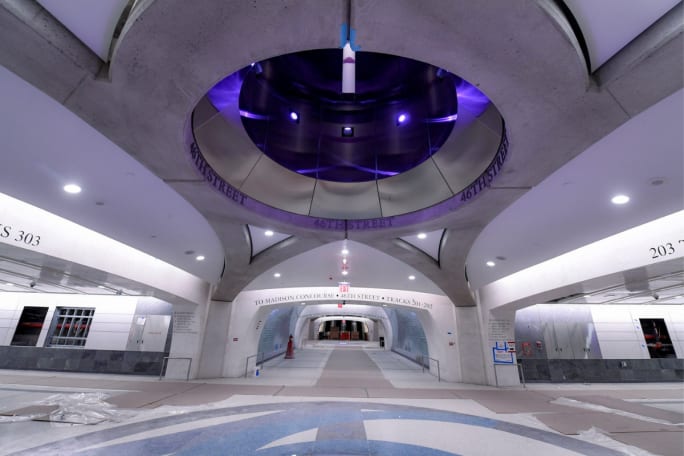
In total, more than 200 STV employees worked directly on the Grand Central Madison project over the years.
Photo: STV
The Impact on NYC and Long Island
The opening of Grand Central Madison will allow MTA to run more LIRR trains at peak hours, expanding reverse commuting opportunities between Long Island and New York City.
With a 65% increase in reverse-peak weekday trains, along with more trains in the early-morning and late-evening rush hours, new opportunities will be introduced for tourism, schools, parks, and jobs on Long Island.
“When I think about our work on Grand Central Madison, it reinforces the fact that STV exists to make communities better,” Amodei said. “We do that through innovative infrastructure that connects people to their communities and the present to the future. Grand Central Madison is a transformative project that accomplishes exactly that.”
Running alongside Madison Avenue from 43rd Street to 48th Street, Grand Central Madison includes a blend of retail and restaurants, spacious waiting areas, free Wi-Fi, and real-time departure information.
“Infrastructure is all about connections, and this project connects millions of New Yorkers with their communities, with their jobs, with one another, and with the future,” Amodei concluded.
Subscribe to Our Newsletter
More Rail

New York MTA Advances Final Contract for Second Avenue Subway Expansion
Contract Four is the largest in the Second Avenue Subway Phase 2 project and includes construction of station infrastructure, tracks, and signals for the subway expansion, MTA officials said. Work on Contract Four will begin in 2027.
Read More →
San Diego MTS Breaks Monthly Trolley Ridership Record
Agency officials said July’s ridership indicates MTS’s continued recovery from the pandemic.
Read More →
Report Examines NJ TRANSIT Reliability, Funding Challenges
The Garden State Initiative analysis examines the roles of Amtrak infrastructure, fleet management, and agency operations while recommending a more performance-based approach to improving reliability.
Read More →
Stadler, CapMetro Sign Long-Term Rail Fleet Support Agreement
Beginning in 2027, Stadler will provide on-site technical expertise, spare parts support, training, and obsolescence management to help extend the reliability and longevity of CapMetro’s GTW fleet.
Read More →
Biz Briefs: Alstom Lands Canadian Contract, LYT to Supply California TSP, and More
In METRO's latest installment, we take a look at recent news from Complete Coach Works, Beep, FlixBus, and more partnerships making headlines across the transportation sector.
Read More →
CATS Gold Line Marks 5 Years of Service, 2.8M Passenger Trips
With a six-mile expansion planned, the Charlotte streetcar is positioned to connect more neighborhoods and major transit hubs across the region.
Read More →
Why Simulating Pedestrian Movement Has Become Essential for Modern Rail Stations
Pedestrian microsimulation is helping rail planners identify bottlenecks, test station designs, and prepare complex transit hubs for growing passenger volumes.
Read More →
Amtrak Begins Major Construction at New York’s Sunnyside Yard
The new maintenance facility will support Amtrak’s Airo trainsets while improving maintenance efficiency and turnaround times in New York.
Read More →
Chicago Leaders Unveil Plans for O’Hare Airport Express Train
The privately developed project would offer a 15-minute trip between downtown and O’Hare’s Terminal 2, with trains operating every 15 minutes on a dedicated track. The service would use battery-electric trains and three existing freight rail rights-of-way.
Read More →
OCTA Maps Out 30-Year Strategy to Protect Coastal Rail Corridor
The draft feasibility report identifies strategies to protect the coastal rail line for decades as the agency continues near-term stabilization and sand placement efforts.
Read More →