



The buck starts here
Training employees is crucial to company success. Norm Littler provides tips on how to get started and how to measure your employees' performance.

Continuing with topics from my 10-point pledge, I want to discuss the importance of training and how it figures into the success of any business.
As a former military aircrew member, I quickly learned how important training was to the safety and security of my crewmates and passengers. The military taught me that training, while important to personal skills development, was also a team builder. Our skills were honed through countless hours of training and cross-training. Crew members learned that all of our hard-earned skills were meaningless if the ground crew and operations staff were not equally skilled in their own disciplines.
The key here is that training must be coordinated and conducted with team building in mind. Teamwork is the key factor in the success of any business. It only takes one weak link to bring down the whole team. In other words, a company can fail if a single employee is inadequately trained.
Getting started
What training is required and where do you start? Well, as a passenger carrier you need to consider all of the various jobs your employees perform. Start with your employee job descriptions. If, for example, an employee is a driver, have they received adequate training in safe driving procedures, vehicle inspection, security, passenger relations, ADA, environmental and sanitary compliance, workplace health and safety, wellness, hours-of-service, and drug and alcohol testing?
How about your maintenance staff? Are they versed in OSHA and EPA rules that apply to their jobs? Has your dispatch staff been adequately instructed in the U.S. Department of Transportation and Department of Labor rules governing hours-of-service and workplace safety?
What about your office staff? Are they aware of their duties regarding records retention and securement, privacy rules and labor laws? These are a few examples that should give you an idea of the complexity involved in delivering training that will knit employees into a cohesive team.
Is it working?
Nothing will test the adequacy of your training more than when you shift into crisis management mode. In an emergency, the entire staff needs to act together. An emergency plan must perform flawlessly. This can only be achieved by having contingency plans that are known, and have been practiced by, all employees. Here is where lapses or holes in a company’s training program become quickly apparent.
Remember, every job requires training. Some jobs require more training than others, but no job can be accomplished without it. Once again, inadequately trained employees will create weak links that can bring the entire business down.
Some readers will argue that training costs are above what they can afford. I will argue that the cost of training, in comparison to the net value of the company, is small. There are training consultants available who will come in and help you create a sound training program. Many will even help set up your policy programs. You might be surprised just how little this service will cost when measured against the protections you gain for everything you’ve been working to build.
The rewards
Finally, training provides you with another important benefit: it gives you the ability to measure your employee’s performance. If your people are all trained to perform their functions as part of your team then a weak link will show up quickly, enabling you to take appropriate action. You will also be able to gauge performance and reward or promote employees accordingly. Team building and leadership development both stem directly from a company’s training program. Remember, in the mind of the public, the government and the courts training is not an option. It’s your duty.
Please contact me at the American Bus Association with any question you have regarding your training needs.
More Management

APTA Honors 2026 Award Winners, Hall of Fame Inductees at TRANSform & EXPO
Innovations in autonomous and zero-emission transportation, standout transit systems, and industry leadership took center stage among this year's honorees.
Read More →
7 Ways to Build a Better Transit Internship Program
Lessons from DRPA/PATCO’s approach to creating a meaningful internship experience—and developing the next generation of transportation professionals.
Read More →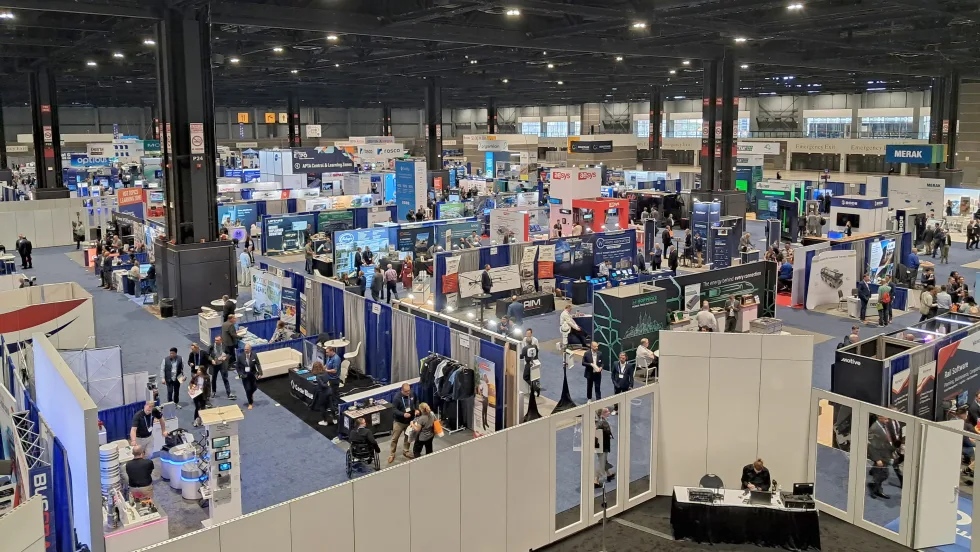
Scenes from APTA TRANSform & EXPO 2026
Transit leaders, manufacturers, and industry professionals gathered in Chicago to explore new technologies, share ideas, and discuss the future of public transportation.
Read More →
Building Stronger Leaders, More Resilient Transit Teams
Dr. Carol Parker Walsh discusses leadership development, employee retention, workplace culture, and preparing transit’s workforce for AI and automation.
Read More →
APTA 2026 TRANSform & EXPO Kicks Off in Chicago
After 45 years, APTA returns to Chicago with a focus on next-generation fleets, AI, connected transit networks, and the funding strategies shaping public transportation’s future.
Read More →
New York MTA Warns Federal Tariffs Could Add $1 Billion to Rolling Stock Costs
The agency said tariffs on specialized imported components could reduce the purchasing power of its $23 billion investment in new subway cars, railcars, and buses.
Read More →
From the Show Floor: What Happened at APTA TRANSform & EXPO 2026
See the latest product launches, partnerships, technology updates, and transit industry announcements from APTA TRANSform & EXPO in Chicago.
Read More →
How Valley Metro Is Balancing Transit Growth With the Rider Experience
The APTA award-winning agency is pairing rapid system expansion with investments in workforce, safety, technology, and the fundamentals of transit service.
Read More →
Bus Tech Talk: Keeping Transit Technicians Ahead of the Technology Curve
In this episode of Bus Tech Talk, Complete Coach Works’ Business Development Manager Mark Hollenbeck and METRO’s Executive Editor Alex Roman sit down with Obed Mejia, Senior Technical Trainer for Bus Maintenance, at LA Metro to discuss how rapidly evolving bus technology is changing the maintenance shop — and the skills technicians need to keep pace.
Read More →
Michael Schneider Joins Paslay Group to Expand Transportation Practice
The longtime transportation executive will help Paslay Group grow its advisory and program management work across transit, highway, and other infrastructure sectors.
Read More →