



Time: an often overlooked transit quality measure
It almost goes without saying, but quite often the most important factor determining what way we travel is how fast it can get us there.
It almost goes without saying, but quite often the most important factor determining what way we travel is how fast it can get us there. Yet, too often it seems to be a missing ingredient in the public transport industry’s measurements of customer satisfaction. There are other important measures of transit success and service quality, of course. They include safety (even the perception of safety is often more important than actual crime statistics), fare level and on-time performance. On that last point, perception is again often more important than reality—if the service is pretty frequent, people will perceive the service to be reliable even if schedule adherence is pretty horrible. It’s one reason why some studies show that even doubling service frequency can result in more than a four-fold improvement in ridership. Time attracts choice riders I want to cite a personal example of how important time can be as a feature of transit quality. I must admit something: This transit editor, who has covered the industry for 20 years, commutes alone to work in his car. Before you write me off as an environmental pariah, know that I live nearly 40 miles from my office and that I telecommute several days per week on average. Back to my point. One day I decided I wanted to commute by bus or train—my car wasn’t even in the repair shop or anything. I went to the Los Angeles County Metropolitan Transit Authority’s Website (www.mta.net). It’s a splendid site—like a growing number in the industry, it has a trip planning feature. I punched in my home address and my work’s and clicked on the submit button. It beautifully displayed multiple travel options in seconds. So far so good. Except for one thing. The fastest journey time estimated that if all went according to schedule, it would take me one hour and 57 minutes to reach my destination. Even on a rainy, dark night in L.A. traffic, slogging through the heart of the beast, I would match that journey time in my car. And I still wouldn’t have to walk to bus stops for several blocks on both ends of my route. Needless to say, this is not the way to win choice riders. Before you begin to question my sanity as to why I picked this system as one of the industry’s most improved, I fully concede that L.A.’s transit system is at a severe disadvantage in trying to accommodate my situation. As I often explain to journalists in the general interest media, our cities took 50 or more years to get us in this situation of transit unfriendliness, and it might take us as long to get out of these development patterns. Yet, time is a very important consideration to many choice riders. They are willing to pay premiums well over the base fare for skip-stop and express service. What the industry needs to do is to test that proposition more thoroughly. It needs to ask in every city: What are you willing to pay if you could get to your destination in an hour? Half an hour? In other words, it needs to battle the convenience of the car with not only the convenience of letting someone else do the driving for less money, but also with a reasonable match in the speed—even on congested freeways. How to find the value of speed Allow this editor, who has never managed a transit system for a nanosecond, to present two ways that might help test choice riders’ value on speed. The first way is your Website. Virtually every agency now has a Website and your marketing staff can help fashion a question that would help you test various fare points and trip speeds. You can use that feedback to help design a service and fare price acceptable to those prospective riders. The second way is by contracting or franchising service. One could issue a tender document asking for proposals of how contract operators would design such services and what they propose to charge. The winning bid would be determined by the best combination of service level, trip speeds and pricing. For the skeptical, that is exactly what many U.K. cities have done. Then, watch the riders and revenue roll in.
More Management
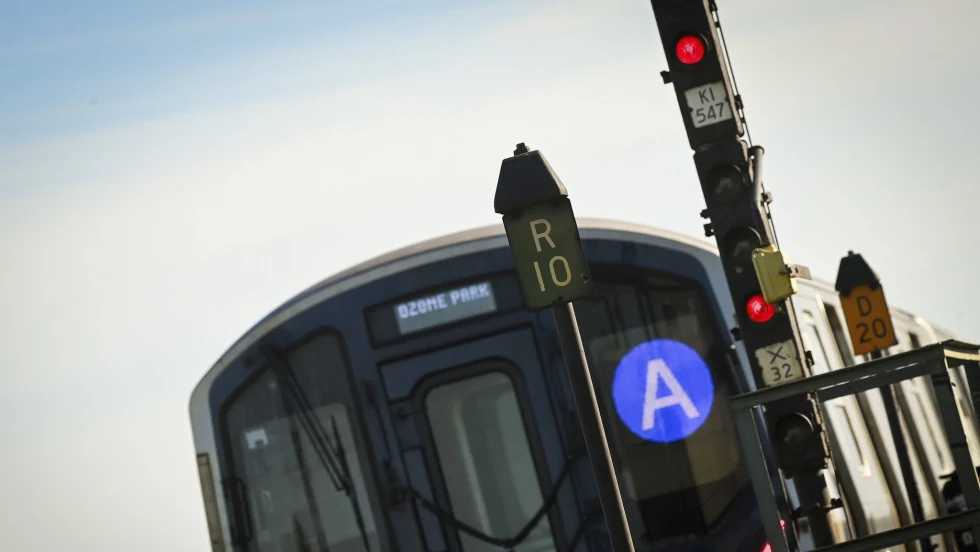
New York MTA Launches Historic $1.9B Signal, Track Modernization Project
Funded in part by congestion pricing revenue, the project will replace nearly century-old signals along the A and C lines in Brooklyn and Queens.
Read More →
Brian Dickson on Building Stronger, More Resilient Transportation Organizations
Bus Business Consultants Founder Brian Dickson discusses the leadership principles, operational discipline, and strategic planning that separate transportation companies positioned for long-term success from those stuck in survival mode.
Read More →
LA Metro Breaks Ground on Vermont BRT Project
The 12.4-mile corridor is projected to serve 66,200 daily riders, reduce travel times by up to 24%, and create the nation's busiest bus rapid transit corridor.
Read More →
Building Stronger Leaders, More Resilient Transit Teams
Dr. Carol Parker Walsh discusses leadership development, employee retention, workplace culture, and preparing transit’s workforce for AI and automation.
Read More →
Roman Cornell on ABC Companies’ Evolution and the Future of Passenger Transportation
The company’s CEO discusses carrying forward a third-generation family legacy, ABC’s continued evolution in passenger transportation, support for increasingly complex fleets, and how technology and continued investment could help operators improve uptime.
Read More →
CATS Launches West Charlotte Microtransit Zone, Expands Transit Services
The new microtransit zone connects residents to key destinations as Charlotte Area Transit System rolls out the first phase of its 2055 Transit System Plan.
Read More →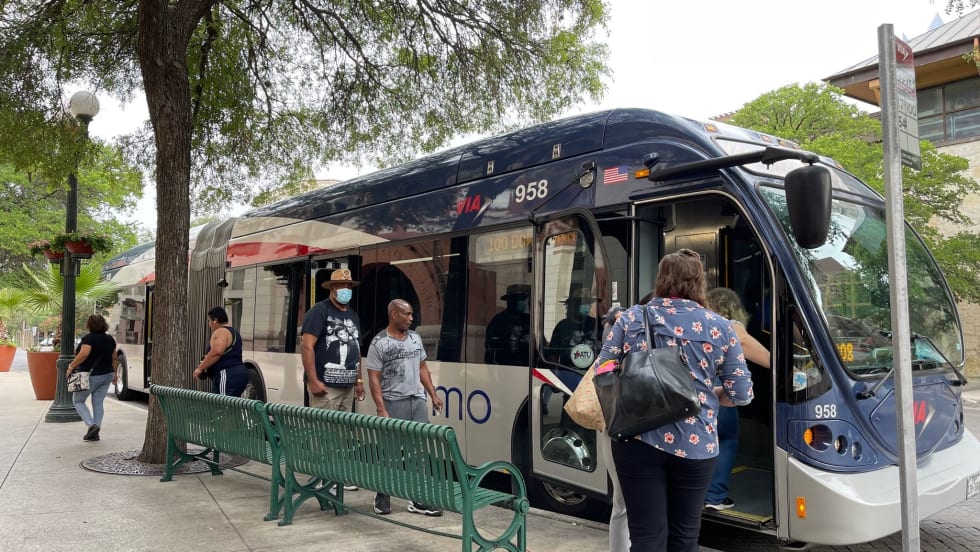
VIA Bus Ridership Grows 10.1% Through August 2026
San Antonio's VIA Metropolitan Transit reported the highest bus ridership growth among major Texas transit systems. Federal Transit Administration data ranked it second among the nation's 50 largest transit systems.
Read More →
CSA Group Releases Climate Resilience Standard for Transit, Passenger Rail
Developed with support from the Standards Council of Canada, CSA D700 guides assessing climate-related risks and planning adaptation measures for transit and passenger rail systems.
Read More →
ETA CEO John Maglio on Transit Technology, Innovation, and Building Agency Trust
ETA founder and CEO John Maglio explores the evolution of transit technology, the importance of reliable systems, and how stronger partnerships can help agencies improve operations and the passenger experience.
Read More →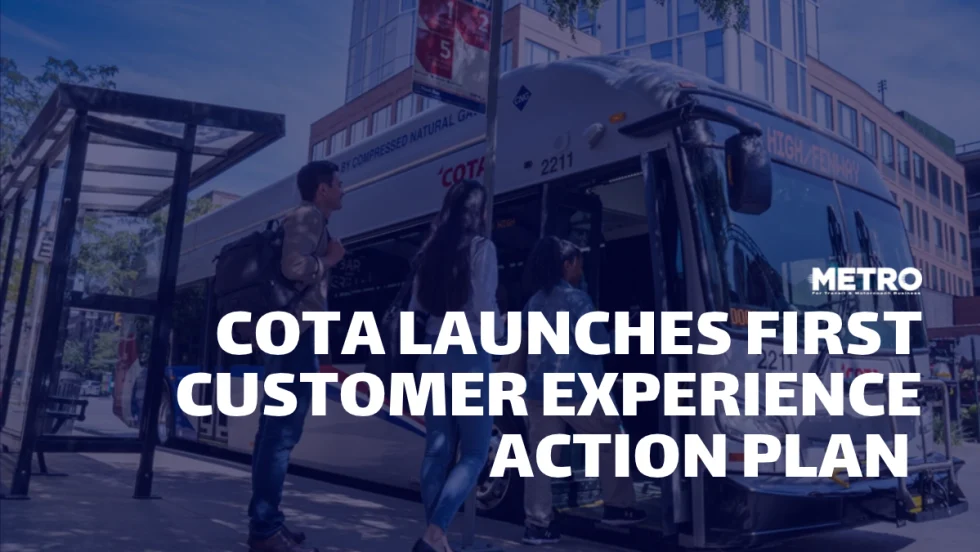
COTA Launches First Customer Experience Action Plan to Improve Transit Service
The new plan outlines improvements to service reliability, accessibility, communication, and the overall rider experience across Central Ohio's transit system.
Read More →