



Time Running Out for Funding A New Transportation Bill
While there are some new solutions for funding a bill when MAP-21 expires being mentioned, there is still no mechanism, new or old, gaining bipartisan favor. Meanwhile, the fractious climate on Capitol Hill makes reaching an agreement even more difficult.
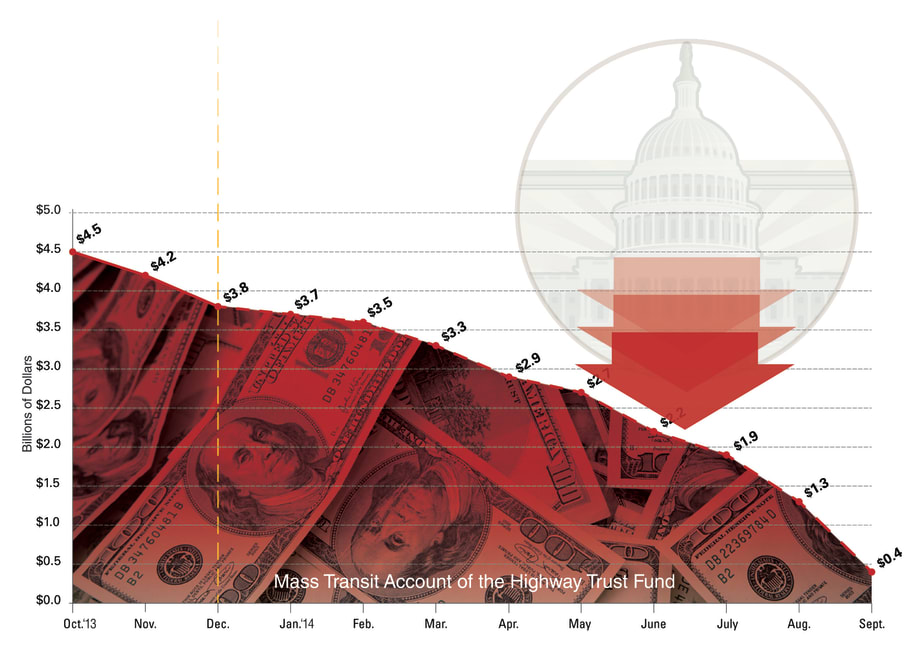
The Highway Trust Fund is set to hit zero by the fall if a funding issue is not found.
The Highway Trust Fund is set to hit zero by the fall if a funding issue is not found.
With MAP-21’s expiration date approaching, the Highway Trust Fund (HTF) slated to run out of money around September and unprecedented gridlock on Capitol Hill, there is growing pessimism a surface transportation authorization bill will get done before the Congressional makeup changes, following the November elections. More importantly, there is still no plan for coming up with the money to fund a new bill, although there have been new options mentioned.
METRO Magazine spoke with industry experts to get a sense of why old ideas still aren’t working, how fresher ideas might fill the funding gap, and if everything falls into place, when exactly a surface transportation bill might get done.
Traditional ideas
While Republicans’ and Democrats’ inability to agree on anything poses a challenge, the critical hurdle to getting a bill done on time is actually funding it. In fact, with funding maintained around current MAP-21 levels, it is estimated a six-year, $320 billion bill would have a shortfall of about $80 billion.
More troubling than the projected shortfall, though, is the fact that there is still no funding solution gaining any sort of backing, leaving the traditional ideas still on the table.
“The 400-pound gorilla in the room is raising the federal gas tax,” says Ken Orski, a public policy consultant, former principal of the Urban Mobility Corp. and publisher of Innovation NewsBriefs. “But, the likelihood of passing a tax increase in this session of Congress, I would have to say, is zero.”
Adds Jeff Boothe, principal at Holland & Knight LLP: “Everybody is dodging the issue, because it is a political third rail, especially in an election year. Members of Congress are scared to death they will get tagged as being somebody who raised taxes. And, gas taxes elicit a very strong public response despite the fact the price of gasoline fluctuates more than the tax would be raised; a point that seems to be lost on most people.”
Election year aside, raising the federal gas tax to create more money in the HTF is a solution that has traditionally been mentioned, yet quickly dismissed, especially as fuel prices have sharply rose over the years, making it an unpopular move amongst voters.
In addition, as Joshua Schank, president/CEO of the Eno Center of Transportation, points out, the gas tax has never been raised to fund transportation.
“The gas tax increases that have happened, and none have in the last 20 years, did not happen because members of Congress said they needed more transportation funding,” he explains. “The increases happened because there was a deficit problem and Congress increased the gas tax to pay down the debt, and then, they wound up using that money in the future to fund transportation.”
Schank adds raising the gas tax has always been and continues to be a hard sell and it is unlikely it would happen this time around to help fund the upcoming bill.
Transitioning to a mileage-based user vehicle miles traveled (VMT) fee is another potential funding solution frequently mentioned. While Oregon will roll out a VMT pilot program in 2015, many feel it is a concept that is not fully ready to be implemented federally in the short term, or even long-term, future.
“The idea the federal government is going to track people’s mileage, and then, charge them on the basis of how many miles they drive, seems very far-fetched to me because of the perception issues that surround that, especially with all of this stuff going on with the National Security Agency,” says Schank. “The level of trust in the federal government’s ability to not invade people’s private lives when they have the data available, I would say, is pretty low. Therefore, you are not going to see a lot of members of Congress say we should be tracking people’s mileage so we have more info about them.”
Boothe adds that the implementation issues alone are a challenge.
“It would take a generation or more to put transponders that would gather information in every vehicle,” he explains.
While it is yet to be seen, it is generally believed VMT is a solution that could work for states and localities. Another such solution that has been thrown out is tolling.
“You are not going to use tolling as a substitute at the federal level — the federal government doesn’t own and operate the roads, so they can’t toll them,” explains Schank. “The only way you will see increased tolling is if the federal government provides incentives for states and localities on their roads, in other words, rewarding that action, which is much harder to do politically.”
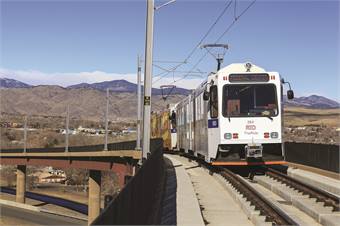
With no funding solutions at the federal level, many cities, including Denver, have found other ways to complete major capital projects, such as P3s and ballot referendums.
Alternative funding solutions
In short, there have been few new funding solutions to arise.
One solution mentioned by Sen. Barbara Boxer (D-CA), however, suggested switching the federal gas tax to a wholesale gas tax, following the leads of states including Pennsylvania and Virginia.
In Virginia, for example, the switch saw the commonwealth go from charging 17.5 cents per gallon tax on all fuels to a 3.5% tax of the statewide average wholesale price for a gallon of gasoline — approximately 11.1 cents per gallon when the tax was launched in July.
Virginia estimates the new tax will generate approximately $625 million for improvements to its transportation system in Fiscal Year 2014.
“I don’t understand, on the national level, why it would make a difference other than maybe something optically,” says Robert Puentes, sr. fellow, metropolitan policy program, at the Brookings Institution. “While it has the potential to keep pace with inflation, it seems to me switching to a wholesale gas tax would be just as politically challenging.”
The move to wholesale tax would allow the tax to go up when fuel prices escalate, a flexibility the current system does not allow. One obvious glitch is the tax collected would also go down as fuel prices decrease.
“There are risks to switching to a wholesale tax, with respect to funding, but the reason it is more palatable is you can say we are going to make it revenue neutral. In other words, we are not going to raise the gas tax, we are just going to convert it, which is probably a little more palatable for people,” says Schank.
Marcia Hale, president of Building America’s Future, believes what is needed is the long-discussed National Infrastructure Bank.
“It will not solve the problem of building most of the transportation projects out there, because in an infrastructure bank, or authority as some call it, you bring the private sector in to help in the financing of projects, therefore, you have to find projects the private sector wants to finance and has the ability to generate a revenue stream from,” she says. “Many countries in the world have had infrastructure banks for quite some time and have found a way to make it work. It is not the long-term answer, but it is a piece.”
Building on that, many believe it is simply time for states to fill the gap, especially as state tax referendums to pay for public transportation projects continue to have a high success rate. One way for states and localities to do that is through public-private partnerships (P3s).
“In the past, the federal program has been taking the place of money the states would have been raising anyways,” explains Puentes. “What is happening now is that since the federal money isn’t there, states are doing what they should have been doing all along in many different ways, including partnering with the private sector to create a pipeline of projects. ”
But, one critical question is if it is plausible to think solutions such as P3s are enough to fill the projected gap.
“It is not only plausible, but quite possible,” Hale explains. “There is an enormous amount of capital out there waiting to invest in the right projects.”
Hale adds what may be needed to help expand the possibility of P3s around the nation is some sort of panel of experts that can look at the project to see if it is an ideal P3 candidate. She also believes a set of guidelines would greatly help.
“If you are the city of St. Louis, for example, and you want to go do a P3, there is almost nowhere to go to find an established best practices,” she says. “It is like everybody is recreating the wheel every time there is a new project. A forum where there are experts on the topic, that don’t have any piece in the pie, would be a fabulous thing for people to set up.”
Orski believes a solution that could work is distinguishing between routine expenditures and capital investments. In a series of Innovation NewsBriefs posts, Orski says regular highway maintenance and system preservation should continue to be paid for with local revenue and federal-aid highway funds on a pay-as-you-go basis, but major construction and reconstruction projects should be financed with long-term debt and availability payments, employing P3s.
“Availability payments are used for large construction and reconstruction projects not expected to generate a sufficient revenue stream to pay for themselves,” he explains. “The risk associated with forecasting demand and revenue has shifted the interest from toll revenue concessions to this method of financing. Payments are made out of toll revenue collected by the sponsoring public agency or dedicated sales taxes, with state transportation budgets making up any shortfall.”
Meanwhile, Puentes suggests that actually finding a way to fund a transportation authorization bill isn’t really the issue.
“We can tick off a lot of the ways where we could generate money for the program, but it’s a difference between shoring up the Highway Trust Fund and actually building a program that works for the country,” he says. “The mechanics of the Highway Trust Fund is not what is going to galvanize the nation. It is putting forth a clear and articulate vision for solving the challenges we face as a nation.”
Outlook
As of press time, there has been no funding solution gaining any sort of bipartisan support and little discussion about what a reauthorization bill may look like. It is also clear that the threat of the HTF running out of money this year is very real and the climate on The Hill only makes it harder.
“[With MAP-21], we couldn’t do a six-year bill because there wasn’t enough money or a collective sense of what we should be doing. So, the idea was to do it for two years, and then during that time, figure out how to do the big authorization bill the country needs,” says Puentes. “But, Congress hasn’t done that for two years and it is doubtful it will happen between now and this summer.”
In short, like many other years when an authorization bill was up for renewal, it is unclear what it may look like or how it may get done.
“We are just going to keep pushing for a long-term bill and try to work with people with that in mind,” says Hale. “I think it is hard to get a bill done in an election year, but it is not impossible. The economic aspects are terribly important. Why we need to do this may not always be very clear, but we have to have a lot of foresight to be able to build the country.”
While the experts METRO spoke with are still optimistic for passage of a bill, many think we will see an extension or two of MAP-21 until a bill can get done, with a short-term bill more than likely if the funding isn’t found.
“Assuming Congress will have the time and inclination to pass a bill before or after the election, I would suspect it would take the form of a one- or two-year bill funded at current spending levels,” says Orski.
Boothe, who adds he believes that raising the gas tax is the only real short-term solution, says getting a bill done could wholly rely on how the upcoming elections play out.
“The optimist and pessimist in me suggests Congress has a bill and a funding solution in place, and then, just waits and sees what happens with the upcoming elections,” he says. “If it is a status quo election, nobody won, nobody lost, maybe a bill can get done in the lame duck Congress. But, if it is perceived by one party or one chamber of Congress or the other gained significant leverage as the result of the election, it will make it harder to get done because they will want the next Congress to have a shot at affecting the legislation. It is a real crap shoot right now.”
More Bus

New York MTA Plans Largest Bus Fleet Upgrade in More Than a Decade
The agency is seeking manufacturers for 650 new CNG buses to replace aging vehicles, improve reliability, and advance its broader fleet modernization strategy.
Read More →
Building a Flexible Path to Transit Electrification
John Hroncich discusses BAE Systems’ modular and scalable approach, lessons learned from decades of real-world operations, and how agencies can identify electrification strategies that fit their fleets.
Read More →
Bus Tech Talk: Keeping Transit Technicians Ahead of the Technology Curve
LA Metro’s Obed Mejia discusses technician training, evolving maintenance technology, fleet replacement, and strategies for getting the most out of today’s transit fleets.
Read More →
Biz Briefs: RIPTA Unveils New Frontrunners, Clevland RTA Adds New Siemens, and More
In METRO's latest installment, we take a look at recent news from Siemens, Prevost, Dodge, and more partnerships making headlines across the transportation sector.
Read More →
People Movement: Holly Arnold Joins Transdev and More
In this edition, we also cover recent appointments and announcements at Pace, CamTran, MCI, and more, showcasing the individuals helping to shape the future of transportation.
Read More →
The High Cost of Transit Buses: Industry Leaders Look to Procurement Reform
Transit leaders and policymakers examine how standardized bus designs, streamlined procurement, and predictable funding could help agencies stretch budgets and deliver better service.
Read More →
The Business Voice Behind Public Transportation
As chair of APTA’s Business Members Board of Governors, Ray Melleady explains how more than 850 business members are partnering with transit agencies to advance funding, innovation, and industry-wide collaboration.
Read More →
From Surviving to Thriving: Building Stronger Transportation Organizations
Bus Business Consultants founder Brian Dickson shares lessons on leadership, organizational health, and creating options for long-term success in a changing transportation industry.
Read More →
Finding the ‘Happy Medium’: Optimizing Maintenance Without Sacrificing Reliability
The key to maintenance optimization isn’t doing less work—it’s doing the right work at the right time on the right assets.
Read More →
LA Metro, City of West Hollywood, and Partners Advance Smarter Bus Lane Enforcement
The award-winning partnership combines AI-powered detection with human oversight to improve bus reliability, accessibility, and enforcement efficiency.
Read More →