



Transit Infrastructure Must Be Made Resilient to the Effects of Climate Change
The transportation system of metropolitan New York was significantly impacted by Superstorm Sandy — including New York City subway and Amtrak rail tunnels damaged by flooding — and the after effects are still being addressed.

Photo: MTA/J.P. Chan
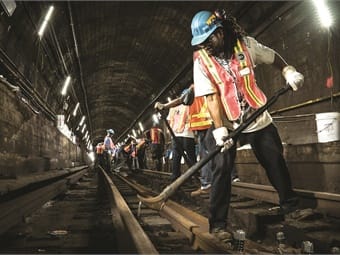
Photo: MTA/J.P. Chan
In 2012, a hurricane churned its way up the Atlantic, merged with another storm, turned toward the shoreline and made landfall in the New York region — an event with devastating effects on property and infrastructure, including transit systems. The transportation system of metropolitan New York was significantly impacted, and the after effects of Superstorm Sandy — including New York City subway and Amtrak rail tunnels damaged by flooding — are still being addressed.
Consider impacts, reconsider design
Sandy is just one of a number of extreme weather events across the U.S. in the past decade that has resulted in significant damage to transportation infrastructure. These events have become a part of the history of transit and transportation disruptions in the U.S. They provide an opportunity to consider the conditions that led to such damage and left communities damaged for extended periods, and without the transit service so critical to a functioning and effective community. Transportation design professionals need to reflect on and consider the cause of these impacts not only from the perspective of the weather events that caused them, but also from the perspective of how these storms have such a disruptive effect on transportation systems, and whether the design of such systems needs to be reconsidered to ensure future system resiliency. Now is the time to reconsider how system and project decisions are made and how we can assure they will withstand future climatic conditions.
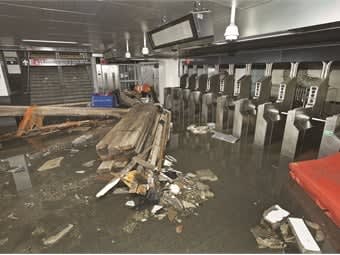
A view of the flooded South Ferry Station -- post Sandy. Photo: MTA/Patrick Cashin
This dialogue on risk and design becomes more complex when considering the expected effects of climate change — with warming global temperatures expected to increase the number and volatility of weather systems, bringing more rain and flooding, and increasing the risk of more damaging coastal storms. The growing political acceptance of a changing future climate, based partly on a large volume of research on the science of climate change, is increasing the interest in designs that consider not just current environmental conditions, but also the potential increasing risks associated with changing climate conditions.
Climate Change, Decision-Making
The science of predicting future climatic conditions continues to refine understanding of how the earth’s systems may respond to a warmer climate. The reality, however, is that the future cannot be defined to a specific level of detail consistent with what engineers typically apply today at the project level, where flows and forces are defined, refined and used to make design decisions. Thus, there is a level of uncertainty in looking to the future, which includes both the timing and extent of change in weather conditions.
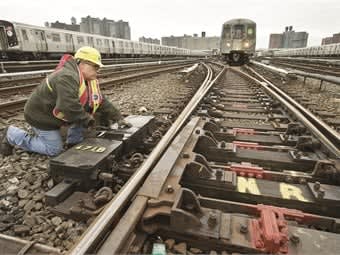
Workers at New York City Transit's Coney Island Yard threw switches by hand as a result of storm damage. Photo: MTA/Patrick Cashin
For managers and designers of transit systems this means that the focus of design should better define the future parameters of what infrastructure will likely face over the lifetime of an asset. A primary benefit of the developing dialogue on climate change and design is that the considerable uncertainty associated with the future means that professionals can no longer rely only on established design guidance to define important phenomena such as sea level rise, storm surge, temperatures or rainfall. These design input data are no longer static, defined by past events. However, models predicting future values vary widely — and transit professionals must broaden their perspective in order to design effectively.
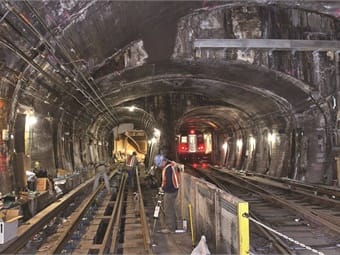
Working on the damaged Montague Tubes along the R line in Brooklyn. Photo: MTA/Patrick Cashin
In response to this high level of uncertainty, the resulting approaches to design have become more risk-based, where the implications of damage and loss to transit system elements have become more a part of best practices design. A closer look at the levels at which high temperatures become an operational concern, where flooding may cause service disruptions, or how storm surge might require extensive repair and rebuilding has increased the understanding of risks and damage — a perspective not traditionally part of criteria-based design. Defining these points and identifying how often they might be exceeded, and at what predicted levels, provides the designer a better understanding of the long-term costs of these events over time.
The basis on which to make design decisions becomes clearer when combined with quantified social/economic losses associated with service disruptions — information that has become more evident from recent extreme weather events. Quantifying damage and loss over a project’s lifetime helps guide appropriate design response strategies that can limit future damage from climate change.
Quantifying damage and loss over a project’s lifetime helps guide appropriate design response strategies that can limit future damage from climate change.
One of the beneficial outcomes of this type of risk-based design for transit systems is that it helps quantify how valuable these systems are to communities. As an essential community resource, transit systems need to be protected with actions focused on eliminating risks using adaptable engineering strategies.
Michael Flood is the National Resiliency Lead for WSP | Parsons Brinckerhoff
(www.wsp-pb.com).
More Technology

From Hardware to Digital Partner: Luminator Charts Its Next Chapter
CEO Magnus Friberg discusses Luminator’s shift toward becoming a digital partner, the growing importance of software and interoperability, and how AI can help agencies improve operations and passenger experience.
Read More →
Beyond the Checklist: A Structured Approach to Transit Maintenance
Reliability-Centered Maintenance helps transit agencies move beyond routine checklists to focus limited resources on the assets and failures that have the greatest impact on safety, reliability, and service.
Read More →
NJ TRANSIT Advances Bus Technology Upgrades Across Statewide Fleet
More than 1,500 buses now feature upgraded technology designed to improve arrival predictions and provide free Wi-Fi, with deployment expected to reach nearly 2,000 buses by the end of 2026.
Read More →

Building a Flexible Path to Transit Electrification
John Hroncich discusses BAE Systems’ modular and scalable approach, lessons learned from decades of real-world operations, and how agencies can identify electrification strategies that fit their fleets.
Read More →
Biz Briefs: Alstom Lands Canadian Contract, LYT to Supply California TSP, and More
In METRO's latest installment, we take a look at recent news from Complete Coach Works, Beep, FlixBus, and more partnerships making headlines across the transportation sector.
Read More →
From Legacy Silos to Conversational Intelligence
What if transit leaders could ask any operational question and get a trusted answer in seconds? Conversational AI is transforming how agencies use their data.
Read More →
USDOT Announces Rail Vehicle Replacement Grants, Chattanooga AV Shuttle Funding
More than $191 million in federal funding will help three transit agencies replace aging rail vehicles and support a new autonomous shuttle service in Chattanooga.
Read More →
Bus Tech Talk: Keeping Transit Technicians Ahead of the Technology Curve
LA Metro’s Obed Mejia discusses technician training, evolving maintenance technology, fleet replacement, and strategies for getting the most out of today’s transit fleets.
Read More →
Biz Briefs: RIPTA Unveils New Frontrunners, Clevland RTA Adds New Siemens, and More
In METRO's latest installment, we take a look at recent news from Siemens, Prevost, Dodge, and more partnerships making headlines across the transportation sector.
Read More →
Why Simulating Pedestrian Movement Has Become Essential for Modern Rail Stations
Pedestrian microsimulation is helping rail planners identify bottlenecks, test station designs, and prepare complex transit hubs for growing passenger volumes.
Read More →