




Keep Reading: How Transit Fleets Lead in Disaster Response
What India's Everyday Public Transit Reveals About U.S. Challenges
From efficiency to culture, a rickshaw run in India reveals people-centered lessons for building stronger American transit.
October 13, 2025
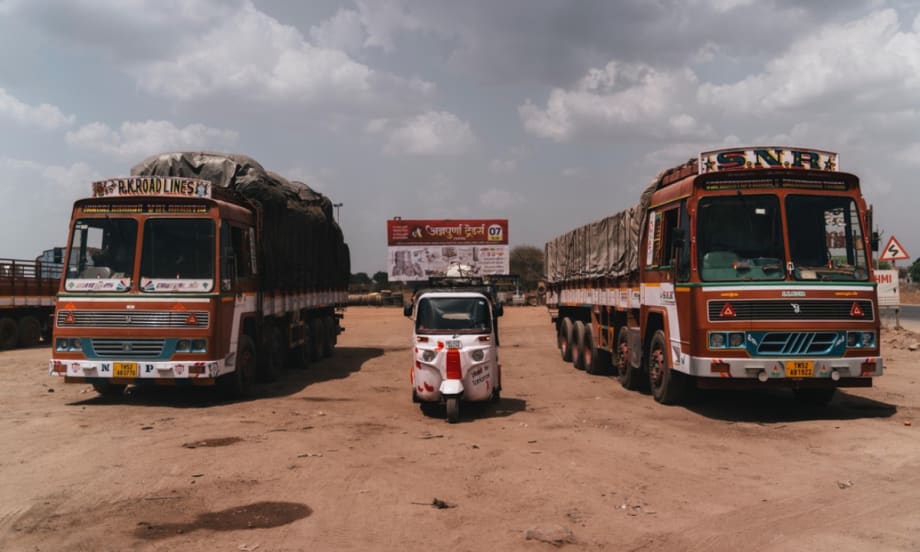
Mike Finnern’s 2,300-mile Rickshaw Run across India offered unexpected lessons on efficiency, pragmatism, and culture that could reshape how the U.S. approaches public transit.
Photo: Mike Finnern
6 min to read
- India's rickshaw system emphasizes efficiency and provides valuable lessons for improving U.S. public transit.
- Cultural aspects of Indian transit highlight the importance of people-centered approaches in transportation systems.
- Adopting insights from Indian public transit could help address challenges faced by American transit infrastructure.
*Summarized by AI
What can a seven-horsepower rickshaw bumping across India teach America about the future of transit? For one transit leader, the answer was a surprising mix of efficiency, pragmatism, and culture — lessons hidden in plain sight on roads half a world away.
Mike Finnern, senior vice president and national zero-emissions fleet lead at WSP in the U.S., recently embarked on an adventure that proved it.
Finnern participated in the Rickshaw Run, organized by The Adventurists, across India with two of his best friends, Kyle Taylor and Jon Thomas.
The run took place over the first three weeks of April 2025, covering over 2300 miles across India, from Kochi in the south to Jaisalmer in the northwest.
Finnern and his friends formed the team "Seven Horsepower of Hell," named after the seven-horsepower rickshaws they drove on their own unique route through the country.
"You definitely have to have the right teammates for something like this because there's a lot of togetherness," said Finnern.
The opportunity had many attractive qualities for Finnern, as it fulfilled his love of travel and adventure and allowed him to chart his own course using informal transportation, such as a scooter, public transit, or, in this case, a rickshaw. “It’s the best way to really see and feel a country, literally!” he said.
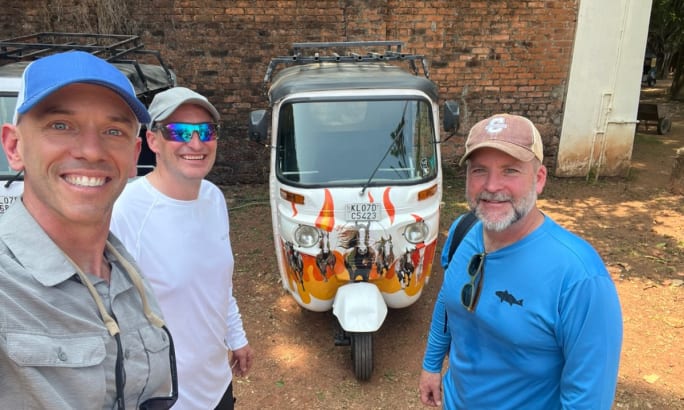
Mike Finnern (left) participated in the Rickshaw Run, organized by The Adventurists, across India with two of his best friends, Kyle Taylor (middle) and Jon Thomas (right).
Photo: Mike Finnern
A charitable aspect was also at play, with Finnern's team raising $1,000 for Cool Earth, a nonprofit that fundss communities to protect forests and combat the climate crisis. Finnern’s team contributed to the collective $50,000 raised by all participants.
Within 10 to 12 hours of driving each day, Finnern recounts the mental and physical demands that allowed his team to experience the diverse landscapes and vibrant cultures of India, including the distinctive public transit infrastructure.
In the U.S., public transit struggles can range from post-pandemic ridership declines to service cuts, low population density, car-centric infrastructure models, and even fragmented transit systems, but those aren't hard-and-fast stopping points.
Evolution is possible, especially if various global scales are used as indicators of what works. Who knows, it may be as simple as a mindset change.
Public Transit Abroad and the U.S.
One thing that surprised Finnern in India was how common it was to see a bus. No matter what, they were everywhere.
"Obviously, there were tons in urban areas, but then we would be out on a dirt road in what seemed to be very rural areas with low population densities for India, and here comes a bus, usually taking up its traffic lane and ours," said Finnern.
More people in India rely on public transit than here in the U.S., a change attributed to the rise of car-centric, suburban environments over the past 70 years. While buses are still an option, Finnern noted that using a bus to travel between towns or over longer distances is less prevalent in the U.S. than it once was.
According to the American Public Transportation Association (APTA), 45% of Americans lack access to public transportation. In comparison, transportation efficiency in India, measured by ridership, is very high. Buses, rickshaws/tuk-tuks, and even scooters are packed to capacity. The latter options support the first- and last-mile needs between transit stops. It’s very common to hitch a ride with a passerby to get to your final destination.
What feels ordinary in many parts of the world stands out to Finnern, especially compared to the U.S., where single-occupancy vehicles remain the norm.
The technical takeaway? The U.S. could benefit from expanding reliable bus service, promoting shared ridership, and exploring flexible community-based transit.
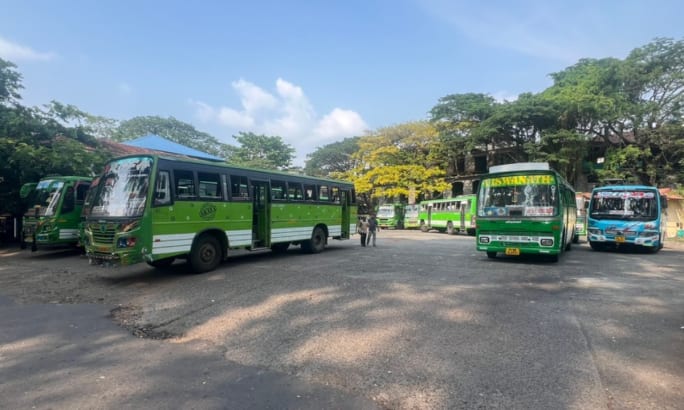
What looks imperfect on the surface — crowded buses, worn vehicles, decentralized charging — may actually hold the key to building more resilient and sustainable transit systems in the U.S.
Photo: Mike Finnern
Pragmatism Vs. Perfection
Another quality Finnern took back from witnessing India's transit infrastructure and accessibility is "form over function." He notes that some buses look like they should be retired, but they are still being used on routes every day.
"They prioritize getting the job done over the form, so to speak," Finnern said. "Perfection doesn't get in the way of progress."
Cosmetic issues, such as faded paint, dents, cracked seats, or an older-looking exterior, might make a vehicle seem unfit in Western eyes.
In the U.S., such wear often pushes transit agencies toward costly overhauls or replacements to improve brand image or meet aesthetic social standards.
Although regulations or high costs drive some of the decisions transit agencies must make, the pursuit of perfection shouldn't deter those with a vision who want to make it work. Building "ideal" infrastructure is an important step, but a shift is in order that focuses on moving people efficiently, which may require certain social expectations to evolve.
Decentralized Charging and the Rise of CNG
Finnern witnessed affordable sustainability solutions across the transition to cleaner mobility. In major cities like Mumbai and Delhi, electric buses are already widespread, and even tuk-tuks, which are traditionally gas, diesel, or CNG-powered, have electric versions available.
Charging infrastructure is often decentralized, meaning relying solely on centralized depots with dozens of chargers is not as much of an issue. Finnern noted that many operators charge vehicles at home or in smaller facilities, distributing the load across the grid.
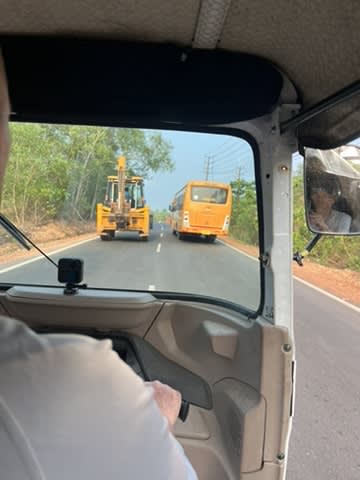
"Here comes a bus, usually taking up its traffic lane and ours," Finnern said of the varying types of roads.
Photo: Mike Finnern
"This eases the burden versus having a big yard with a lot of chargers and a high point-load for the utility," said Finnern.
Compressed natural gas (CNG) also plays a significant role, which Finnern said is potentially supported by a tariff structure that makes it more affordable as a domestic and commercial option.
According to a 2025 report from Crisil Intelligence, an ongoing push for cleaner fuels is predicted to push the CNG vehicle count in India to 7.5 million, a threefold increase from 2.6 million in fiscal year 2016.
Crisil also reports a rise in competitive intensity, expansion into new geographic areas, and narrower infrastructure gaps, all of which contribute to CNG's growing popularity in India.
Widespread EV or alternative fuel adoption doesn't necessarily require perfection or multimillion-dollar solutions. In most areas, bus yards are essential for maintaining smooth transit operations and will serve as the foundation for accessible, cost-effective adoption of new technologies.
"You just have to work within the capability of the vehicles that you have," said Finnern.
Blending Global Lessons for People-Centered Mobility
An interesting key difference in India's mobility ecosystem, as Finnern observed, lies in cultural values and roadway hierarchies. The "right-of-way pyramid" places cows first, then buses and trucks above private cars, with the principle that vehicles carrying more people should have priority. “It’s like BRT service in the U.S. but with every bus, all the time instead of dedicated routes only,” said Finnern.
This thinking on the road could improve traffic flow and also signal respect for high-capacity, shared transportation.
"By letting them in and letting them get to wherever they're going more quickly, it just makes for a better form of transportation," said Finnern. "Then you're likely to want to use it."
Transit is also deeply social. Buses are everywhere, even on rural dirt roads, and always full.
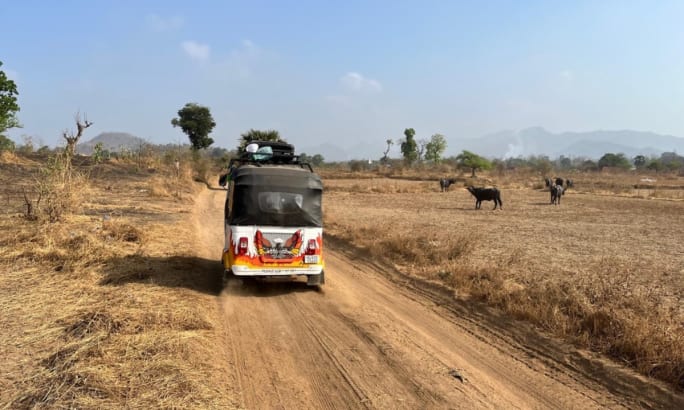
From rural dirt roads to bustling cities, India’s buses and rickshaws revealed people-centered mobility practices that stand in sharp contrast to America’s car-first structure.
Photo: Mike Finnern
Shifting the road culture to value shared transit would require both policy and mindset changes. Prioritizing buses, making room for high-capacity vehicles, and reframing transit as a place of human connection rather than just mobility could help build stronger communities while easing congestion.
This global example illustrates four interconnected takeaways for the U.S.:
- Efficiency: Maximize vehicle use by prioritizing high-capacity transit.
- Pragmatism: Focus on function over perfection, like getting systems working and improving them over time.
- Sustainability: Leverage affordable clean energy technologies, such as electric buses or alternative fuels like CNG, where it makes sense.
- Cultural Priorities: Elevate shared transit in road culture and policy to reinforce its value.
By blending global lessons with local innovation, U.S. transit agencies can build systems that are technologically advanced and people-centered, valuing the journey, human connection, and community as much as the destination.
"Ideally, the more you can think about projects as an ecosystem, [...] where you pull in stakeholders, both from all parts of your agency and the people that you serve, and let them be part of the process, you can overall have a better system, operate more efficiently, spend less money, and provide better service," said Finnern.
Quick Answers
India's public transit, including rickshaw runs, operates with a high level of efficiency due to its dense network and ability to navigate through congested areas swiftly, offering lessons in optimizing routes and minimizing wait times.
*Summarized by AI
Subscribe to Our Newsletter
More Management

METRO Opens Submissions for 2026 Motorcoach Awards
Nominations are now being accepted for METRO Magazine’s Operator of the Year and Innovative Operator of the Year awards.
Read More →
New York MTA Advances Final Contract for Second Avenue Subway Expansion
Contract Four is the largest in the Second Avenue Subway Phase 2 project and includes construction of station infrastructure, tracks, and signals for the subway expansion, MTA officials said. Work on Contract Four will begin in 2027.
Read More →
Transit Agencies Highlight Safety Gains at National Summit
Leaders from 15 major transit systems shared crime-reduction results and safety initiatives while discussing the role of continued federal support.
Read More →

NITA Names New Leadership, Expands Reduced-Fare Program at First Board Meeting
The new regional transit authority appointed its first board chair and interim executive director while extending reduced fares across CTA, Metra, and Pace for eligible riders.
Read More →
Beyond the Checklist: A Structured Approach to Transit Maintenance
Reliability-Centered Maintenance helps transit agencies move beyond routine checklists to focus limited resources on the assets and failures that have the greatest impact on safety, reliability, and service.
Read More →
APTA 2026 Nominating Committee Selects Leadership Slate, Names Chair and Vice Chair Nominees
Leadership changes will help shape the association’s priorities and its representation of the transportation industry during the 2026–2027 term.
Read More →
DART Launches Major Security, Fare Enforcement Initiative
The 90-day demonstration will deploy coordinated security teams at five light rail stations while testing controlled access and gathering data to guide future investments.
Read More →
Sponsored•September 9, 2026
Advancing Fare Collection Through Technology and Innovation
Learn about delivering 1300 gates at 91 stations while managing fare evasion. Explore the large scale deployment, solution customization and real-world results that affect the region. Prepare for deployment in your region now.
Read More →
Game Day in Motion: Moving Millions During the 2026 World Cup
Between packed transit stations and team motorcoaches, see how agencies and operators across North America tackled the transportation demands of the 2026 FIFA World Cup.
Read More →
Surface Transportation Extension Averts Shutdown, Leaves Transit Funding Gap
The stopgap keeps federal transportation programs moving, but missing advance funding could complicate the transit and rail projects agencies are planning next.
Read More →