



Yes, rail investments produce jobs and growth!
Eliminating all FY 2011 dollars for high-speed and intercity rail is therefore more than short-sighted. It sets the stage for an attack on the whole program.
Some of the rhetoric coming out of the mouths of conservative, anti-government politicians these days is no less than astonishing in its ignorance about infrastructure spending. They hold to the myth that high-speed rail spending - or even all rail spending - by government will not create jobs or economic growth. This is part of a larger myth that only non-government actions like private investment are what create private sector jobs and that government simply needs to get out of the way.
Government's role in investment
The truth is that government has always had a role in transportation infrastructure investment, at least from the days of the Roman Empire, and that this transportation investment leads to greater economic growth. It was proven during the Great Depression and again and again with the Interstate Highway System, new major rail and bus transit investments in cities, and with transportation funding in the American Recovery and Reinvestment Act of 2009. According to the U.S. Government Accountability Office and other government reports, transit investments created the most jobs per million dollars spent in that stimulus legislation. The same would hold for high-speed rail.
APTA has just released a new report, called "The Case for Business Investment in High-Speed and Intercity Passenger Rail," which shows that the large investments in high-speed and intercity rail along the lines of what President Obama has proposed just over the next six years will directly and indirectly result in at least partly creating more than 1.3 million jobs. Longer term, it can rejuvenate the U.S. manufacturing industries and help get us off the largest contributor to our trade deficit - oil imports.
Playing politics with our future
Taking the flawed and sometimes completely unsupported conclusions of conservative think tanks, the new House majority forced the administration and Senate to cut rail transit and high-speed rail disproportionately in the recently enacted FY 2011 budget. Unfortunately, the way that Washington works is that this sets a baseline for future investments. Eliminating all FY 2011 dollars for high-speed and intercity rail is therefore more than short-sighted. It sets the stage for an attack on the whole program.
This is playing politics with our economic future in a very important way. We need to remind these members of Congress that 32 states and the District of Columbia are advancing projects with FY 2010 dollars. We also need to remind them that every single one of our major trade competitors is still investing in rail, even while slashing other government spending.
As it has been for more than a century now, urban and regional rapid transit, intercity and future high-speed and passenger rail investments are just that - important investments to create jobs (remember that word?) and help boost the economy.
More Bus

Finding the ‘Happy Medium’: Optimizing Maintenance Without Sacrificing Reliability
The key to maintenance optimization isn’t doing less work—it’s doing the right work at the right time on the right assets.
Read More →
LA Metro, City of West Hollywood, and Partners Advance Smarter Bus Lane Enforcement
The award-winning partnership combines AI-powered detection with human oversight to improve bus reliability, accessibility, and enforcement efficiency.
Read More →
PSTA Modernizes Workforce Management with Digital Bidding System
The award-winning Workforce Transit Modernization project replaced paper bidding with a transparent digital platform, cutting administrative effort while improving access for operators.
Read More →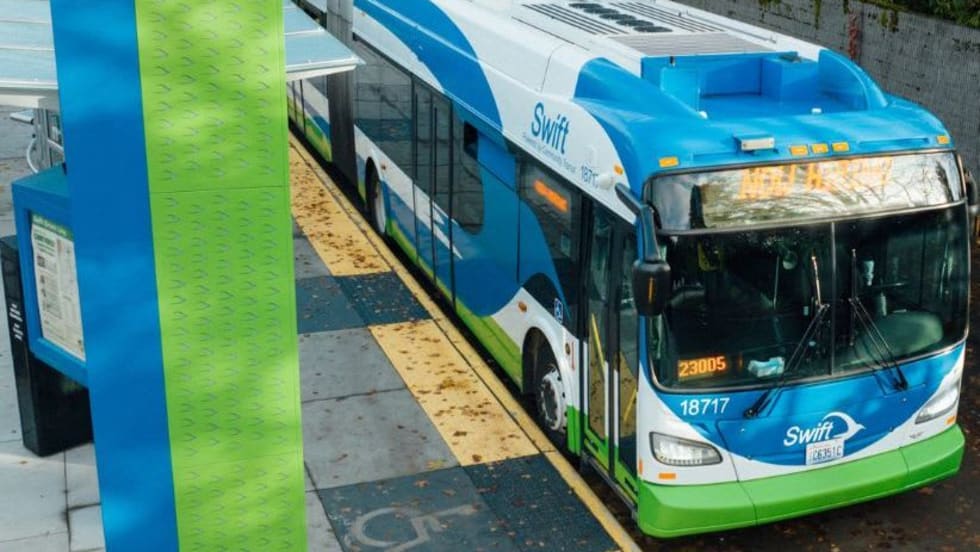
Washington's Community Transit Sets Six-Year Roadmap for Growth, Expansion
Approved TDP targets more bus service, new mobility options, Swift BRT expansion, and a potential Everett Transit annexation.
Read More →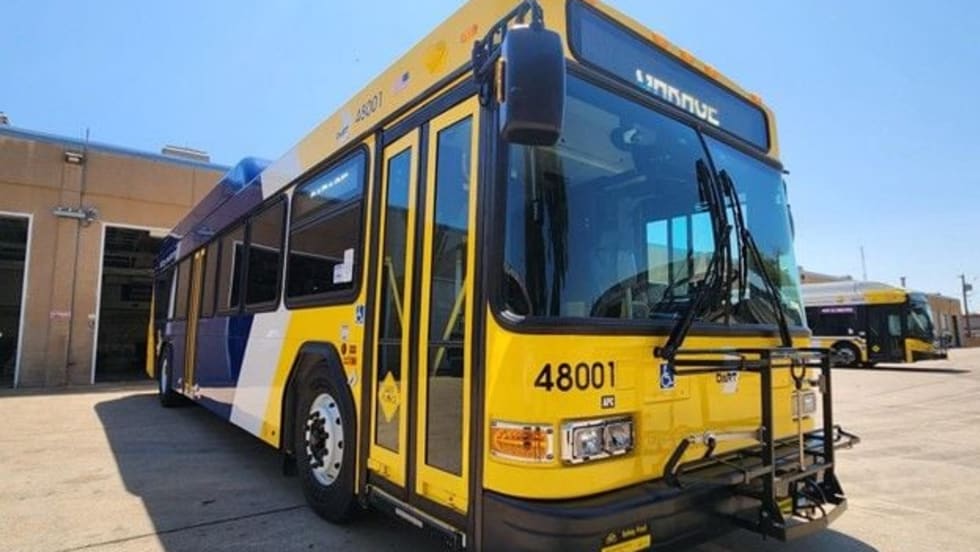
DART Customer Satisfaction Reaches Six-Year High
Overall satisfaction rose to 74.9%, while the agency’s Net Promoter Score reached a record 33.7.
Read More →
How DART's GoPass Is Redefining Regional Mobility
Serving 14 transit agencies, GoPass simplifies multimodal travel by allowing riders to plan, pay for, and manage an entire trip through one app.
Read More →
Biz Briefs: OCTA Taps Clean Energy for Hydrogen Station, Stadler to Supply Via Rail Vehicles, and More
From manufacturers and suppliers to transit agencies and motorcoach operators, these updates offer a snapshot of the projects, partnerships and business moves driving the industry forward.
Read More →
METRO Magazine Announces 2026 Innovative Solutions Awards Winners
Projects Recognized for Advancing Mobility Through Technology, Accessibility, Workforce Innovation, and Operational Excellence
Read More →
Biz Briefs: STV teams with Amtrak, Motorcoach Operators Boost Fleet and Land Contracts, and More
From manufacturers and suppliers to transit agencies and motorcoach operators, these updates offer a snapshot of the projects, partnerships and business moves driving the industry forward.
Read More →
LA Metro Marks Banner Year, Sets Ambitious Goals for New Fiscal Year
Incoming LA Metro Board Chair and Los Angeles Mayor Karen Bass joined outgoing Board Chair Fernando Dutra and LA Metro CEO Stephanie Wiggins to review accomplishments from fiscal year 2026, which included the opening of new rail extensions, advancement of major transit projects, expanded safety programs, and new rider amenities.
Read More →