



Advancing women in transportation: Closing the gap
With President Obama’s recent bills regarding gender equality in the workplace, it’s hard to understand why gaps regarding pay, position, and opportunity for women still exist and why, in some industries such as transportation, gaps regarding position and opportunity are wider than in others.

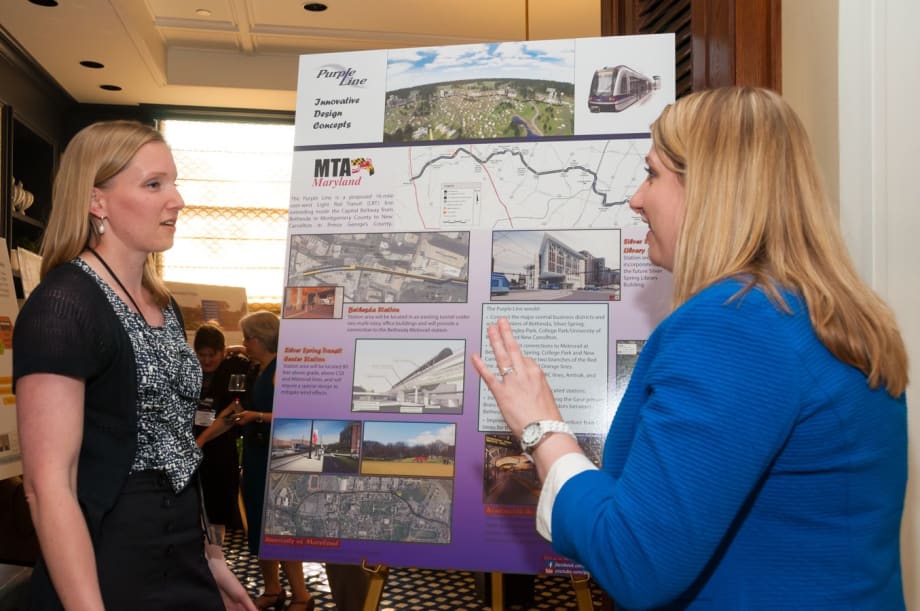
Two women discuss a project featured at the 2013 WTS Annual Conference in Philadelphia.
Two women discuss a project featured at the 2013 WTS Annual Conference in Philadelphia.
With President Obama’s recent bills regarding gender equality in the workplace, it’s hard to understand why gaps regarding pay, position, and opportunity for women still exist and why, in some industries such as transportation, gaps regarding position and opportunity are wider than in others.
Study after study has illustrated that employee performance is increased with programs that offer flexibility and recognition for women in the workplace. That company performance is increased as more women are included in the board room. That there is a direct link between economic performance and the advancement of women into senior positions.
To be fair — and here comes the conundrum — a great number of companies and agencies within both the transportation industry’s public and private sectors do in fact offer great programs and policies that have been in existence for some time.
As an example, HDR Engineering conducts an annual internal audit that includes minorities and women to verify employees are classified and compensated correctly and that there are no discrimination issues, and they’ve enhanced their flex-time and part-time programs to encourage recruitment and retention of women with children.
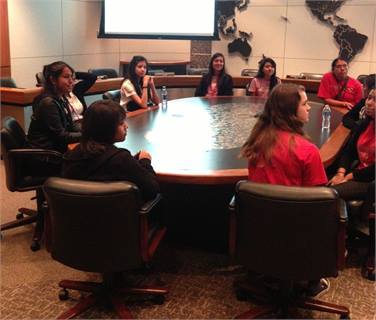
A WTS Dallas/Fort Worth Chapter Transportation YOU meeting takes place at the Dallas/Fort Worth International Airport
On the public sector side, the Federal Transit Administration (FTA) is also an example of an organization that supports the retention and advancement of women in the industry. The FTA has been a driving force in enabling small and disadvantaged businesses, as its leadership has been instrumental in making changes beneficial to small business and is taking an active role in providing opportunities and encouraging women to pursue transportation as a career path.
So the question remains: Why is the gap between the number of women and the number of men in professional positions in transportation so wide? What can be done to attract more women to the industry, retain them through their career cycle, and ultimately advance them to the boardroom where they can affect greater organization performance, and ultimately, benefit the economy?
Marcia Ferranto is President/CEO of WTS International. Headquartered in Washington, D.C., WTS seeks to attract, retain and advance women in transportation.
In case you missed it...
Read our METRO blog, "Training bus documentation...focus on the facts."
More Blog Posts
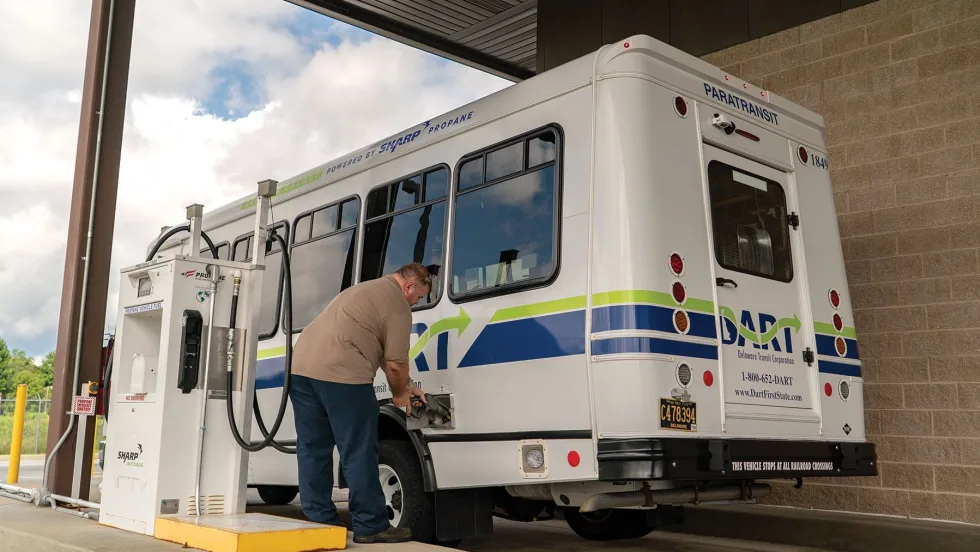
Building a Winning FTA Grant Proposal: Why Propane Autogas is the Pragmatic Choice for Fleet Resilience
With $610 million available through the FY 2026 Buses and Bus Facilities Competitive Program and the Low or No Emission Grant Program, agencies must build a compelling case before the September 21 deadline that balances environmental compliance with operational feasibility.
Read More →
Velo-city Conference 2026: Latest Trends in Cycling as Part of Urban Mobility
The global cycling conference highlighted how cities are integrating bicycles into multimodal transportation networks, expanding cycle tourism and reshaping urban mobility.
Read More →
Kindness Isn’t Soft...It’s Strategic.
Mike Bismeyer — often known as “The Kindness Guy” — has spent more than 17 years in public transit and mobility, serving in industry leadership roles, speaking across North America, and advocating for stronger workplace cultures. But his message doesn’t come from theory. It comes from lived experience.
Read More →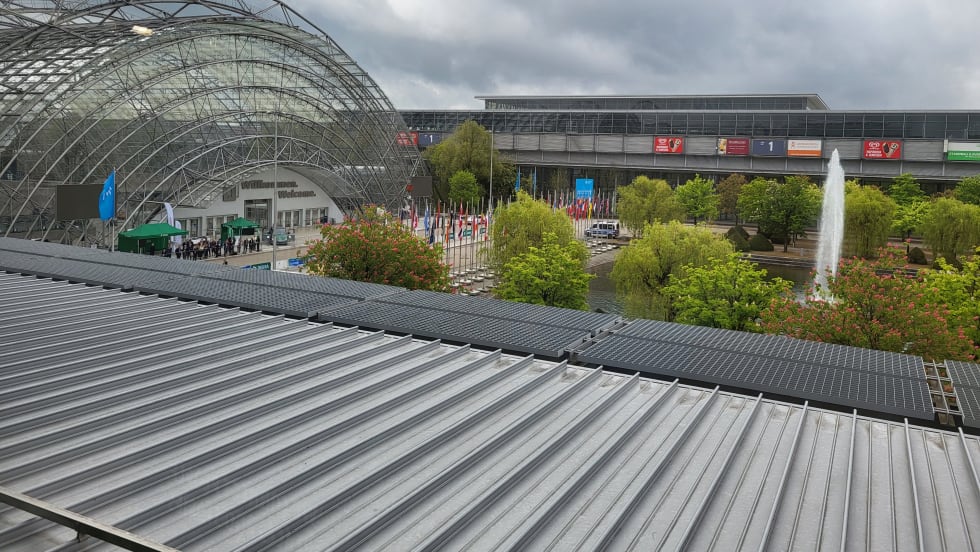
Inside ITF 2026: Transport Reacts to A Challenging World
Transport leaders from around the world gathered in Leipzig, Germany, for the 2026 International Transport Forum to discuss resilience, climate impacts, supply chains and the future of sustainable mobility.
Read More →
Every Ride Tells a Story — But You’re Not Just Selling the Ride
You’re selling the moment, the meaning, and the emotion behind it.
Read More →
How Digital Signage is Reshaping the Traveler Experience at Transportation Hubs
What was once a landscape of static signs has evolved into a responsive, immersive environment powered by real-time visual communication.
Read More →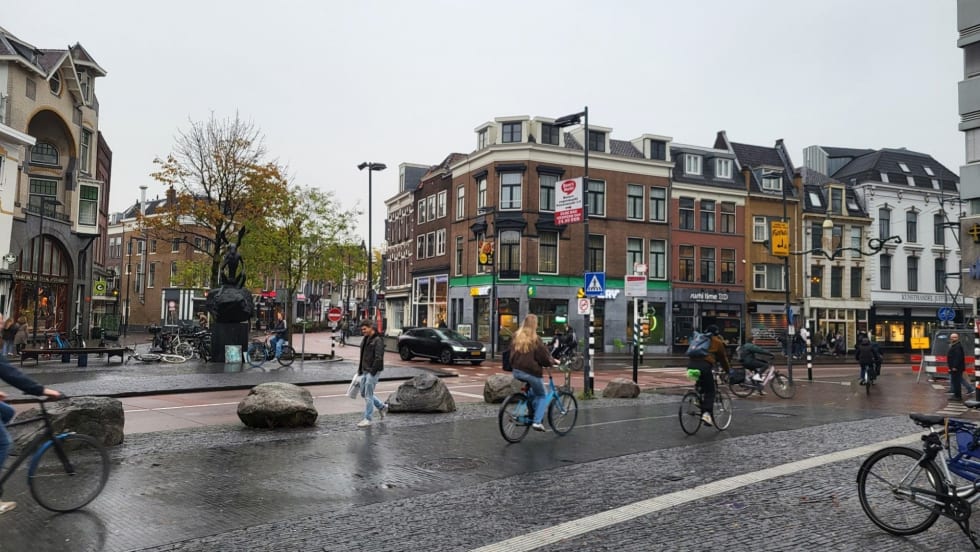
Latest Trends in Urban Mobility from Polis Conference 2025
Polis comprises cities and regions, as well as corporate partners, from across Europe, promoting the development and implementation of sustainable mobility. This year’s event had over a thousand attendees across various policy forums and an exhibition.
Read More →
Why Transit Leaders Require Better Tools for Operational Clarity In Today’s Tech-Fragmented Environment
Across North America and beyond, transit agency officials are contending with a perfect storm of operational headaches and strategic challenges that hamper daily service and long-term progress.
Read More →
The Powerless Brokers: Why California Can’t Build Transit
It is no secret that transit in the U.S. is slow and expensive to build.
Read More →
Why Transport Sustainability Should Focus on People Instead of Cars
Simply incentivizing electrification is not enough to make a meaningful impact; we must shift our focus toward prioritizing public transportation and infrastructure.
Read More →