




RELATED: Zen and the Art of Bus Driving
Amid automation trend, here's why we still need bus drivers
The driverless option will severely impact the four million commercial drivers working in the U.S., according to a 2014 Goldman Sachs report. These figures suggest the loss of 25,000 jobs per month during the height of the autonomous vehicles saturation into the industry.
September 10, 2019
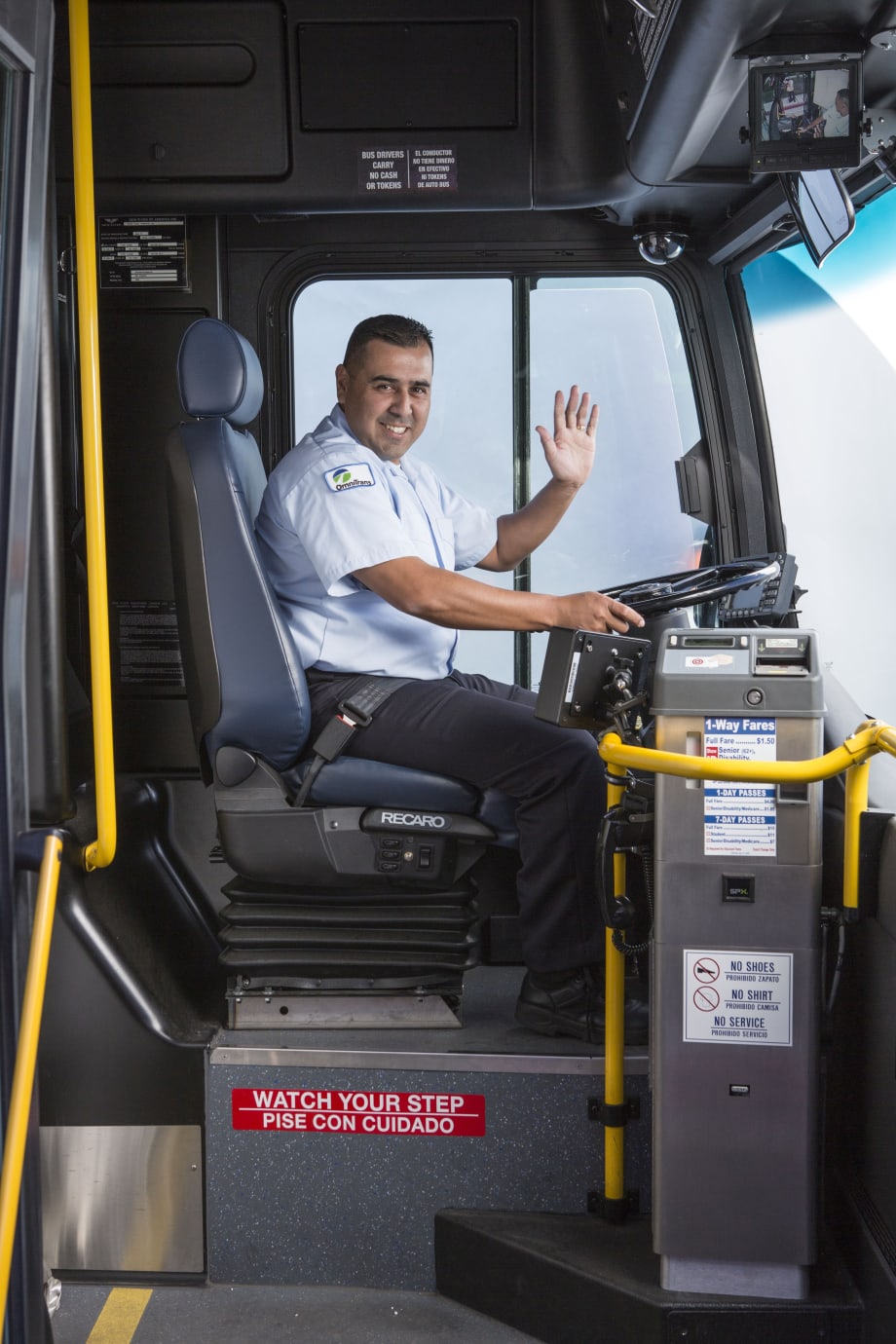
Transit plays a critical social role in our society as evidenced in public transit’s relationship with seniors.
Omnitrans
7 min to read
Transit plays a critical social role in our society as evidenced in public transit’s relationship with seniors.
Omnitrans
(This article was originally posted April, 24, 2018.)
Last month, San Ramon, Calif., took a test drive into the future with the debut of its first autonomous bus on public roads. By 2020, California transit leaders are aiming for 100 driverless public vehicles to occupy the system. And California isn’t alone. In February, Las Vegas tested a driverless option, and this summer Tampa, Fla., plans to unveil its autonomous shuttle. This may be a sensible solution to accommodate special events and for those heavy commuter lines where the majority of riders are making their way to and from work. But is that the end game for driverless buses? A few automated routes to assist in the overflow? Or is this the beginning of the end for human beings at the wheel? In the sometimes acrimonious relationship between management and labor, and increasing concerns over drivers' safety, it’s tempting for industry leaders to phase out bus operators in favor of driverless vehicles completely. Before we replace personnel with automation, examine the long-range consequences this technology will impose on the industry and our communities.
According to a 2014 report by Goldman Sachs, the driverless option will severely impact the four million commercial drivers working in the U.S. The report's figures suggest the loss of 25,000 jobs per month during the height of the autonomous vehicles saturation into the industry. While three-quarters of these are trucking jobs, another one million are commercial drivers who engage directly with passengers rather than cargo. And when bus operators are no longer needed to carry passengers, the supervisor positions, middle management, and extensive human resource departments that manage and support these frontline employees will become obsolete.
Perhaps public transit is destined to become a giant IT procurement industry rather than a people-centered industry run by essential personnel. At first glance, it appears autonomous vehicles could save the industry billions. And, as the question remains how public transit will survive in spite of dwindling local and state budgets and wholesale federal defunding, saving the industry billions in human capital is attractive. But is it the best answer?
Shifting the Identity of Public Transit
In his 2015 article entitled, “The Real Reason American Public Transit is such a Disaster,” Joseph Stromberg makes the case that we in the U.S. view public transit as social welfare rather than the European view of transit as a public utility. According to Stromberg, if transit’s identity is merely social welfare for people who can’t afford a car, then transit agencies’ ability to raise fares are limited, and conservative politicians who loathe welfare will continue to defund it. Stromberg is onto something. However, what he fails to note is that we have options. If we expand transit’s identity to fit the complexity of its purpose as both a public utility and a social service for all citizens, not just social welfare for the poor, then the industry can rewrite its future. It’s going to take a cultural identity shift led by heralds of the industry to shake loose government dollars and remove the cap on fares. But, heralds need talking points to reframe the conversation to redefine the industry, not just as a safe, reliable option, but a cornerstone of our social structures.
Essential Social Service for our Elders
Transit plays a critical social role in our society as evidenced in public transit’s relationship with seniors. According to AARP, over 36 million Americans are age 65 or older. By 2030, this number will double, and one in five Americans will be 65 or older. Americans over 85 will comprise the fastest growing age group in the decades ahead. Many have disabilities requiring operator assistance. Even if a senior doesn’t need physical help, consider that 28% of people aged 65 and older, live alone, and are isolated from family members and neighbors. Not only do seniors increasingly depend on public transit for mobility, but they also rely on the driver to greet them, and speak a few words of concern. Often this is the only human connection a senior will have the entire day. A driverless bus may solve mobility issues, but it doesn’t reduce the isolation affecting our elders.
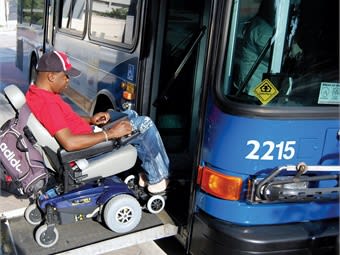
According to AARP, over 36 million Americans are age 65 or older.
HART
Mentors and Guides for our Children
Think of the impact driverless buses will have on another vulnerable population who depends on public transit, our children. According to a February 2017 report generated by the Urban Institute Student Transportation Working Group, urban education systems around the country are implementing school choice policies aimed at expanding low-income students’ access to high-quality schools. However, these options are inaccessible without safe public transportation systems. Without an adult authority on the bus, surely, there will be an increase of bullying, harassment, and violence among our children. Operators aren’t just authorities to our youth; they’re mentors and role models who provide safe passage for their community. As the social structures for youth continue to disappear in our towns, are we in any position to lose more mentors and positive role models?
First Responders to Crisis
I’ve worked with thousands of bus operators over the years and learned that an essential function of bus operators is as community guides, who sometimes must act as first responders to the most vulnerable in our society. I've been thinking about writing this for several months but hadn't gotten around to it. This winter, I got the push I needed. In the early hours of Sunday morning, February 18, my husband and I lost our apartment, all of our possessions, and our beloved cats to what is being called a historic fire in Olde City, Philadelphia. It was a four-alarm blaze that took 23 hours and 400 firefighters to control. Hundreds of residents were displaced, and many of us will never be able to return to our homes.
The night of the blaze, the smoke was so thick you could not see six feet ahead of you, and it was difficult to breathe. It was a relief to have Southeastern Pennsylvania Transit Authority (SEPTA) station one of their buses a block from the blaze for victims of the fire to escape the bitter cold and polluted air. The operator manning the bus acted as a liaison between Emergency Management Systems and other social services. I later found out that it is a common practice for SEPTA to send buses when communities are in crisis due to fire, flood, or other natural disasters. The operator showed everyone on the vehicle compassion and acted quickly to help each of us get our immediate needs met. When the animal rescue team delivered the terrible news to us that our cats had perished from carbon monoxide poisoning, the operator was there to comfort us in our loss. I can't imagine how a driverless bus would have done that.
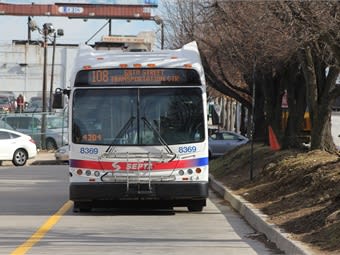
It is a common practice for SEPTA to send buses when communities are in crisis due to fire, flood, or other natural disasters.
SEPTA
My experience with a compassionate bus operator is not unique. After hearing thousands of operators’ stories over the years, I’ve come to understand the quiet heroism they often possess. Public transit workers perform countless acts of kindness without fanfare, such as the operator who gives a winter coat to the 11-year-old boy routinely riding in a spring jacket during the dead of winter. Or, the operator who momentarily parks his bus in the middle of a run to walk a recently blinded man safely across the street.
Bus operators have stepped up to save passengers from criminals, like the operator who protected an elderly passenger from being robbed on her vehicle by calling the police to meet him at the next stop. Or, the operator who alerted the authorities that a child predator was on his bus engaging an adolescent in intimate conversation to lure the girl to his home. A driverless bus will not do that.
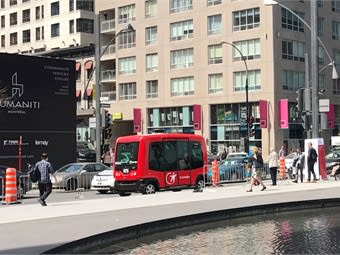
Before we replace personnel with automation, examine the long-range consequences this technology will impose on the industry and our communities.
Technology’s Role in the Industry
Technology is an essential piece to the survival of the transit industry.
Utilize technology to properly screen candidates for the difficult job of working with an increasing elderly, frequently traumatized public.
Use technology to institute crime heat maps to station police where crime is most prevalent.
Employ innovative technology to train operators to provide service safely.
Use technology, in the form of social media, to redirect the conversation about public transit as an environmentally sound, public utility and essential social service.
Use social media to shift the identity of the operator from driver to essential community personnel. Work with your local media to build understanding and respect for the critical job these professionals perform, and the vital public service you as an agency provides.
Don’t use technology to eradicate the crucial human connection bus operators offer their riding public.
The social contract this industry has with its community is wearing thin, but consider what would happen to our streets should we decide to end it all together. We’ve yet to develop an accurate equation for monetizing empathy, compassion, and mentorship in our society. However, I’m sure the cost of sustaining the social contract is not nearly as high as the cost of trying to rebuild community once that social contract disappears.
Charlotte DiBartolomeo, M.A.C.T. is CEO and founder of Red Kite Project, a resiliency building firm working with the transit industry for the past seven years to mitigate the impact of burnout, which causes absenteeism, high turnover rates, accidents, rule violations, and assaults.
Subscribe to Our Newsletter
More Blog Posts
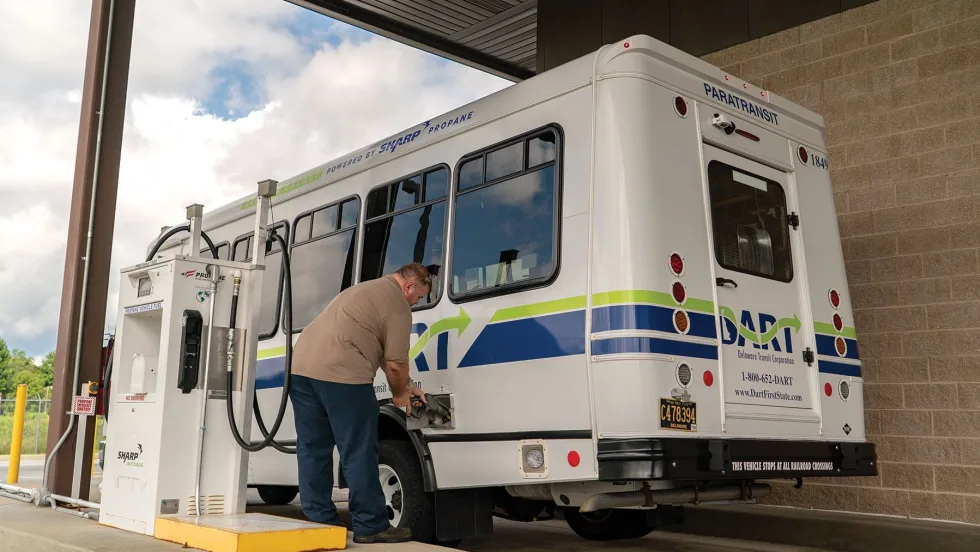
Building a Winning FTA Grant Proposal: Why Propane Autogas is the Pragmatic Choice for Fleet Resilience
With $610 million available through the FY 2026 Buses and Bus Facilities Competitive Program and the Low or No Emission Grant Program, agencies must build a compelling case before the September 21 deadline that balances environmental compliance with operational feasibility.
Read More →
Velo-city Conference 2026: Latest Trends in Cycling as Part of Urban Mobility
The global cycling conference highlighted how cities are integrating bicycles into multimodal transportation networks, expanding cycle tourism and reshaping urban mobility.
Read More →
Kindness Isn’t Soft...It’s Strategic.
Mike Bismeyer — often known as “The Kindness Guy” — has spent more than 17 years in public transit and mobility, serving in industry leadership roles, speaking across North America, and advocating for stronger workplace cultures. But his message doesn’t come from theory. It comes from lived experience.
Read More →
Inside ITF 2026: Transport Reacts to A Challenging World
Transport leaders from around the world gathered in Leipzig, Germany, for the 2026 International Transport Forum to discuss resilience, climate impacts, supply chains and the future of sustainable mobility.
Read More →
Every Ride Tells a Story — But You’re Not Just Selling the Ride
You’re selling the moment, the meaning, and the emotion behind it.
Read More →
How Digital Signage is Reshaping the Traveler Experience at Transportation Hubs
What was once a landscape of static signs has evolved into a responsive, immersive environment powered by real-time visual communication.
Read More →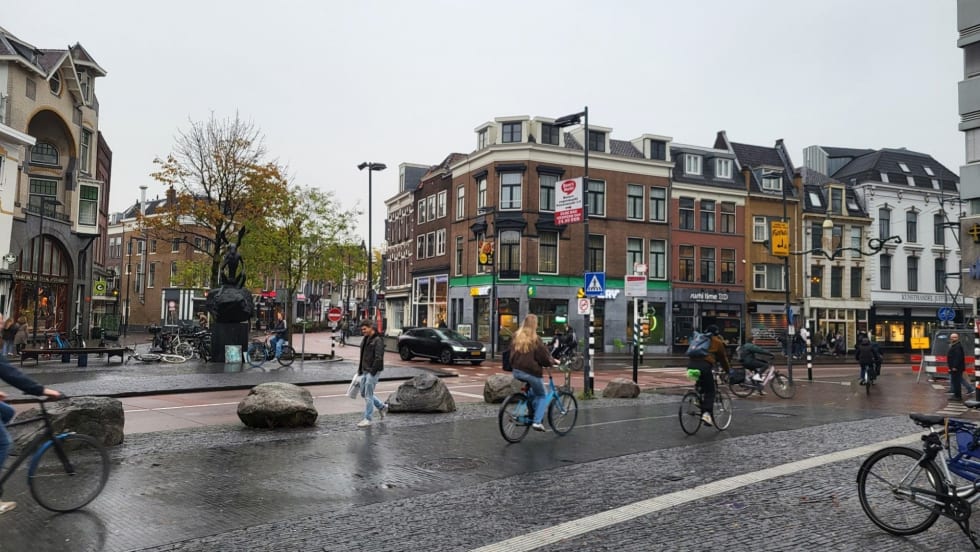
Latest Trends in Urban Mobility from Polis Conference 2025
Polis comprises cities and regions, as well as corporate partners, from across Europe, promoting the development and implementation of sustainable mobility. This year’s event had over a thousand attendees across various policy forums and an exhibition.
Read More →
Why Transit Leaders Require Better Tools for Operational Clarity In Today’s Tech-Fragmented Environment
Across North America and beyond, transit agency officials are contending with a perfect storm of operational headaches and strategic challenges that hamper daily service and long-term progress.
Read More →
The Powerless Brokers: Why California Can’t Build Transit
It is no secret that transit in the U.S. is slow and expensive to build.
Read More →
Why Transport Sustainability Should Focus on People Instead of Cars
Simply incentivizing electrification is not enough to make a meaningful impact; we must shift our focus toward prioritizing public transportation and infrastructure.
Read More →