



Inside ITF 2026: Transport Reacts to A Challenging World
Transport leaders from around the world gathered in Leipzig, Germany, for the 2026 International Transport Forum to discuss resilience, climate impacts, supply chains and the future of sustainable mobility.

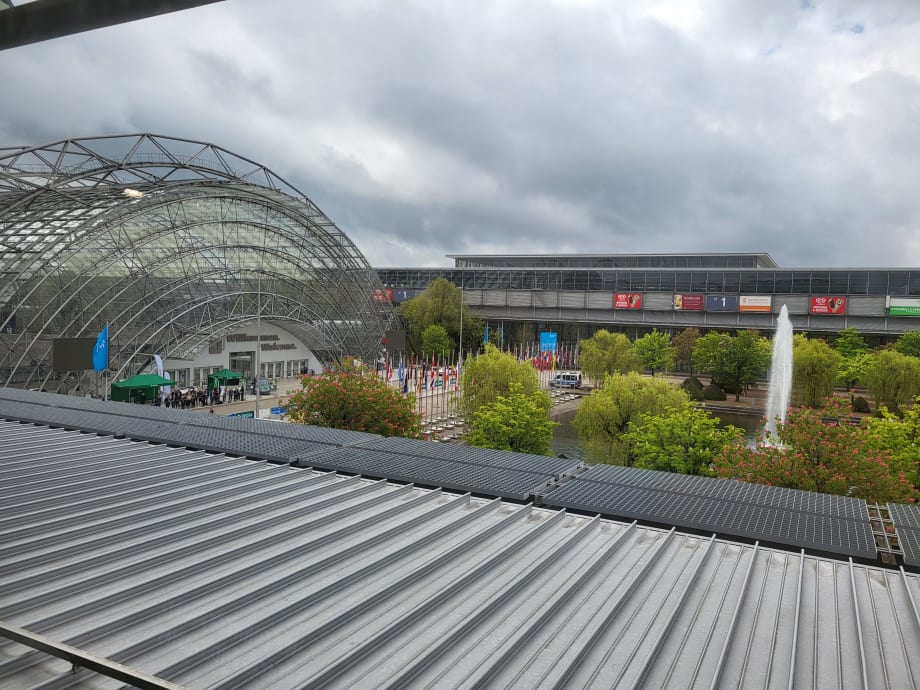
The 2026 International Transport Forum focused on “Funding Resilient Transport” amid growing global mobility challenges.
Giles Bailey
- Global transport leaders convened in Leipzig for the 2026 International Transport Forum to tackle pressing issues in the sector.
- Discussions focused on enhancing resilience, managing climate impacts, and optimizing supply chains.
- The event also examined prospects for sustainable mobility in the face of global challenges.
*Summarized by AI
The annual International Transport Forum (ITF) conference was held in Leipzig, Germany, in early May 2026. This was the 20th anniversary of the event.
The ITF is associated with the Organization for Economic Co-operation and Development (OECD). Both organizations are based in Paris, France, and comprise governments from across the developed economies.
One of the ITF's objectives is to expand its membership and globalize. This is to incorporate emerging economies, which reflect the broader challenges of global mobility. Thus, in 2026, three new members officially joined the group — Ghana, Panama, and Peru — bringing the total membership to 72 countries.
The Presidency of the ITF rotates each year, and Azerbaijan had been President through 2025/26, handling many of the meeting-chairing and agenda-setting responsibilities. The Presidency has passed to Czechia for the coming year. Corporate partners support the ITF event and provide professional advice to the organization and its members.
Goals of ITF
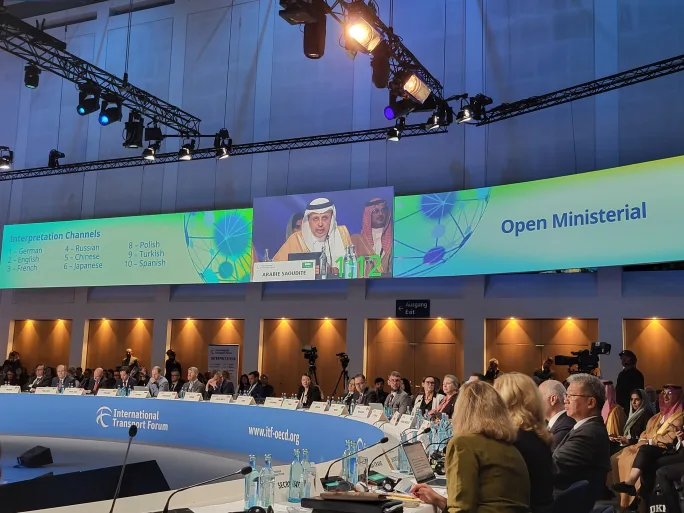
More than 1,200 delegates and 40 transport ministers attended the 2026 International Transport Forum in Leipzig, Germany.
Giles Bailey
The ITF conference gathered 1,200 delegates and 40 ministers of transport this year.
The event offers a unique opportunity for ministers of transport from many countries to gather, understand, and exchange policy goals and progress in meeting them, consider best practices, and hear from leading corporate and third-sector players in the global transport industry. The event considers all forms of transport for both people and goods, with a natural focus on improving the sustainability of transport modes to meet global environmental commitments.
The event is not a purely academic or theoretical conversation. With the breadth and depth of attendance, it aims to provide members with advice on the most topical and critical current and future issues.
While there has always been regional and global transport instability, managing these issues has become much more acute in an increasingly interconnected world.
This includes issues such as a changing climate which is affecting large parts of the world and making the delivery and predictability of reliable transport challenging; blockages at key transport arteries such as the 2021 Suez Canal closure due to one wayward cargo ship; as well as of course the current issues in the Persian Gulf; supply chain issues that became apparent during and after the Covid pandemic; and the delivery of stable funding and economic models for operating and transport investment.
Mobility enables a secure and prosperous regional and global economy, but it comes at immediate and long-term costs. Furthermore, these crises are affecting an increasingly wide set of countries as the location of these disruptions and their impacts are being magnified.
Thus, this year’s ITF event was part of a trilogy focused on transport resilience. The official theme was “Funding Resilient Transport.”
The Forum was a mix of private ministerial meetings, private bilateral meetings with key mobility actors, an open ministerial roundtable, and open sessions on key topical issues organized by the ITF or partner organizations.
Highlights From 2026
Whether at the global, national, or regional level, or in local cities and communities, the issues of managing increasing disruption and embedding resilience were considered.
For example, the open Ministerial Roundtable featured guests from Tokyo Narita Airport, the International Road Transport Union (IRU), and RATP Dev.
The RATP Dev representative highlighted that global cities are growing rapidly and may be becoming “less livable,” thus, as policy leaders, we need to focus on collaboration and governance to address this “livability gap.”
The IRU representative stressed the need to improve the efficiency and timeliness of border crossings, including through digitization, to enable alternative routes for moving goods during times of disruption. Much work still needs to be done on this area, particularly within and between emerging economies along key trade routes.
This session also highlighted that several participants in the roundtable stated that national security and resilience are highly interrelated, and that these security issues make considering resilience a particularly urgent priority in the contemporary world.
In one of the plenaries, the Minister of Transport for Spain highlighted that his country is acutely exposed to extreme weather, whether excessive heat, drought, or extreme rainfall events, such as those in Valencia in 2024.
Resilience in local transport is a critical issue in Spain, and the minister highlighted that 20th-century local infrastructure is increasingly failing to meet the needs of the 21st century. Active short and long-term mitigation measures are needed. One short-term measure discussed was redesigning guiderails on urban bridges over floodways to prevent the bridges from becoming barriers during floods.
At a local level, one session examined the definition of resilience within cities and how many actors may have diverse definitions of needs related to climate, finances, human resources, terrorism, economic dislocation, or service provision.
A conclusion in this session was that urban resilience needs to be based on a robust multimodal transport system, a diverse and fair allocation of urban space, and political will to embed resilience in local planning decisions.
Furthermore, it was stated that public transport in cities needs to be treated with the same urgency as private cars to offer a truly resilient transport mix.
Resiliency in local transport is also not always about implementing mega-projects; simple solutions can have immediate effects, such as changing staffing schedules for public transport drivers to allow more time to recover from heat stress at the end of their routes, or by providing well-designed, well-located cooling zones.
An ongoing concern amongst many leaders was whether we have seen a weakening of the democratic infrastructure for discussing, prioritizing, and deploying complex urban systems that will deliver resilience in modern society. At times of crisis, civic leaders need to be able to promptly gather public and stakeholder support to offer solutions that mitigate the crisis.
The Journey to Leipzig
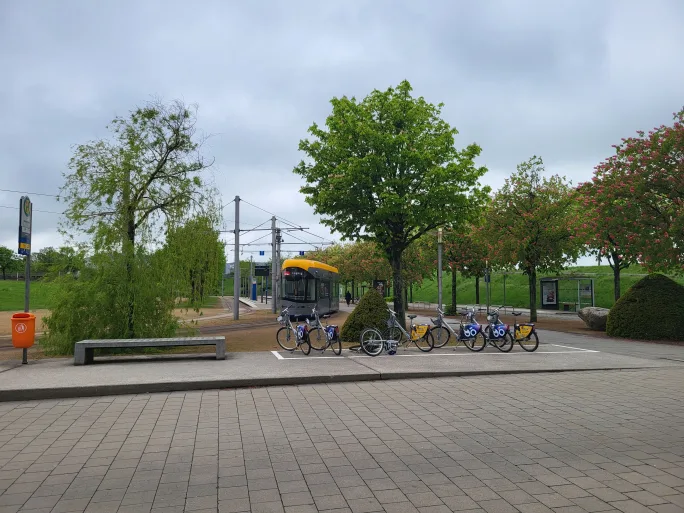
Transport officials and industry leaders gathered in Leipzig to discuss resilience, sustainability and global supply chain challenges at ITF 2026.
Giles Bailey
I traveled to the ITF event again entirely by train, from London to Leipzig and back.
The 530-mile journey took approximately eight hours across three train services.
Compared to the last time I made this journey in 2024, connections have improved, and the train operators are clearly more proactive in enabling seamless interchange, even during slight delays. It is also clearly much more common in Europe to make these trips of several hundred miles as part of a strategy to decarbonize business travel.
The International Transport Forum will return to Leipzig in mid-May 2027.
Quick Answers
The purpose of the ITF 2026 event was to bring together transport leaders from around the world to discuss key issues such as resilience, climate impacts, supply chains, and the future of sustainable mobility.
*Summarized by AI
More Blog Posts
Building a Winning FTA Grant Proposal: Why Propane Autogas is the Pragmatic Choice for Fleet Resilience
With $610 million available through the FY 2026 Buses and Bus Facilities Competitive Program and the Low or No Emission Grant Program, agencies must build a compelling case before the September 21 deadline that balances environmental compliance with operational feasibility.
Read More →
Velo-city Conference 2026: Latest Trends in Cycling as Part of Urban Mobility
The global cycling conference highlighted how cities are integrating bicycles into multimodal transportation networks, expanding cycle tourism and reshaping urban mobility.
Read More →
Kindness Isn’t Soft...It’s Strategic.
Mike Bismeyer — often known as “The Kindness Guy” — has spent more than 17 years in public transit and mobility, serving in industry leadership roles, speaking across North America, and advocating for stronger workplace cultures. But his message doesn’t come from theory. It comes from lived experience.
Read More →
Every Ride Tells a Story — But You’re Not Just Selling the Ride
You’re selling the moment, the meaning, and the emotion behind it.
Read More →
How Digital Signage is Reshaping the Traveler Experience at Transportation Hubs
What was once a landscape of static signs has evolved into a responsive, immersive environment powered by real-time visual communication.
Read More →
Latest Trends in Urban Mobility from Polis Conference 2025
Polis comprises cities and regions, as well as corporate partners, from across Europe, promoting the development and implementation of sustainable mobility. This year’s event had over a thousand attendees across various policy forums and an exhibition.
Read More →
Why Transit Leaders Require Better Tools for Operational Clarity In Today’s Tech-Fragmented Environment
Across North America and beyond, transit agency officials are contending with a perfect storm of operational headaches and strategic challenges that hamper daily service and long-term progress.
Read More →
The Powerless Brokers: Why California Can’t Build Transit
It is no secret that transit in the U.S. is slow and expensive to build.
Read More →
Why Transport Sustainability Should Focus on People Instead of Cars
Simply incentivizing electrification is not enough to make a meaningful impact; we must shift our focus toward prioritizing public transportation and infrastructure.
Read More →
Transit ROI & System Efficiencies Will Drive 'Big, Beautiful' Transit Funding
For many years, the narrative surrounding public transit improvements has been heavily weighted toward environmental gains and carbon reduction. While these are undeniably crucial long-term benefits, the immediate focus of this new funding environment is firmly on demonstrable system efficiencies and a clear return on investment.
Read More →