



Building a Winning FTA Grant Proposal: Why Propane Autogas is the Pragmatic Choice for Fleet Resilience
With $610 million available through the FY 2026 Buses and Bus Facilities Competitive Program and the Low or No Emission Grant Program, agencies must build a compelling case before the September 21 deadline that balances environmental compliance with operational feasibility.

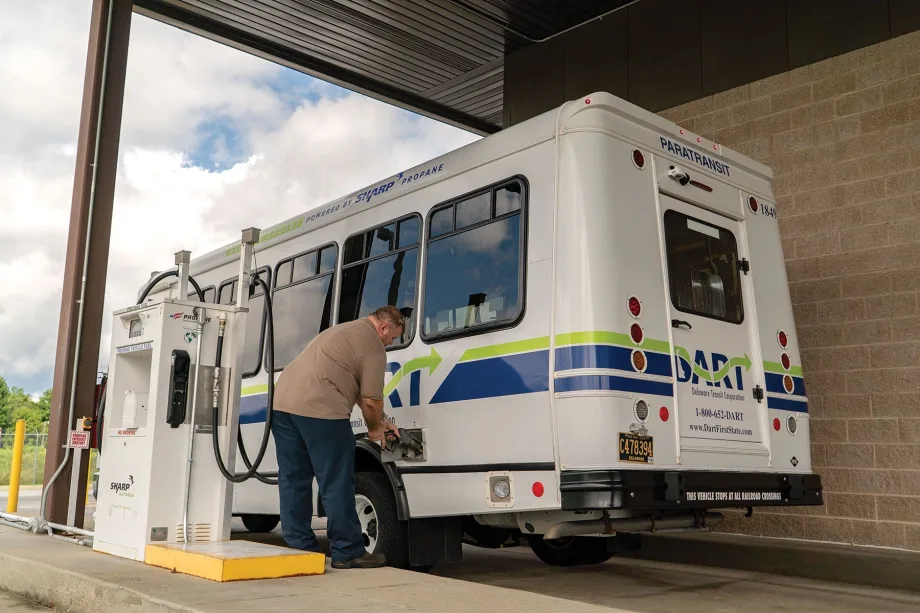
By capturing federal dollars to absorb capital acquisition costs, transit leaders can deploy clean energy systems that lower long-term operating expenditures without straining local taxpayer funds.
PERC
- Transit agencies are challenged with meeting sustainability goals while managing budgets and fuel cost volatility.
- Federal funding of $610 million is available for fleet modernization under the FY 2026 Buses and Bus Facilities Competitive Program and the Low or No Emission Grant Program.
- Proposing propane autogas as an alternative fuel enhances the grant application's chances by aligning with emission reduction and air quality improvement priorities.
*Summarized by AI
Transit and paratransit agencies are facing a critical balancing act: meeting strict sustainability mandates while managing constrained budgets and volatile fuel costs. Fortunately, federal funding offers a powerful mechanism to accelerate fleet modernization, provided agencies position their applications strategically.
With $610 million available through the FY 2026 Buses and Bus Facilities Competitive Program and the Low or No Emission Grant Program, agencies must build a compelling case before the September 21 deadline that balances environmental compliance with operational feasibility.
Structuring a Competitive Environmental Case
Winning grant applications must demonstrate clear environmental and operational returns. Because both programs explicitly prioritize projects that reduce greenhouse gas emissions and improve local air quality, proposing alternative-fuel fleets, such as propane autogas, significantly enhances a score.
By capturing federal dollars to absorb capital acquisition costs, transit leaders can deploy clean energy systems that lower long-term operating expenditures without straining local taxpayer funds.
Mitigating Grid Lag Implementation Risks
A common pitfall in grant proposals is underestimating implementation timelines. High-voltage electric charging infrastructure frequently faces severe utility interconnection delays, often extending wait times to 18 to 36 months. Evaluators scrutinize these timeline risks when reviewing proposals.
Propane autogas mitigates project execution risk. Because fueling infrastructure can be deployed rapidly without complex grid upgrades, proposals featuring propane autogas present evaluators with a highly executable, turnkey project that delivers immediate emissions reductions.
Positioning Resiliency as a Score Multiplier
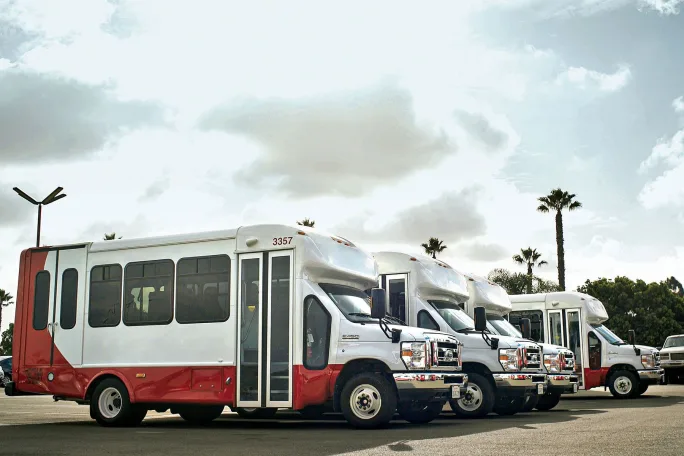
Lower upfront costs for propane autogas infrastructure allow agencies to stretch grant funds further by procuring more clean vehicles and expanding rider service reach.
PERC
Grant reviewers prioritize projects that deliver both environmental benefit and operational resilience during emergency events. Weather-hardened, reliable infrastructure serves as a major scoring differentiator.
Unlike surface electric charging stations vulnerable to power grid failures and water damage, or atmospheric diesel storage tanks prone to contamination, propane autogas infrastructure relies on pressurized, closed-loop systems. This ensures continuous fleet dispatchability during severe weather or power outages.
Maximizing TCO and Capital Efficiency
Grant evaluators favor proposals that maximize the impact of federal investment. Lower upfront costs for propane autogas infrastructure allow agencies to stretch grant funds further by procuring more clean vehicles and expanding rider service reach.
Beyond capital savings, transitioning from diesel or gasoline to domestic propane autogas delivers a lower Total Cost of Ownership (TCO). For instance, Broward County Transit saved $9.8 million in fuel and maintenance costs over six years after switching to propane autogas buses, shielding operating budgets from price shocks.
Simplified engine maintenance, which eliminates complex diesel aftertreatment systems and DEF requirements, reduces downtime and operational expenses, providing a highly compelling financial case in grant evaluations.
Strategic Takeaway for Applicants
To submit a winning application for FY 2026 FTA funding, present a project that is environmentally sound, financially efficient, and immediately actionable. By leveraging propane autogas, transit agencies can present grant reviewers with a de-risked, highly cost-effective fleet strategy.
About the Author:Joel Stutheit is Senior Manager of Business Development for the On-Road Market Portfolio at the Propane Education & Research Council (PERC).
Quick Answers
Transit agencies are dealing with the challenge of meeting strict sustainability mandates while managing limited budgets and volatile fuel costs.
*Summarized by AI
More Blog Posts

Velo-city Conference 2026: Latest Trends in Cycling as Part of Urban Mobility
The global cycling conference highlighted how cities are integrating bicycles into multimodal transportation networks, expanding cycle tourism and reshaping urban mobility.
Read More →
Kindness Isn’t Soft...It’s Strategic.
Mike Bismeyer — often known as “The Kindness Guy” — has spent more than 17 years in public transit and mobility, serving in industry leadership roles, speaking across North America, and advocating for stronger workplace cultures. But his message doesn’t come from theory. It comes from lived experience.
Read More →
Inside ITF 2026: Transport Reacts to A Challenging World
Transport leaders from around the world gathered in Leipzig, Germany, for the 2026 International Transport Forum to discuss resilience, climate impacts, supply chains and the future of sustainable mobility.
Read More →
Every Ride Tells a Story — But You’re Not Just Selling the Ride
You’re selling the moment, the meaning, and the emotion behind it.
Read More →
How Digital Signage is Reshaping the Traveler Experience at Transportation Hubs
What was once a landscape of static signs has evolved into a responsive, immersive environment powered by real-time visual communication.
Read More →
Latest Trends in Urban Mobility from Polis Conference 2025
Polis comprises cities and regions, as well as corporate partners, from across Europe, promoting the development and implementation of sustainable mobility. This year’s event had over a thousand attendees across various policy forums and an exhibition.
Read More →
Why Transit Leaders Require Better Tools for Operational Clarity In Today’s Tech-Fragmented Environment
Across North America and beyond, transit agency officials are contending with a perfect storm of operational headaches and strategic challenges that hamper daily service and long-term progress.
Read More →
The Powerless Brokers: Why California Can’t Build Transit
It is no secret that transit in the U.S. is slow and expensive to build.
Read More →
Why Transport Sustainability Should Focus on People Instead of Cars
Simply incentivizing electrification is not enough to make a meaningful impact; we must shift our focus toward prioritizing public transportation and infrastructure.
Read More →
Transit ROI & System Efficiencies Will Drive 'Big, Beautiful' Transit Funding
For many years, the narrative surrounding public transit improvements has been heavily weighted toward environmental gains and carbon reduction. While these are undeniably crucial long-term benefits, the immediate focus of this new funding environment is firmly on demonstrable system efficiencies and a clear return on investment.
Read More →