



RELATED: Self-driving vehicle integrating IBM Watson tech debuts
Building a 'smart city' starts with mass transit systems
Municipal officials worldwide are leveraging advances in mobile, communications and Internet of Things (IoT) technologies to build so-called “smart cities” to deliver services more efficiently and improve the overall quality of life for their residents. That work begins with the mass transit system.

Laetitia Gazel Anthoine・Founder/CEO, Connecthings
Connecthings
4 min to read
Connecthings
Not long ago, when you boarded a bus, train or plane for a short commute or a cross-country trip, you brought along a book. Maybe a few magazines and newspapers too just in case you had no interest in the in-flight movie. Today, you can get your work done or tap (literally) into an ever-growing selection of news and entertainment options. What’s even more amazing is that in the near-future, today’s experiences will seem just as quaint and old-fashioned as unfolding a newspaper. Municipal officials worldwide are leveraging advances in mobile, communications and Internet of Things (IoT) technologies to build so-called “smart cities” to deliver services more efficiently and improve the overall quality of life for their residents. That work begins with the mass transit system.
Connecthings
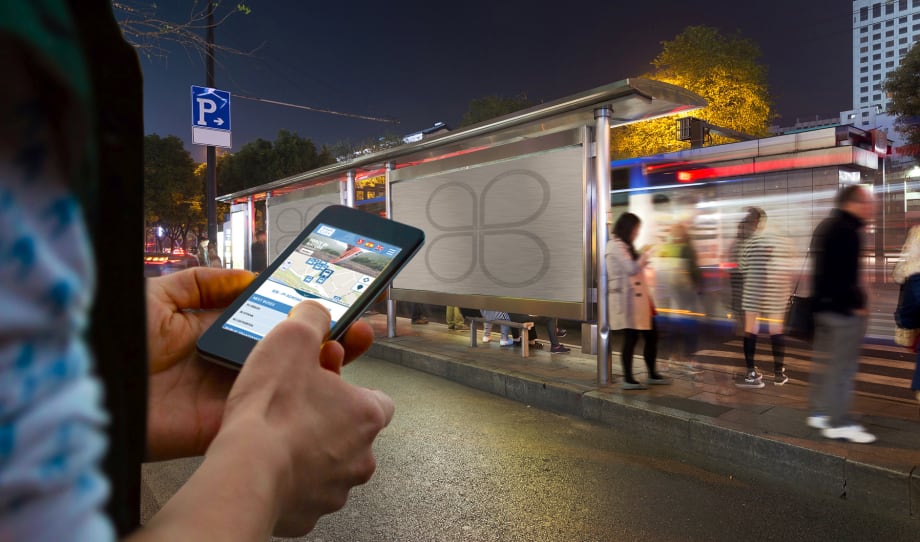
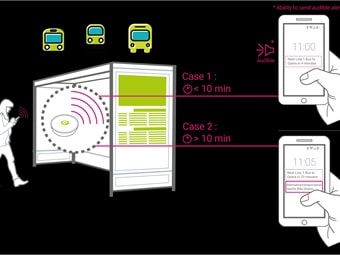
What does a “smart” transportation infrastructure look like? One where train stations, bus stops, airports, and car- and bike-sharing stations become integrated parts of one big open, high-speed connected communications network that enables government agencies, transportation modes, and local businesses to interact and share information in real-time with residents. Turning transportation assets in the city into interactive points enable travelers, residents, and visitors to receive hyper-contextualized, proximity-based, relevant notifications tied to the wide variety of transportation modes available throughout the city, proximity services, and businesses on their mobile devices.
This enables private and public entities to engage with people in real-time while they’re riding on a train or waiting at a bus stop and collect data on the traffic in the cities. Government agencies, schools and public safety officials can generate alerts with relevant up-to-the-minute information about a broken water main on Main Street is affecting traffic patterns, businesses, schools and homes in the area.
According to Juniper Research’s “Worldwide Smart Cities: Energy, Transport & Lighting 2016-2021," there are two overarching benefits of smart cities: sustainability and efficiency. Making mass transit smarter is critical to realizing those benefits.
“Congestion and mobility are almost universal issues for cities to address,” report author Steffen Sorrell wrote. “Facilitating the movement of citizens within urban agglomerations via transport networks is fundamental to a city’s economic growth. When addressed effectively, the impacts are substantial: higher economic productivity, potential for new revenue streams, and services, as well as a measurable benefit in reduced healthcare costs.”
Out with the Old
The primary obstacles U.S. cities face are the age and technical obsolescence of the networks supporting their mass transport systems. They were built decades ago and based on proprietary solutions. These aging networks that are expensive to operate and difficult to manage as more people adopt smartphones, tablets, smartwatches, and other mobile devices. It also means fragmented communications between multiple systems, which leads to public safety risks for passengers and first responders.
Fortunately, a number of cities across the country and around the world can serve as excellent examples of how to overcome these obstacles.
In with the New
No matter what list or ranking of the world’s most advanced smart cities you look at, you’ll likely find Singapore. It took the top spot in Juniper Research’s 2016 Smart City Rankings due what Juniper refers to the city’s status as a world leader in applying smart mobility policies and technology. Singapore has deployed hundreds of cameras and sensors citywide to analyze traffic congestion and crowd density. This enables government officials to reroute buses at rush hour, reducing the risk of traffic jams.
Connecthings
Airports have become small cities unto themselves, and city planners would do well to look to Bologna Airport, which ranks as Italy’s seventh-largest in terms of passenger traffic, as a model for their smart city initiatives. The airport recently brought a new digital infrastructure online to improve access to information for travelers. A new “One Touch” mobile application delivers contextualized and personalized information to travelers based on their locations. It runs on a network of 40 Bluetooth beacons that are configured to address visitors with real-time information, triggering app notifications with relevant messaging according to different airport zones (i.e., terminal entrance, check-in, duty free, boarding).
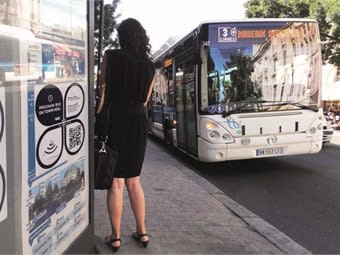
In 2012, Officials in Eurométropole de Strasbourg also created a massive network of sensors that constantly collects and disseminates information citywide. It launched the Connected City mobile service in France, creating a network of 1,400 city points of interest (i.e. tourist attractions and bus stops). Residents and visitors use their mobile devices to access real-time, hyper-contextualized information related to transport and nearby city points of interest.
Play nice!
Perhaps the most critical component of any smart transit network is that it is open and available to everyone, regardless of which technology and mobile applications they interact with. If you’ve ever tried to turn your house into a smart home, you know how difficult it can be to connect your entertainment system, thermostat, security system, appliances, etc. if you’re working with hardware that only run on certain operating systems.
Municipal officials should insist on only partnering with technology developers and integrators that offer connectivity across all mobile devices. This will ensure all residents and visitors can leverage the connected network, and will more easily scale as additional smart services are implemented citywide in the future.
Laetitia Gazel Anthoine is the founder and CEO of Connecthings, a U.S.-European based technology and IoT enabling company. Connecthings implements contactless technologies into the public space to turn urban, passive physical assets into smart, connected objects.
Subscribe to Our Newsletter
More Blog Posts
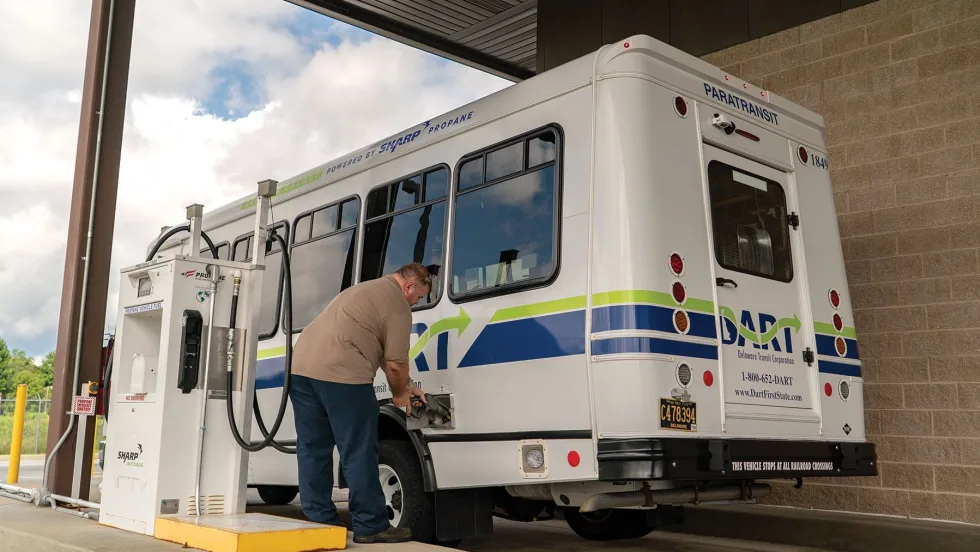
Building a Winning FTA Grant Proposal: Why Propane Autogas is the Pragmatic Choice for Fleet Resilience
With $610 million available through the FY 2026 Buses and Bus Facilities Competitive Program and the Low or No Emission Grant Program, agencies must build a compelling case before the September 21 deadline that balances environmental compliance with operational feasibility.
Read More →
Velo-city Conference 2026: Latest Trends in Cycling as Part of Urban Mobility
The global cycling conference highlighted how cities are integrating bicycles into multimodal transportation networks, expanding cycle tourism and reshaping urban mobility.
Read More →
Kindness Isn’t Soft...It’s Strategic.
Mike Bismeyer — often known as “The Kindness Guy” — has spent more than 17 years in public transit and mobility, serving in industry leadership roles, speaking across North America, and advocating for stronger workplace cultures. But his message doesn’t come from theory. It comes from lived experience.
Read More →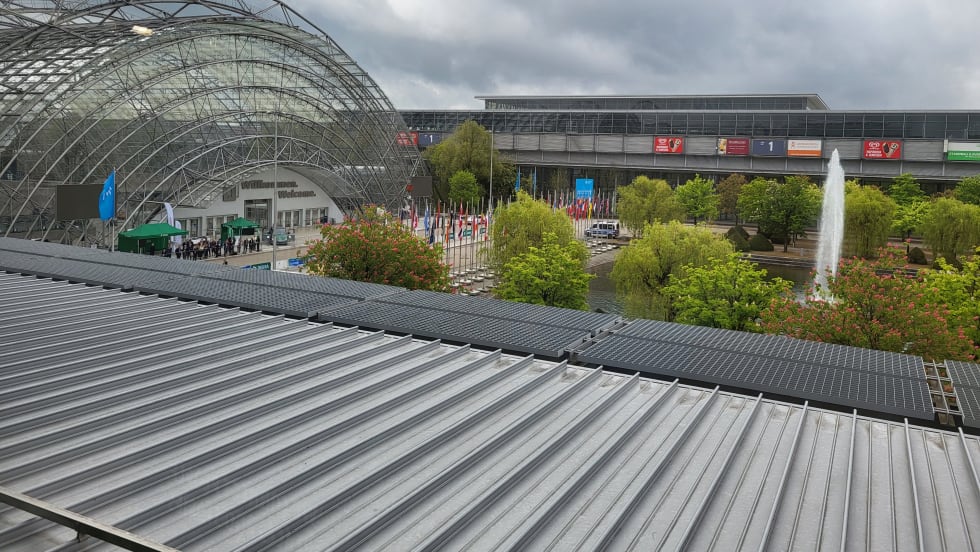
Inside ITF 2026: Transport Reacts to A Challenging World
Transport leaders from around the world gathered in Leipzig, Germany, for the 2026 International Transport Forum to discuss resilience, climate impacts, supply chains and the future of sustainable mobility.
Read More →
Every Ride Tells a Story — But You’re Not Just Selling the Ride
You’re selling the moment, the meaning, and the emotion behind it.
Read More →
How Digital Signage is Reshaping the Traveler Experience at Transportation Hubs
What was once a landscape of static signs has evolved into a responsive, immersive environment powered by real-time visual communication.
Read More →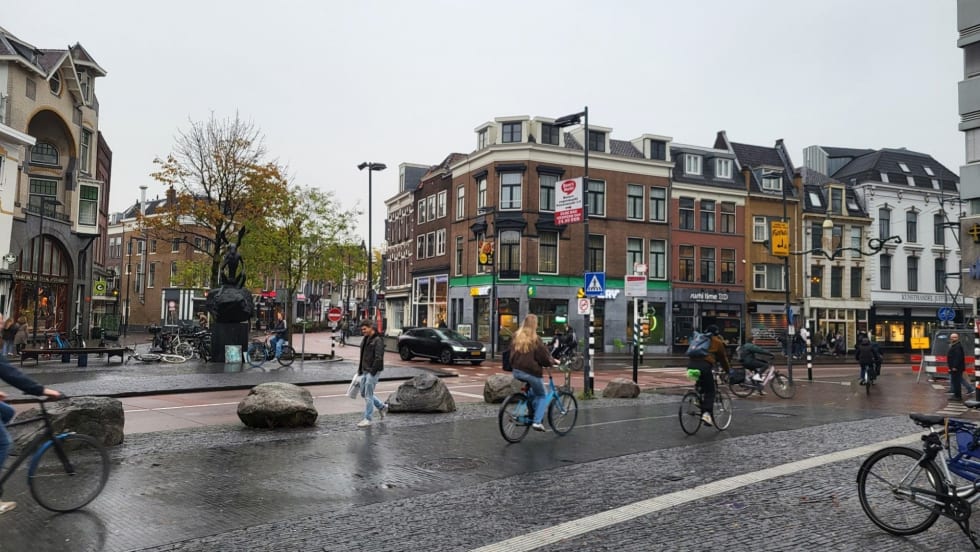
Latest Trends in Urban Mobility from Polis Conference 2025
Polis comprises cities and regions, as well as corporate partners, from across Europe, promoting the development and implementation of sustainable mobility. This year’s event had over a thousand attendees across various policy forums and an exhibition.
Read More →
Why Transit Leaders Require Better Tools for Operational Clarity In Today’s Tech-Fragmented Environment
Across North America and beyond, transit agency officials are contending with a perfect storm of operational headaches and strategic challenges that hamper daily service and long-term progress.
Read More →
The Powerless Brokers: Why California Can’t Build Transit
It is no secret that transit in the U.S. is slow and expensive to build.
Read More →
Why Transport Sustainability Should Focus on People Instead of Cars
Simply incentivizing electrification is not enough to make a meaningful impact; we must shift our focus toward prioritizing public transportation and infrastructure.
Read More →