



Can the USPS Be a Model for Transit Reinvention?
What similar service obligations and financial challenges can teach transit agencies about new methods for selling fares?

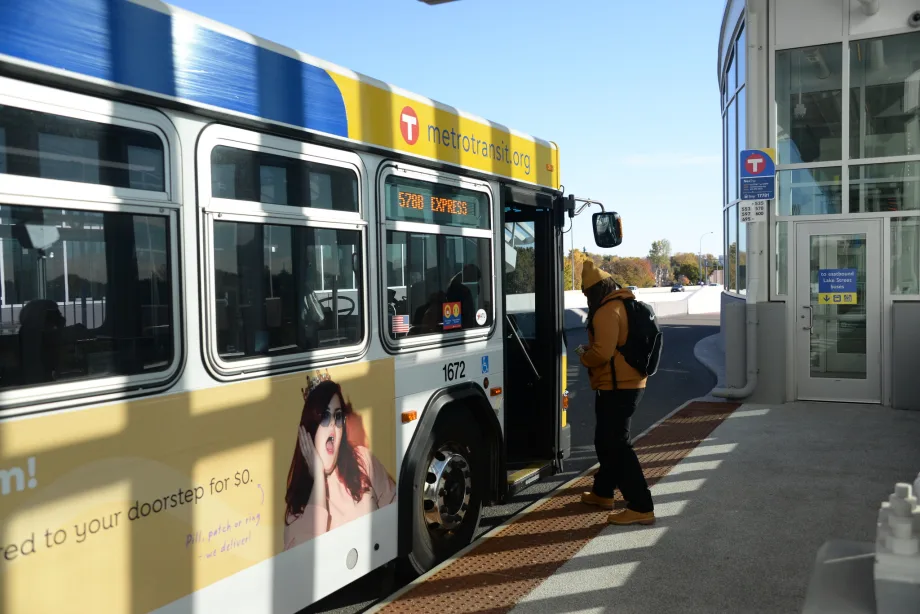
Transit is experiencing a post-pandemic decline in revenue and has a universal service obligation to be available to the entire public.
Metro Transit
In 1775, before the U.S. Declaration of Independence had even been signed, the Continental Congress turned the Constitutional Post into the Post Office of the United States, whose operations were among the first functions of the newly established government.
The charter of the United States Postal Service (USPS) grew from its primitive beginning, serving the original 13 colonies, eventually moving westward with the new American frontier. Throughout time, the delivery service modernized and kept pace with the industrial age, adopting new modes of transportation like railroads, automobiles, and aircraft, to fulfill its core mission.
There are several parallels of the USPS story to that of American transit agencies. In fact, for transit agencies to encourage the broad adoption of new Mobility-as-a-Service (MaaS) and Mobility on Demand (MoD) solutions, we don’t have to look any further than the USPS for a revenue model use case.
A mandated mission but with fluctuating costs
The modern USPS continues to be a government run and regulated service, with a universal service obligation that is defined by a broad set of mandates, obligating the agency to provide uniform price and quality across the entirety of its service area. Deliveries must happen through the postal service’s fixed network, independent of utilization levels by the population. As has been highlighted in the news recently, the USPS is struggling to maintain relevance in an increasingly digitized society, resulting in declining utilization and revenues.
Other challenges for the USPS are due to the limitations on how much its fares, like postage or shipping labels, can increase, as well as how it can cover fixed costs such as large pension funds.
Looking at both examples side-by-side, transit agencies have a similar story to the postal service. Both are government run and regulated, with a pay-per-usage model. Transit is experiencing a post-pandemic decline in revenue and has a universal service obligation to be available to the entire public. Transit services operate on fixed networks, meaning the bus will run whether or not it is at capacity. There is very limited political appetite for increasing fares for the high-volume, small value transactions that define its operations.
However, where the two examples diverge is in how they sell fares. What’s interesting about the revenue model for the postal service is that users are no longer limited to buying postage exclusively through the USPS — now, stamps and other shipping labels are available for purchase at wholesale retail or third-party resellers, like Stamps.com, EasyPost, PayPal, or Amazon Shopper. This is an ideal illustration of a government-run organization that offers its services at less than face value to private third parties, even though it is subsidized by public funds. This arrangement has benefits for the postal service, which extends its reach using private third parties. And, for the private companies, they can offer the postal products as an additional benefit to their customers.
A new model to reduce costs and generate benefits
The USPS embraces third-party commercial organizations to resell postage via connections to the USPS back office to create a 2D barcode. Each commercial agreement is negotiated separately and is traditionally based on volume of transactions. The third parties usually charge a monthly fee to cover a limited amount of postage or use a pay-as-you-go model. The face value of postage bought at discount by third-party vendors appears consistent with the cost of postage acquired directly from the USPS. Price to the customer of the postage is less than the USPS face-value by an agreed percentage based on the commercial agreements, and according to some agreements, a portion of the discount on face value is passed to the customer or kept as profit by the third party.
Essentially, the USPS has embraced third parties as an additional sales arm to drive down operational costs (for example, less post offices), and drive-up utilization, increasing the mail being shipped.
Unfortunately, many transit agencies have pushed back against the concept of allowing wholesale retail of its fares and services. They are reluctant to sell fares to private organizations for fear of backlash over subsidizing private enterprises that will make a profit.
Lessons that apply to support transit agencies
Transit agencies could benefit from also allowing third-party commercial resale of transit fares in similar ways. For example, an integrated transit ticket can help to reduce operational costs with fewer ticket vending machines, and less media to be produced. Additionally, this model can deliver MaaS/MoD solutions to a much wider audience, which can result in net gains of ridership in areas that continue to struggle with post-pandemic effects. Through commercial extensions, like free rides on public transit to restaurants and events, or integrations with airports and intercity rail, transit can attract more passengers as travel returns to pre-pandemic levels.
Commercial resale of transit fares can also serve to capture the users that, without incentive to include transit in their journey, would have opted for another private transit mode (e.g., rideshare). Further, third-party selling of unused or underutilized transit capacity can leverage a yield management model with variable pricing, as is commonly done in other service industries like airlines, lodging, entertainment, and more. Transit agencies could consider this model and look to the USPS’s partnerships and moves to keep up with faster paced and increasingly digitized world for guidance. In the end, it could be a win-win-win, for the rider, the transit agency, and the third-party partners.
More Blog Posts
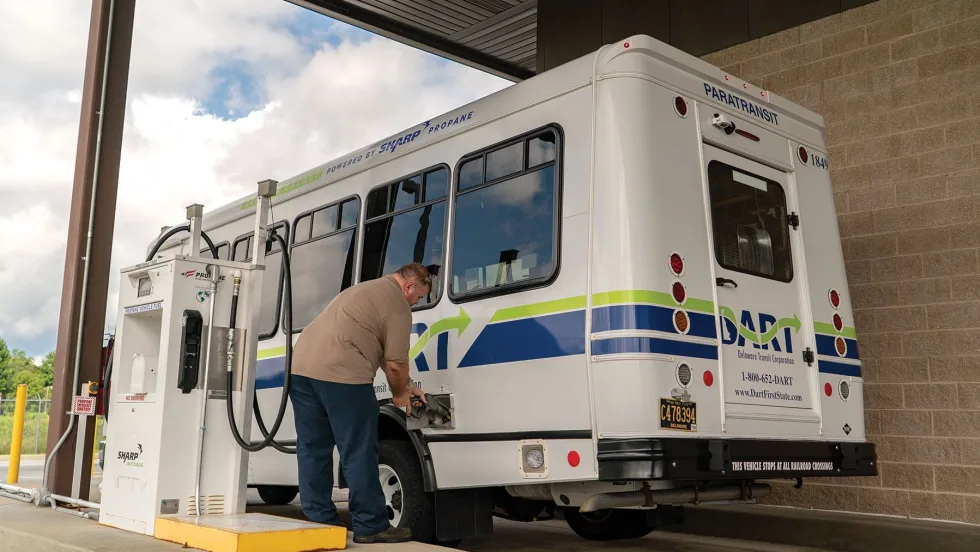
Building a Winning FTA Grant Proposal: Why Propane Autogas is the Pragmatic Choice for Fleet Resilience
With $610 million available through the FY 2026 Buses and Bus Facilities Competitive Program and the Low or No Emission Grant Program, agencies must build a compelling case before the September 21 deadline that balances environmental compliance with operational feasibility.
Read More →
Velo-city Conference 2026: Latest Trends in Cycling as Part of Urban Mobility
The global cycling conference highlighted how cities are integrating bicycles into multimodal transportation networks, expanding cycle tourism and reshaping urban mobility.
Read More →
Kindness Isn’t Soft...It’s Strategic.
Mike Bismeyer — often known as “The Kindness Guy” — has spent more than 17 years in public transit and mobility, serving in industry leadership roles, speaking across North America, and advocating for stronger workplace cultures. But his message doesn’t come from theory. It comes from lived experience.
Read More →
Inside ITF 2026: Transport Reacts to A Challenging World
Transport leaders from around the world gathered in Leipzig, Germany, for the 2026 International Transport Forum to discuss resilience, climate impacts, supply chains and the future of sustainable mobility.
Read More →
Every Ride Tells a Story — But You’re Not Just Selling the Ride
You’re selling the moment, the meaning, and the emotion behind it.
Read More →
How Digital Signage is Reshaping the Traveler Experience at Transportation Hubs
What was once a landscape of static signs has evolved into a responsive, immersive environment powered by real-time visual communication.
Read More →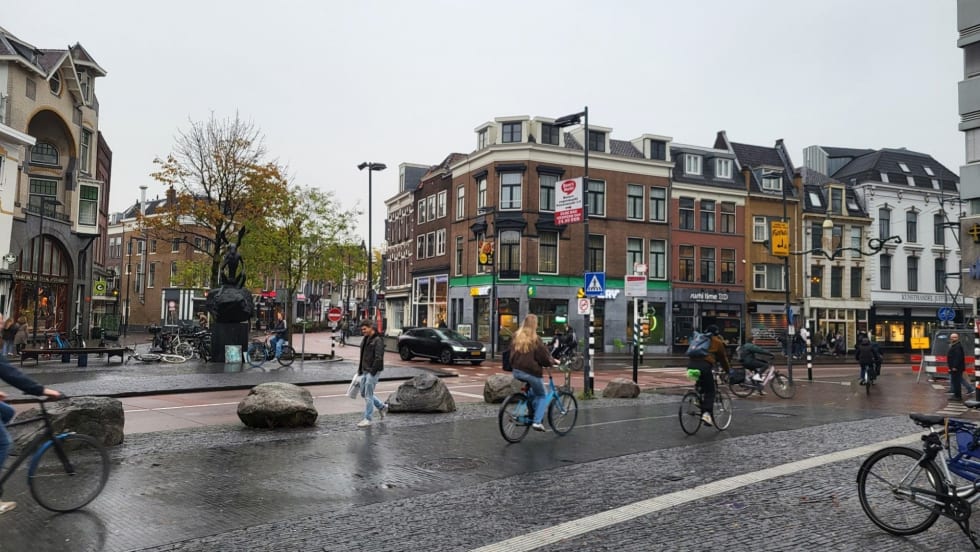
Latest Trends in Urban Mobility from Polis Conference 2025
Polis comprises cities and regions, as well as corporate partners, from across Europe, promoting the development and implementation of sustainable mobility. This year’s event had over a thousand attendees across various policy forums and an exhibition.
Read More →
Why Transit Leaders Require Better Tools for Operational Clarity In Today’s Tech-Fragmented Environment
Across North America and beyond, transit agency officials are contending with a perfect storm of operational headaches and strategic challenges that hamper daily service and long-term progress.
Read More →
The Powerless Brokers: Why California Can’t Build Transit
It is no secret that transit in the U.S. is slow and expensive to build.
Read More →
Why Transport Sustainability Should Focus on People Instead of Cars
Simply incentivizing electrification is not enough to make a meaningful impact; we must shift our focus toward prioritizing public transportation and infrastructure.
Read More →