



Hire me because I'm the best, not because I'm a woman
My name is Laura Wilbanks and I'm the chief marketing officer for Thomson Reuters. I have over 25 years’ deep marketing experience...

GettyImages-961370750

Many women see themselves as much more than a female leader.
GettyImages-961370750
(Article originally published on World Economic Forum.)
My name is Laura Wilbanks and I'm the chief marketing office for Thomson Reuters. I have over 25 years’ deep marketing experience. Prior to joining Thomson Reuters, I was corporate vice president and chief marketing officer at Equifax.
And guess what? I wasn’t hired for either of those jobs because of my gender.
I was hired because I was the best candidate for the job.
Many women – and I consider myself one of them – see themselves as much more than a female leader. I feel this label can detract and deflect attention from my professional and personal achievements. I, for one, am thrilled it's become (and continues to become) easier for women to be who they want and do what they want without the shadow of gender stereotypes.
At the start of my career, I often felt confined in how I should act. It took a long time for me to be comfortable enough to bring my authentic self to the fore. When I look back, I feel like jumping into a DeLorean, travelling back in time and giving young Laura a pep talk. Along with a few pointers on questionable 80s fashion trends, I would tell her: you deserve to be here. Your voice matters. Your opinions are valid.
Times (and thankfully fashion!) have changed since then and, in terms of women in the workplace and gender stereotyping, we have made progress.
Yet, we’re still highlighting women achieving leadership roles. Sure, we should celebrate them. But shouldn’t we celebrate the candidate for the totality of who they are and not just their gender?
We have seen a fundamental shift in society during the last half a century. Views on traditional gender-based roles are being abandoned, and women have more options available to them than before. More women than ever are attending university or college. Female students are outperforming male students. Thanks to tech like Skype and Slack, people are no longer impeded by geographical region and time zones, or bound to an office; working environments are increasingly flexible.
So, how do these changes in societal demographics affect women in the workplace?
Organizations are explicitly stating gender workforce targets and making strides to ensure diversity in hiring panels and candidate slates.
In 2018, women accounted for 48.5% of the global workforce. A joint report from McKinsey and LeanIn.org (October 2019) found a 24% increase in the number of women holding C-suite roles since 2015. These changes are supported by initiatives such as Grace Hopper, which promotes diversity and inclusion in traditionally male-dominated industries such as technology and engineering. In some regions, businesses are held accountable and obliged to report on their gender pay gap and the number of women holding leadership positions.
This is not just a check-the-box exercise. A report from PwC shows the positive GDP impacts of increasing female employment rates, including a potential boost of $6 trillion across the OECD and $2 trillion to female earnings in these countries. (WEF’s Global Gender Gap report suggests it might take several generations before we see significant change.)
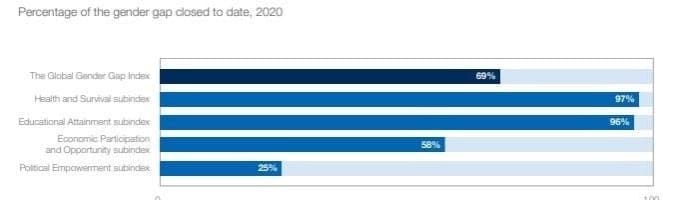
The Global Gender Gap Index 2020 highlights where the gender gap has closed to date. World Economic Forum
With all these changes, do we still need to use the label "female leader" – or is it becoming more of a hindrance than a help to those of us who are defined as one?
The label can certainly empower women in the workplace. Positive female role models inspire and embolden other women. We cannot underestimate the part they play in society and the workplace.
Regardless of our gender, we have a responsibility to empower tomorrow’s leaders. As a woman and a leader, I get to speak with women from many different walks of life who are just starting out in, or thinking about, their careers. Here's my advice to them:
You were hired for your skills. Use them.
Find your voice. Use it.
Be you. Don’t try to be the picture that has been painted for you.
You will teach people how to treat you. Start off right.
Set your bar high – and go higher.
We continue to move the needle, but there is more to be done to push for sustainable change in terms of greater gender equality in the workplace, and specifically, gender pay parity. In a global business, the breadth and diversity of perspective is essential to success. There must be strong commitment to driving this change, and measurements against which we hold ourselves accountable and through which we can demonstrate impact.
And let’s make sure our conversations are equally diverse. Male allies are as critical to the conversations as females. Both women and men are keen to make a difference. To affect change, the conversations need to be united, not exclusive.
Those of us who have broken the glass ceiling must continue to pave the way for future generations, and to share what we have learned and the experiences that have shaped us. My hope for the future, for my children and for future generations, is that we move away from the term “female leader” and start recognizing women for what they are: inspirational, transformational, powerful and high achievers.
Laura Wilbanks is chief marketing officer, Thomson Reuters.
More Blog Posts
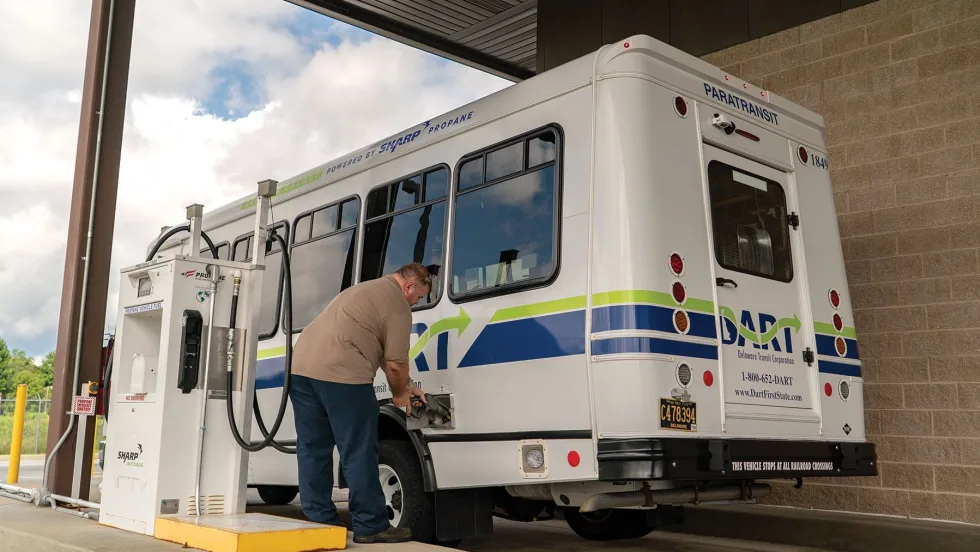
Building a Winning FTA Grant Proposal: Why Propane Autogas is the Pragmatic Choice for Fleet Resilience
With $610 million available through the FY 2026 Buses and Bus Facilities Competitive Program and the Low or No Emission Grant Program, agencies must build a compelling case before the September 21 deadline that balances environmental compliance with operational feasibility.
Read More →
Velo-city Conference 2026: Latest Trends in Cycling as Part of Urban Mobility
The global cycling conference highlighted how cities are integrating bicycles into multimodal transportation networks, expanding cycle tourism and reshaping urban mobility.
Read More →
Kindness Isn’t Soft...It’s Strategic.
Mike Bismeyer — often known as “The Kindness Guy” — has spent more than 17 years in public transit and mobility, serving in industry leadership roles, speaking across North America, and advocating for stronger workplace cultures. But his message doesn’t come from theory. It comes from lived experience.
Read More →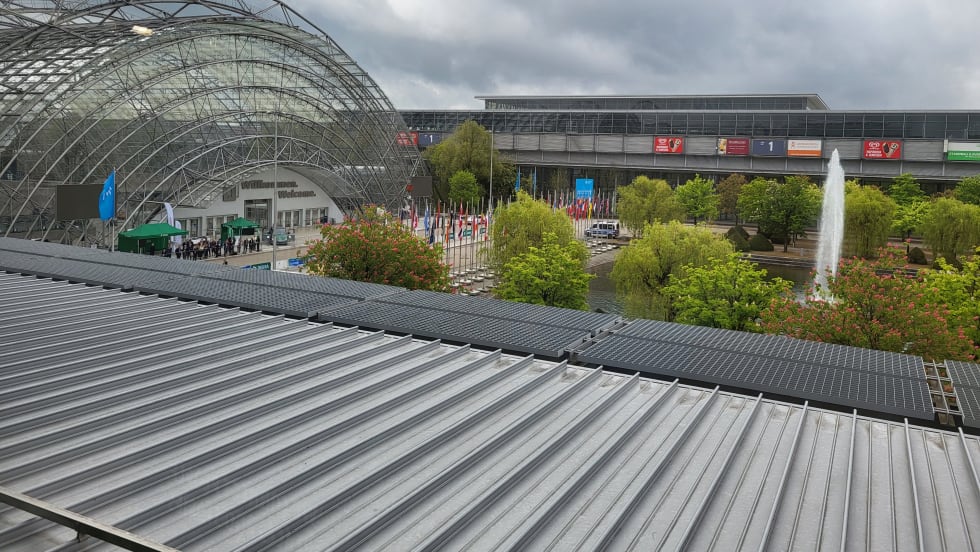
Inside ITF 2026: Transport Reacts to A Challenging World
Transport leaders from around the world gathered in Leipzig, Germany, for the 2026 International Transport Forum to discuss resilience, climate impacts, supply chains and the future of sustainable mobility.
Read More →
Every Ride Tells a Story — But You’re Not Just Selling the Ride
You’re selling the moment, the meaning, and the emotion behind it.
Read More →
How Digital Signage is Reshaping the Traveler Experience at Transportation Hubs
What was once a landscape of static signs has evolved into a responsive, immersive environment powered by real-time visual communication.
Read More →
Latest Trends in Urban Mobility from Polis Conference 2025
Polis comprises cities and regions, as well as corporate partners, from across Europe, promoting the development and implementation of sustainable mobility. This year’s event had over a thousand attendees across various policy forums and an exhibition.
Read More →
Why Transit Leaders Require Better Tools for Operational Clarity In Today’s Tech-Fragmented Environment
Across North America and beyond, transit agency officials are contending with a perfect storm of operational headaches and strategic challenges that hamper daily service and long-term progress.
Read More →
The Powerless Brokers: Why California Can’t Build Transit
It is no secret that transit in the U.S. is slow and expensive to build.
Read More →
Why Transport Sustainability Should Focus on People Instead of Cars
Simply incentivizing electrification is not enough to make a meaningful impact; we must shift our focus toward prioritizing public transportation and infrastructure.
Read More →