




RELATED: Micromobility: The missing link between people and cities
How leading adventure travel tours led me to transportation innovation
My stint in Spain in 2005 lit a fire under me to travel the globe, and I decided that living abroad was something I could see myself doing...
September 2, 2019

Running of the bulls in Pamplona, Spain.
3 min to read
b.jpg)
Running of the bulls in Pamplona, Spain.
I never set out to work in the transportation or technology field. I never got a degree in urban planning or real estate. In fact, it wasn’t until the moment I met my co-founder that I knew this was the path I was meant to go down. After graduating with a BA in International Business (with one semester abroad, studying in Spain, under my belt) my love for travel and adventure is what really inspired my career and my business. We create technology that has the power to change how people get around, and subsequently, how they see the world.
The inspiration. My stint in Spain in 2005 lit a fire under me to travel the globe, and I decided that living abroad was something I could see myself doing for a while. So in 2006, I moved to the Dominican Republic right out of college; in the two years I lived there, nearly 100 different family members and friends came to visit. I happily assumed the role of tour guide, taking them everywhere from the mountains to the ocean, organizing wine tastings, surf lessons, yoga retreats, and jungle hikes for anyone who wanted to come along for the ride.
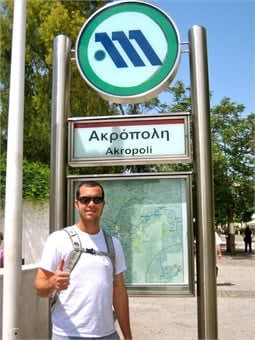
Readying to ride the Athens Metro.
Ryan Croft
Friends and family quickly expanded to friends of friends and through word of mouth, my accidental adventure tourism company was born. Soon, I was leading corporate yoga retreats and even organizing honeymoons for newlywed couples, traveling through Puerto Rico, Brazil, Turkey, Croatia, Belize, Argentina, Panama, Chile and more. I have traveled to nearly 50 countries and more than 150 cities and counting.
But as my company continued to gain a following, I noticed one major problem, no matter which city we traveled to or what language was spoken — transportation is the worst.
The problem. Navigating a new city is hard as it is — but trying to get around with 10-plus eager travel companions relying on me was nearly impossible. Every city suffers from it, especially heavily populated urban areas where daily commuters are intermingled with tourists, all trying to figure out if they should take the bus or the train. From Rio de Janeiro to San Juan, I encountered the same problems and thought to myself: There has to be a better way.
The solution. The aha! moment came when I met my now co-founder at a startup networking event in Washington, D.C., in 2013. He was working on a form of technology to curate any and all transportation options, theoretically alleviating the exact pain points I encountered on every trip I had ever led.
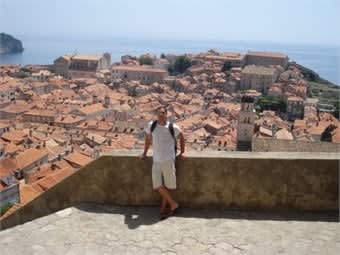
Dubrovnik, Croatia, on coast of the Adriatic Sea, is listed as a UNESCO World Heritage site.
Ryan Croft
Not only was this a way to help people better navigate their cities and those they were visiting, it was also a technology that could help people move around more sustainably — saving on time, cost, energy, and waste.
Today. Combining the experience I had accumulated through my travels abroad with my co-founder’s coding skills, TransitScreen was born. Today, TransitScreen provides real-time, location-based transportation information, pulling data for everything from the next train and nearby ride-hailing choices, to micromobility options like dockless bikes and e-scooters, to help travelers and residents alike easily navigate their cities.
Looking forward: Earlier this year, I was invited by the Inter-American Development Bank to speak [about our technology] in Montevideo, Uruguay. This was the first time I proudly traveled back to Latin America for my business, and a real full-circle moment for me.
Ryan Croft is the COO and co-founder of TransitScreen.
Subscribe to Our Newsletter
More Blog Posts
Building a Winning FTA Grant Proposal: Why Propane Autogas is the Pragmatic Choice for Fleet Resilience
With $610 million available through the FY 2026 Buses and Bus Facilities Competitive Program and the Low or No Emission Grant Program, agencies must build a compelling case before the September 21 deadline that balances environmental compliance with operational feasibility.
Read More →
Velo-city Conference 2026: Latest Trends in Cycling as Part of Urban Mobility
The global cycling conference highlighted how cities are integrating bicycles into multimodal transportation networks, expanding cycle tourism and reshaping urban mobility.
Read More →
Kindness Isn’t Soft...It’s Strategic.
Mike Bismeyer — often known as “The Kindness Guy” — has spent more than 17 years in public transit and mobility, serving in industry leadership roles, speaking across North America, and advocating for stronger workplace cultures. But his message doesn’t come from theory. It comes from lived experience.
Read More →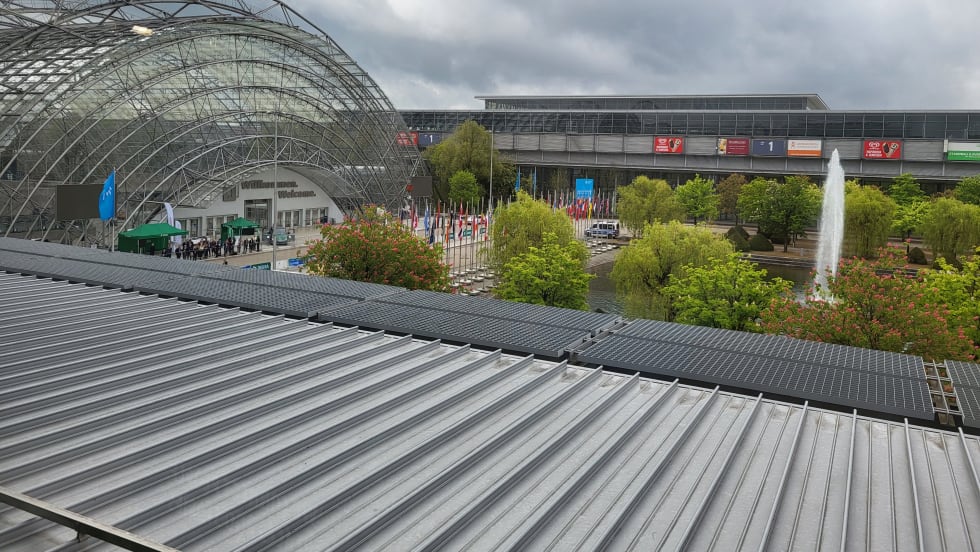
Inside ITF 2026: Transport Reacts to A Challenging World
Transport leaders from around the world gathered in Leipzig, Germany, for the 2026 International Transport Forum to discuss resilience, climate impacts, supply chains and the future of sustainable mobility.
Read More →
Every Ride Tells a Story — But You’re Not Just Selling the Ride
You’re selling the moment, the meaning, and the emotion behind it.
Read More →
How Digital Signage is Reshaping the Traveler Experience at Transportation Hubs
What was once a landscape of static signs has evolved into a responsive, immersive environment powered by real-time visual communication.
Read More →
Latest Trends in Urban Mobility from Polis Conference 2025
Polis comprises cities and regions, as well as corporate partners, from across Europe, promoting the development and implementation of sustainable mobility. This year’s event had over a thousand attendees across various policy forums and an exhibition.
Read More →
Why Transit Leaders Require Better Tools for Operational Clarity In Today’s Tech-Fragmented Environment
Across North America and beyond, transit agency officials are contending with a perfect storm of operational headaches and strategic challenges that hamper daily service and long-term progress.
Read More →
The Powerless Brokers: Why California Can’t Build Transit
It is no secret that transit in the U.S. is slow and expensive to build.
Read More →
Why Transport Sustainability Should Focus on People Instead of Cars
Simply incentivizing electrification is not enough to make a meaningful impact; we must shift our focus toward prioritizing public transportation and infrastructure.
Read More →