



Idea for Smarter Transit Fares is a Winner
Transit would be better served if the pay-per-ride and unlimited fare structures that currently dominate were expanded to include more fine-tuned pricing structures similar to those offered by cell phone companies. That was the idea that won the recent second annual Outside the Box transportation conference and competition at George Mason University’s School of Public Policy.

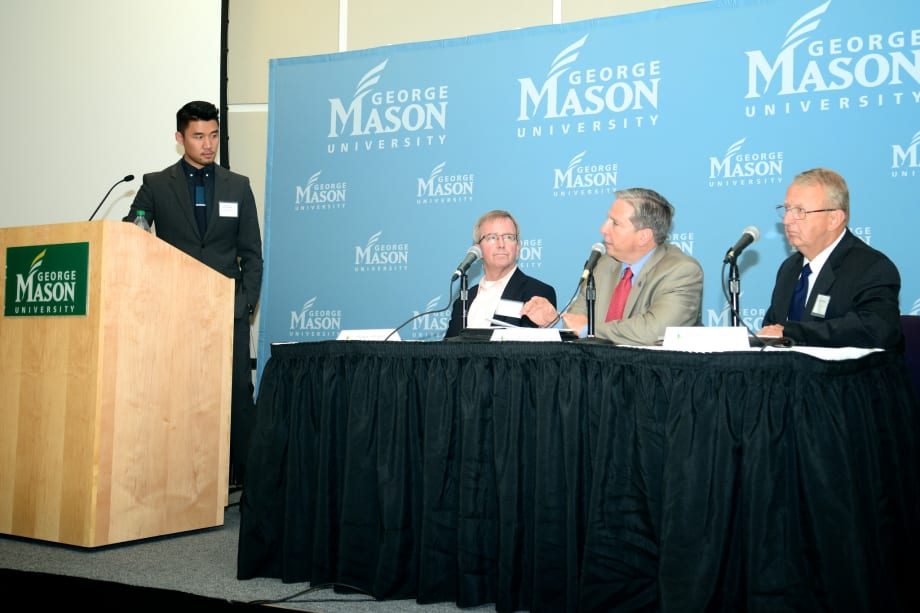
Contestant Earl Kaing addresses the Outside the Box judges.
Contestant Earl Kaing addresses the Outside the Box judges.
(This story by Paul Goddin, was original published by Mobility Lab.)
Transit would be better served if the pay-per-ride and unlimited fare structures that currently dominate were expanded to include more fine-tuned pricing structures similar to those offered by cell phone companies.
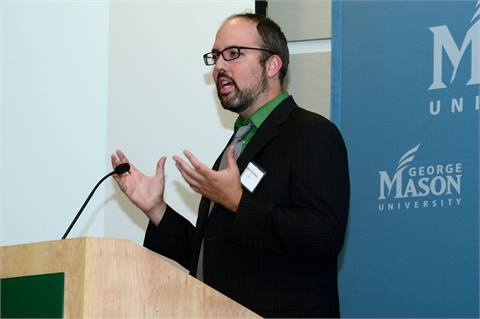
Contest winner Adam Davidson.
That was the idea that won the recent second annual Outside the Box transportation conference and competition at George Mason University’s (GMU’s) School of Public Policy.
Winner Adam Davidson, a Ph.D. student and Mobility Lab contributor, imagined transit fare plans that, similar to mobile phone carriers, might include “free nights and weekends” (that is, free off-peak rides). He was persuasive in arguing that such a scheme would suit different user needs better than the current system, incentivize transit use and increase customer satisfaction.
Davidson demonstrated how a “transit virtual network operator” could buy fares in bulk and re-sell them to customers similar to the manner in which Boost Mobile re-brands and sells minutes on Sprint’s mobile network.
“We have the technology, we just need enabling legislation," Davidson said. His plan also allows for the potential of inter-jurisdictional fare plans, which would certainly be welcomed by many transit riders.
A blue ribbon panel of judges — venture capitalist Hooks Johnston of Valhalla Partners, former Virginia Secretary of Transportation John Milliken Esq., and VP of Policy for American Public Transportation Association Art Guzzetti — narrowed the panelists down to three, who presented their transportation policy innovations.
The second-place winner of the competition was Danny Yoder, a masters of planning student at Rutgers. He explained to Mobility Lab that his entry, called SocialTransit, is “Foursquare for transit vehicles.”
Allowing transit customers to “check in” to moving trains or buses, Yoder explained how his app would link up with social networks such as Facebook, allowing social interactions among transit riders. Gamification, according to Yoder, would incentivize use of the app, which in turn would incentivize transit use and promote customer loyalty.
Secondarily, use of Yoder’s app would result in useful data regarding delays, congestion, and the ride experience, similar to the information crowd-sourced by users of Waze. Yoder estimated production of his app would cost $72,000 over 24 weeks for production of his app (Co-applicant Dorothy Kieu Le was not present at the presentation at GMU).
The third-place winner was Earl Kaing, a transportation planner at San Francisco Municipal Transportation Agency.
Kaing’s entry started with an implementation of Bus Rapid Transit (BRT), replete with dedicated right-of-way. Next, Kaing opened up the dedicated BRT lanes to permit the use of taxis and transportation network companies (TNCs), such as Uber and Lyft to utilize the dedicated lanes. Congestion pricing for TNCs plus taxi credits for bus riders could be utilized to control the quantities of each service on the roads. Kaing predicted that his plan would result in a decline in single-occupancy vehicle use and car ownership.
In addition to the three contest finalists, the event also featured keynote speaker Gil Penalosa, who discussed his experience in transforming automobile-centric places into pedestrian-oriented, vibrant communities.
Penalosa, former commissioner of Bogotá, Colombia, called his mission one of “dignifying the pedestrian.” Penalosa is currently executive director of 8-80 Cities, which claims that cities designed for eight-year-olds and 80-year-olds work for everyone. Penalosa said that we need to “stop building cities as though everyone was 30 and athletic.” Graduate students in GMU’s Transportation Policy, Operations and Logistics (TPOL) program have recommended adoption of the eight-80 Cities concept in Arlington County, Virginia.
The winner of last year’s Outside the Box event, Josephine Kressner, Ph.D., updated the audience on her recent developments. In the past year, Kressner has completed her Ph.D., patented her concept (a new way to perform travel-demand modeling using location-based mobile phone data) and started a company called Transport Foundry. She’s currently hiring researchers for her feasibility study and can be contacted via email.
Sponsored by the family of the late Cameron Rian Hays, a George Mason University student whose life was cut short prior to graduation, Outside the Box celebrates Hays’ interest in transportation and his penchant for innovative thought.
“We want to stimulate innovation in this area,” said Brian Hays, Cameron’s father. “It’s not just about building better infrastructure, it’s about building a better country.”
Photos by M.V. Jantzen
More Blog Posts
Building a Winning FTA Grant Proposal: Why Propane Autogas is the Pragmatic Choice for Fleet Resilience
With $610 million available through the FY 2026 Buses and Bus Facilities Competitive Program and the Low or No Emission Grant Program, agencies must build a compelling case before the September 21 deadline that balances environmental compliance with operational feasibility.
Read More →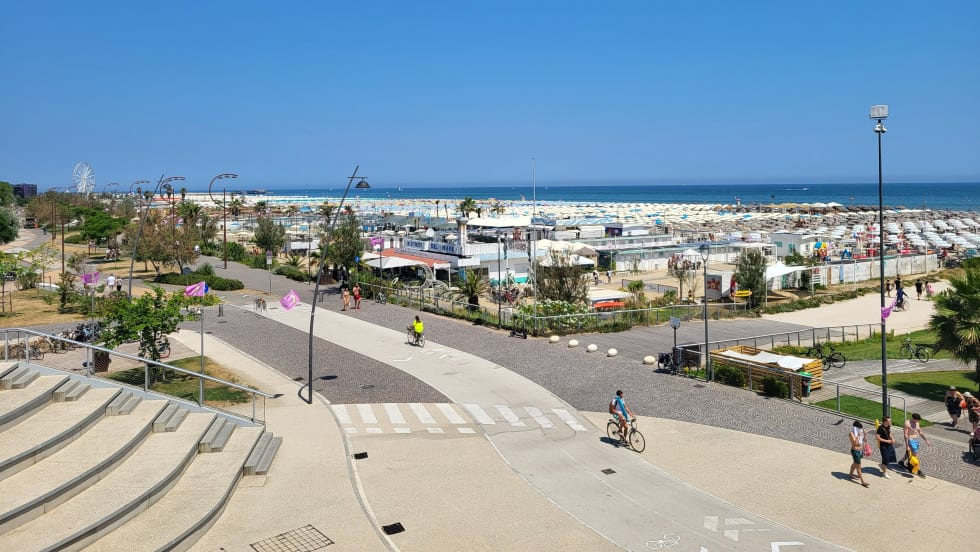
Velo-city Conference 2026: Latest Trends in Cycling as Part of Urban Mobility
The global cycling conference highlighted how cities are integrating bicycles into multimodal transportation networks, expanding cycle tourism and reshaping urban mobility.
Read More →
Kindness Isn’t Soft...It’s Strategic.
Mike Bismeyer — often known as “The Kindness Guy” — has spent more than 17 years in public transit and mobility, serving in industry leadership roles, speaking across North America, and advocating for stronger workplace cultures. But his message doesn’t come from theory. It comes from lived experience.
Read More →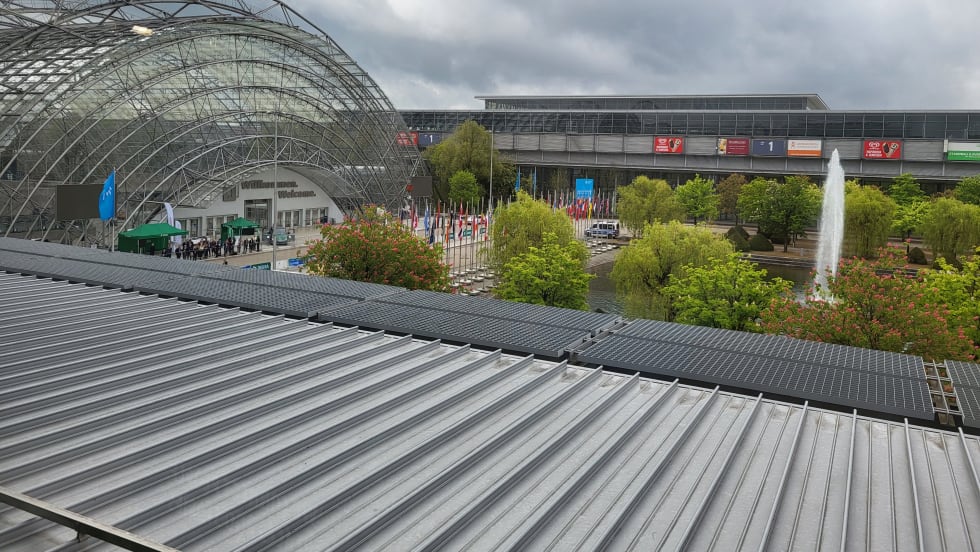
Inside ITF 2026: Transport Reacts to A Challenging World
Transport leaders from around the world gathered in Leipzig, Germany, for the 2026 International Transport Forum to discuss resilience, climate impacts, supply chains and the future of sustainable mobility.
Read More →
Every Ride Tells a Story — But You’re Not Just Selling the Ride
You’re selling the moment, the meaning, and the emotion behind it.
Read More →
How Digital Signage is Reshaping the Traveler Experience at Transportation Hubs
What was once a landscape of static signs has evolved into a responsive, immersive environment powered by real-time visual communication.
Read More →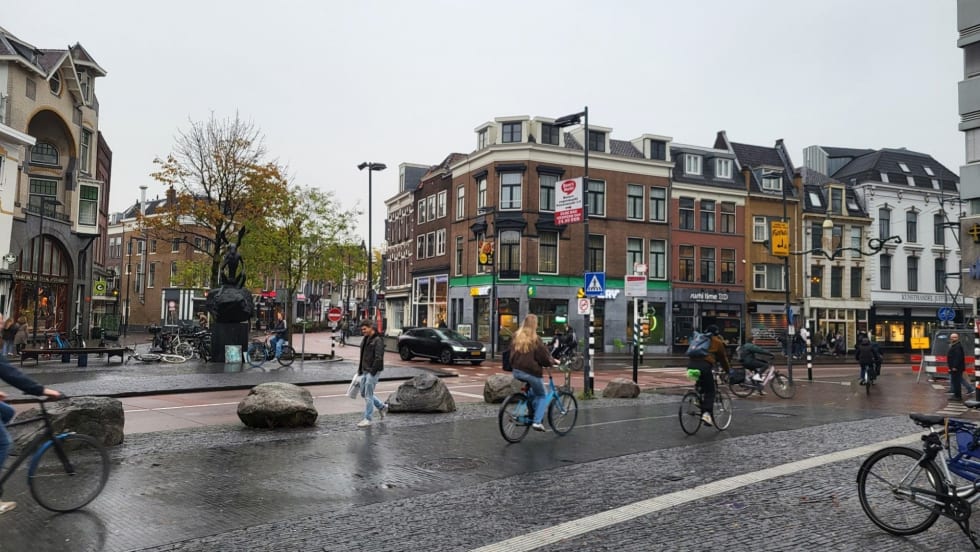
Latest Trends in Urban Mobility from Polis Conference 2025
Polis comprises cities and regions, as well as corporate partners, from across Europe, promoting the development and implementation of sustainable mobility. This year’s event had over a thousand attendees across various policy forums and an exhibition.
Read More →
Why Transit Leaders Require Better Tools for Operational Clarity In Today’s Tech-Fragmented Environment
Across North America and beyond, transit agency officials are contending with a perfect storm of operational headaches and strategic challenges that hamper daily service and long-term progress.
Read More →
The Powerless Brokers: Why California Can’t Build Transit
It is no secret that transit in the U.S. is slow and expensive to build.
Read More →
Why Transport Sustainability Should Focus on People Instead of Cars
Simply incentivizing electrification is not enough to make a meaningful impact; we must shift our focus toward prioritizing public transportation and infrastructure.
Read More →