



RELATED: Building a 'smart city' starts with mass transit systems
Leveraging IoT to Modernize Small City Public Transit Systems
The rapid growth of the Internet of Things (IoT) device ecosystem, and the spread of high-speed broadband internet access combine to offer cities of all sizes the opportunity to modernize their mass transit systems. Doing so will enable officials to accomplish two long-standing goals: drive up the usage of public transportation and spur local economic development.

Laetitia Gazel Anthoine・Founder/CEO, Connecthings
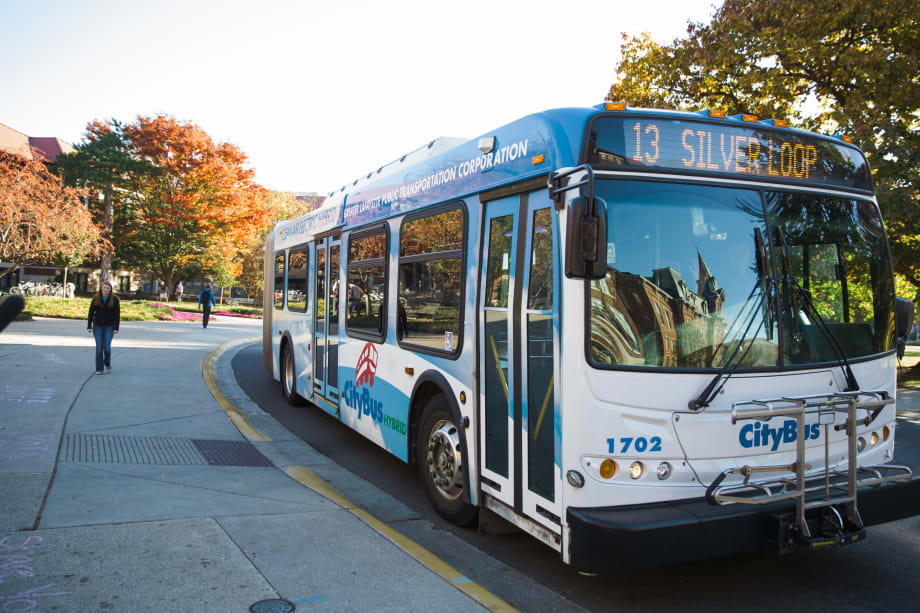
A CityBus shuttle on the Purdue University campus.
3 min to read
A CityBus shuttle on the Purdue University campus.
The international stereotype of America may be that it’s a country full of car lovers crowding the nation’s highways and city streets. But Americans shattered that stereotype last November by approving dozens of public transportation-related funding initiatives that allocate about $170 billion in public transit funding. This relatively new national attitude, the rapid growth of the Internet of Things (IoT) device ecosystem, and the spread of high-speed broadband internet access combine to offer cities of all sizes the opportunity to modernize their mass transit systems. Doing so will enable officials to accomplish two long-standing goals: drive up the usage of public transportation and spur local economic development.
Planning and personnel
The key to keeping budgets in line is to incorporate IoT and communications technologies into the initial planning process to ensure adequate funding is available not just for the IT systems, but also to hire the personnel with the expertise required to implement and manage these systems.
Consider the city of West Lafayette, Ind. (pop. 30,875), which the Public Transportation Partnership for Tomorrow reports has built a new downtown retail and entertainment sector with new stores and restaurants, a multiscreen theater, residential dwellings, a park, and a hotel. The mixed-use development connects the downtown business district to the nearby Purdue University campus and a riverfront area, via a multimodal bus and rail transportation center.
It sounds like an amazing project that will improve the lives of residents and help grow the local business community. How could it be made even better? By turning the bus stops, rail stations, and even the parking spaces and street lights, into an open, connected communications network that enables government agencies, local businesses, transportation applications, and residents to interact and share information in real time.
Tapping “dumb” resources
Turning these “dumb” resources into interactive points enable residents and visitors to receive hyper-contextualized, proximity-based, relevant notifications tied to proximity services and businesses, tourist, and cultural information in their mobile applications they use every day as they ride the bus or train, and walk along the streets. That’s the realization of every business owner/operator’s dream: gain the ability to engage with their customers in real-time right before they arrive at their doors.
The key to creating this network is deploying contactless technology beacons based on open standards such as NFC, Bluetooth Low Energy (BLE), and QR codes. These beacons turn passive, urban assets into smart interaction points, which are able to initiate two-way communications with residents’ and visitors’ smartphones, tablets, smartwatches, and other mobile devices. That may sound like science fiction, but cities across Europe and Asia are making that happen today.
Incorporating IoT technologies into communications networks based on open standards will help local businesses attract new customers, enable government officials to communicate in real time with residents, reduce traffic congestion, make roads safer, reduce the transportation infrastructure’s environmental impact, and, of course, continue to increase the ridership and use of public transit.
Laetitia Gazel Anthoine is the founder and CEO of Connecthings, a U.S.-European based technology and IoT enabling company. Connecthings implements contactless technologies into the public space to turn urban, passive physical assets into smart, connected objects.
Subscribe to Our Newsletter
More Blog Posts
Building a Winning FTA Grant Proposal: Why Propane Autogas is the Pragmatic Choice for Fleet Resilience
With $610 million available through the FY 2026 Buses and Bus Facilities Competitive Program and the Low or No Emission Grant Program, agencies must build a compelling case before the September 21 deadline that balances environmental compliance with operational feasibility.
Read More →
Velo-city Conference 2026: Latest Trends in Cycling as Part of Urban Mobility
The global cycling conference highlighted how cities are integrating bicycles into multimodal transportation networks, expanding cycle tourism and reshaping urban mobility.
Read More →
Kindness Isn’t Soft...It’s Strategic.
Mike Bismeyer — often known as “The Kindness Guy” — has spent more than 17 years in public transit and mobility, serving in industry leadership roles, speaking across North America, and advocating for stronger workplace cultures. But his message doesn’t come from theory. It comes from lived experience.
Read More →
Inside ITF 2026: Transport Reacts to A Challenging World
Transport leaders from around the world gathered in Leipzig, Germany, for the 2026 International Transport Forum to discuss resilience, climate impacts, supply chains and the future of sustainable mobility.
Read More →
Every Ride Tells a Story — But You’re Not Just Selling the Ride
You’re selling the moment, the meaning, and the emotion behind it.
Read More →
How Digital Signage is Reshaping the Traveler Experience at Transportation Hubs
What was once a landscape of static signs has evolved into a responsive, immersive environment powered by real-time visual communication.
Read More →
Latest Trends in Urban Mobility from Polis Conference 2025
Polis comprises cities and regions, as well as corporate partners, from across Europe, promoting the development and implementation of sustainable mobility. This year’s event had over a thousand attendees across various policy forums and an exhibition.
Read More →
Why Transit Leaders Require Better Tools for Operational Clarity In Today’s Tech-Fragmented Environment
Across North America and beyond, transit agency officials are contending with a perfect storm of operational headaches and strategic challenges that hamper daily service and long-term progress.
Read More →
The Powerless Brokers: Why California Can’t Build Transit
It is no secret that transit in the U.S. is slow and expensive to build.
Read More →
Why Transport Sustainability Should Focus on People Instead of Cars
Simply incentivizing electrification is not enough to make a meaningful impact; we must shift our focus toward prioritizing public transportation and infrastructure.
Read More →