




Cracking an organization’s cyber defenses doesn’t always take a sophisticated hack by a foreign government or crime syndicate.
Railway cybersecurity must never be taken lightly
Many cybersecurity breaches are traced back to human error, from lack of compliance with security policies to configuration errors. Even the best-trained staff can be overwhelmed by the sheer volume of daily alerts that need to be tackled.
March 7, 2018

3 min to read

This short news item about cybersecurity will surprise you. It’s easy to shrug it off, but it does make the point that cracking an organization’s cyber defenses doesn’t always take a sophisticated hack by a foreign government or crime syndicate. Many security breaches are traced back to human error, from lack of compliance with security policies to configuration errors. Even the best-trained staff can be overwhelmed by the sheer volume of daily alerts that need to be tackled. However, automation makes execution of repeatable actions without human intervention and orchestration chains possible, speeding up the investigation and mitigation of incidents.
Cybersecurity is a growing issue for many railway operators as they adopt IP-based network technologies to deliver broadband coverage onboard and for mission-critical train control systems. That’s because these networks tend to be more open and more interconnected. The more parts of a railway communication infrastructure exposed to the internet, the more vulnerabilities might arise. Besides, there is a massive cybersecurity skillset shortage globally, rendering human-centric and manually intensive incident response strategies insufficient.
Consequently, railway communications security must be stepped up. Key capabilities to efficiently protect networks include:
Security automation that encompasses business processes.
Incident response plans.
Regulations and policies.
End-to-end security that encompasses network operations and processes.
Security analytics to correlate security-related information from across the network.
Devices and cloud layers to spot suspicious anomalies and provide insight into threats.
Multiple layers of encryption to protect network traffic.
Adding machine learning to the mix enables organizations to identify potential compromises by using threat intelligence information across the network, device, and cloud layers. Such a multi-layered and active defense-in-depth approach provides the right balance of costs with the protection needed to defend against today’s security threats.
The risks are hard to understate. In the U.S., cybersecurity is a serious economic and national threat with the U.S. Computer Emergency Readiness Team (US-CERT) creating a framework to support the protection of critical infrastructure. In Europe, the EU has proposed a cybersecurity strategy outlining its vision, clarifying roles and responsibilities, and defining actions required to protect citizens. In Asia, some governments have established national cybersecurity policies.
So, it’s only natural that railway operators need to deploy equally serious protection measures. Organizations must focus on
Detecting and mitigating new threats,
Reducing the vulnerable surface area,
Improving analytics to correlate data from multiple domains and to help identify suspicious, malicious, or inadvertent anomalies.
Combining threat intelligence data and security analytics makes it possible to detect threats and prescribe the appropriate response more effectively, providing strategic mitigation to strategic threats.
This way operators not only protect themselves against potential loss of revenue and the high costs of service restoration and passenger compensation, but they can build their brand as an operator that helps their passengers to spend worry-free, secure time onboard.
Karsten Oberle is Global Practice Lead within Transportation Sales in the Nokia TEPS (Transportation, Energy, and Public Sector) Division. To view a video about Nokia's cybersecurity for rail, click here.
Subscribe to Our Newsletter
More Blog Posts
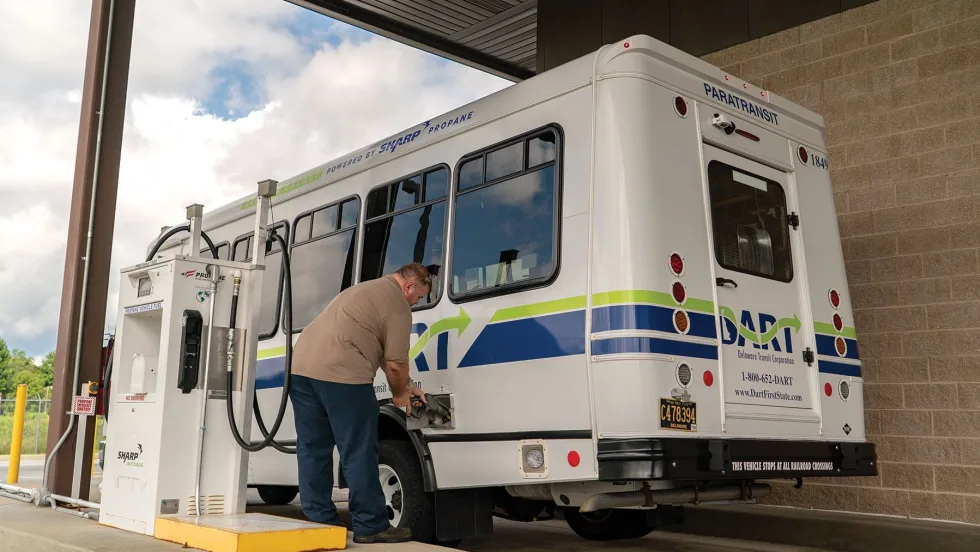
Building a Winning FTA Grant Proposal: Why Propane Autogas is the Pragmatic Choice for Fleet Resilience
With $610 million available through the FY 2026 Buses and Bus Facilities Competitive Program and the Low or No Emission Grant Program, agencies must build a compelling case before the September 21 deadline that balances environmental compliance with operational feasibility.
Read More →
Velo-city Conference 2026: Latest Trends in Cycling as Part of Urban Mobility
The global cycling conference highlighted how cities are integrating bicycles into multimodal transportation networks, expanding cycle tourism and reshaping urban mobility.
Read More →
Kindness Isn’t Soft...It’s Strategic.
Mike Bismeyer — often known as “The Kindness Guy” — has spent more than 17 years in public transit and mobility, serving in industry leadership roles, speaking across North America, and advocating for stronger workplace cultures. But his message doesn’t come from theory. It comes from lived experience.
Read More →
Inside ITF 2026: Transport Reacts to A Challenging World
Transport leaders from around the world gathered in Leipzig, Germany, for the 2026 International Transport Forum to discuss resilience, climate impacts, supply chains and the future of sustainable mobility.
Read More →
Every Ride Tells a Story — But You’re Not Just Selling the Ride
You’re selling the moment, the meaning, and the emotion behind it.
Read More →
How Digital Signage is Reshaping the Traveler Experience at Transportation Hubs
What was once a landscape of static signs has evolved into a responsive, immersive environment powered by real-time visual communication.
Read More →
Latest Trends in Urban Mobility from Polis Conference 2025
Polis comprises cities and regions, as well as corporate partners, from across Europe, promoting the development and implementation of sustainable mobility. This year’s event had over a thousand attendees across various policy forums and an exhibition.
Read More →
Why Transit Leaders Require Better Tools for Operational Clarity In Today’s Tech-Fragmented Environment
Across North America and beyond, transit agency officials are contending with a perfect storm of operational headaches and strategic challenges that hamper daily service and long-term progress.
Read More →
The Powerless Brokers: Why California Can’t Build Transit
It is no secret that transit in the U.S. is slow and expensive to build.
Read More →
Why Transport Sustainability Should Focus on People Instead of Cars
Simply incentivizing electrification is not enough to make a meaningful impact; we must shift our focus toward prioritizing public transportation and infrastructure.
Read More →